
Personal Insurance
Sinkhole Insurance That Fills the Gap Your Home Policy Leaves
Standard homeowners insurance often excludes sinkhole damage, and the repair bills can be severe enough to threaten your home's foundation and your finances.
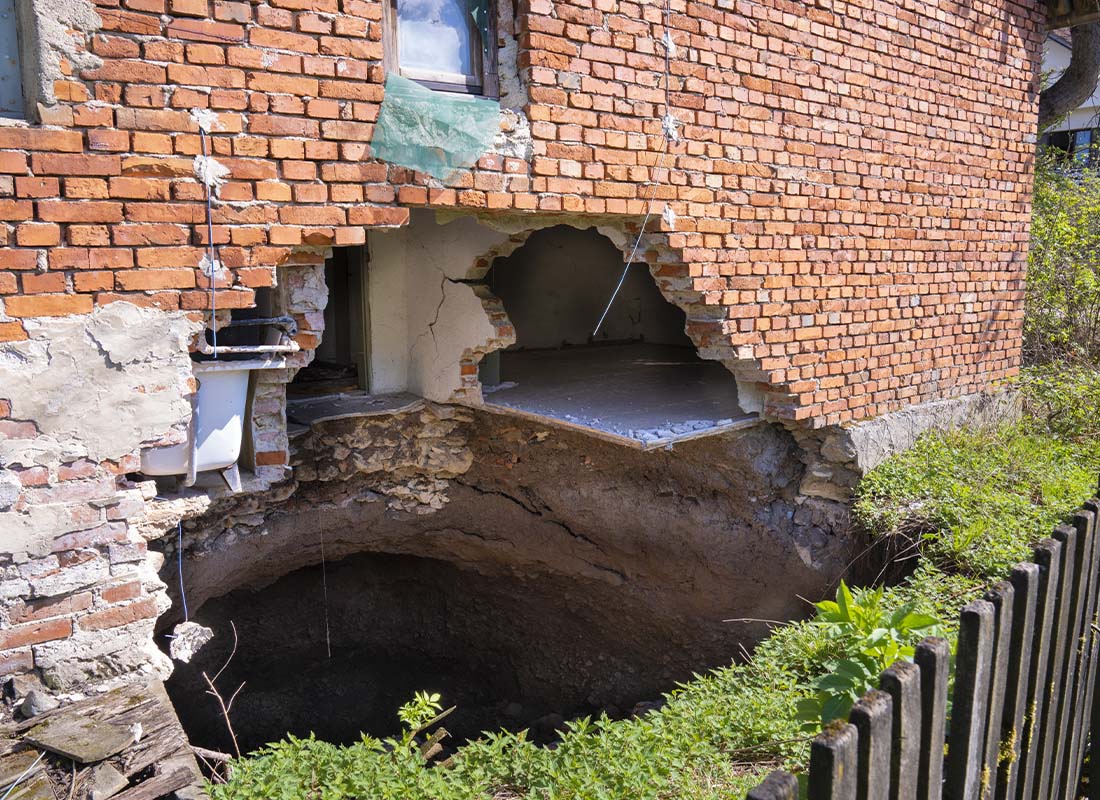
Sinkhole insurance is a separate or add-on coverage that pays for structural damage, repairs, and related losses when a sinkhole opens beneath or near your property. Most homeowners policies only cover what insurers call "catastrophic ground collapse" — a high bar that excludes gradual settling, partial collapses, and many real-world sinkhole events. If your home sits over limestone, basalt cavities, or soil prone to underground erosion, that gap matters. Bittick shops coverage across multiple carriers — licensed in CA, CO, ID, NV, OR, TX, VA, and WA — to find a policy that actually fits your property's risk profile.
What this coverage includes
Structural damage to your home
When a sinkhole damages your foundation, walls, floors, or roof structure, this coverage pays for engineering assessment and repairs. That includes cases where the ground beneath a concrete slab shifts gradually before any visible collapse occurs. Most homeowners policies draw a hard line at dramatic sudden collapse; sinkhole insurance is designed to cover the full spectrum of damage events, from cracks in your foundation to a section of your home dropping into a void.
What standard home insurance actually covers — and what it skips
Homeowners policies sometimes include a "catastrophic ground collapse" provision, but that language typically requires the event to be sudden, obvious, and severe. Gradual soil subsidence, minor foundation cracking, and sinkholes tied to human activity (such as old mining operations or broken utility lines) are routinely excluded. Even when your policy mentions sinkholes by name, read the fine print: many policies restrict coverage to naturally occurring events only. Sinkhole insurance fills those exclusion gaps specifically.
Additional living expenses if your home becomes uninhabitable
A significant sinkhole event can make a home unsafe to occupy while engineers assess the damage and contractors stabilize the site. Sinkhole coverage can extend to temporary housing and related living costs during that period, so you are not paying rent out of pocket while also managing repair costs. The length of coverage varies by policy, so it is worth reviewing that limit when you compare options.
Personal property losses connected to the event
If a sinkhole damages or destroys personal property inside your home — furniture, appliances, electronics — some sinkhole policies will include personal property losses as part of the covered event. Coverage terms differ by carrier, and some policies limit this to items directly inside the affected structure. Bittick can clarify exactly what each policy includes before you commit to it.
Pairs well with
Homeowners Insurance
Your primary homeowners policy is the foundation. Sinkhole coverage works alongside it to address the ground-collapse exclusions most homeowners policies carry.
Learn more ›Earthquake Insurance
Soil movement from seismic activity can trigger or accelerate sinkhole formation. In Idaho, where minor seismic events occur along the Snake River Plain fault zones, pairing earthquake and sinkhole coverage closes a significant gap.
Learn more ›Umbrella Insurance
If a sinkhole on your property damages a neighbor's structure or vehicle, your liability exposure can climb fast. A personal umbrella policy extends your liability limits well above what a standard homeowners policy carries.
Learn more ›Flood Insurance
Underground water movement is a primary driver of sinkhole formation, and the same weather events that saturate soil can also cause surface flooding. Flood insurance is a separate policy from both homeowners and sinkhole coverage.
Learn more ›What this coverage protects against
Common risks and how this coverage addresses them. Tap any scenario to expand.
-
Slow foundation cracking that turns into a full structural problem.
The risk
A homeowner in the Boise foothills notices hairline cracks in the garage slab and a door that no longer closes flush. An engineer confirms that a small subsurface void has been growing beneath the foundation for years. The homeowners policy excludes the claim because there was no sudden, dramatic collapse.
How this coverage helps
Sinkhole insurance is built to cover this kind of gradual subsidence event. It pays for the engineering report, the soil stabilization work, and the foundation repairs — costs that can easily reach five or six figures before a contractor breaks ground.
-
A driveway section drops overnight near an old irrigation line.
The risk
A homeowner in Meridian wakes up to find a three-foot depression in the driveway where an aging pressurized irrigation line has been slowly eroding the soil underneath. The collapse happened quickly once the void reached a critical size, but the homeowners carrier denies the claim because the cause traces back to a man-made utility line, not a natural geological event.
How this coverage helps
A sinkhole policy that covers human-activity-related subsidence — not just natural geological events — would respond to this loss. When Bittick reviews policy language with you upfront, that distinction is one of the first things to check.
-
A home becomes uninhabitable while engineers assess the damage.
The risk
After a sinkhole opens beneath the back corner of a house near Nampa, the city red-tags the structure pending a geotechnical assessment. The family cannot return home for six weeks while engineers probe the site and contractors stabilize the soil. Hotel and meal costs accumulate quickly on top of the looming repair bills.
How this coverage helps
The additional living expense component of sinkhole insurance covers temporary housing and related costs during the displacement period. That keeps one financial pressure off while the structural work gets sorted out.
-
A sinkhole near the Hill Country north of San Antonio swallows a corner of the garage.
The risk
The Edwards Plateau sits on karst limestone that dissolves over time, and sinkholes in the San Antonio metro area are a documented risk. A homeowner in Boerne loses a corner of their attached garage when a subsurface cavity collapses. The damage is real, but not large enough to meet the homeowners policy's catastrophic-collapse threshold.
How this coverage helps
Sinkhole coverage at the right limit would pay for the structural repair to the garage and the soil remediation work beneath it. Bittick's San Antonio office works with homeowners throughout the Hill Country region where karst geology makes this coverage worth a serious look.
-
Personal property destroyed when a section of the home drops.
The risk
A sinkhole causes a portion of a home's first floor to collapse. Beyond the structural damage, the family loses appliances, furniture, and electronics that were in the affected room. The homeowners policy is silent on sinkhole losses, and the personal property claim is tied up in the same exclusion.
How this coverage helps
Some sinkhole policies extend to personal property losses that occur directly as part of the covered event. Reviewing that provision before you buy the policy is the difference between recovering your belongings and replacing them out of pocket.
-
A neighbor's fence and landscaping drop into a void that started under your lot.
The risk
A sinkhole originates beneath your property but expands to take out a portion of a neighbor's fence and a mature tree near the property line. Your neighbor files a claim against you for the damage to their property.
How this coverage helps
Liability coverage in a homeowners policy can respond to a neighbor's property damage claim, but limits may not be enough for a significant event. Pairing sinkhole insurance with an umbrella policy gives you the depth to handle that kind of third-party loss without depleting your own assets.