
Personal Insurance
Your home policy probably doesn't cover earthquakes
A standalone earthquake policy fills that gap, covering structural damage, personal belongings, and temporary living costs when a standard homeowners policy won't.
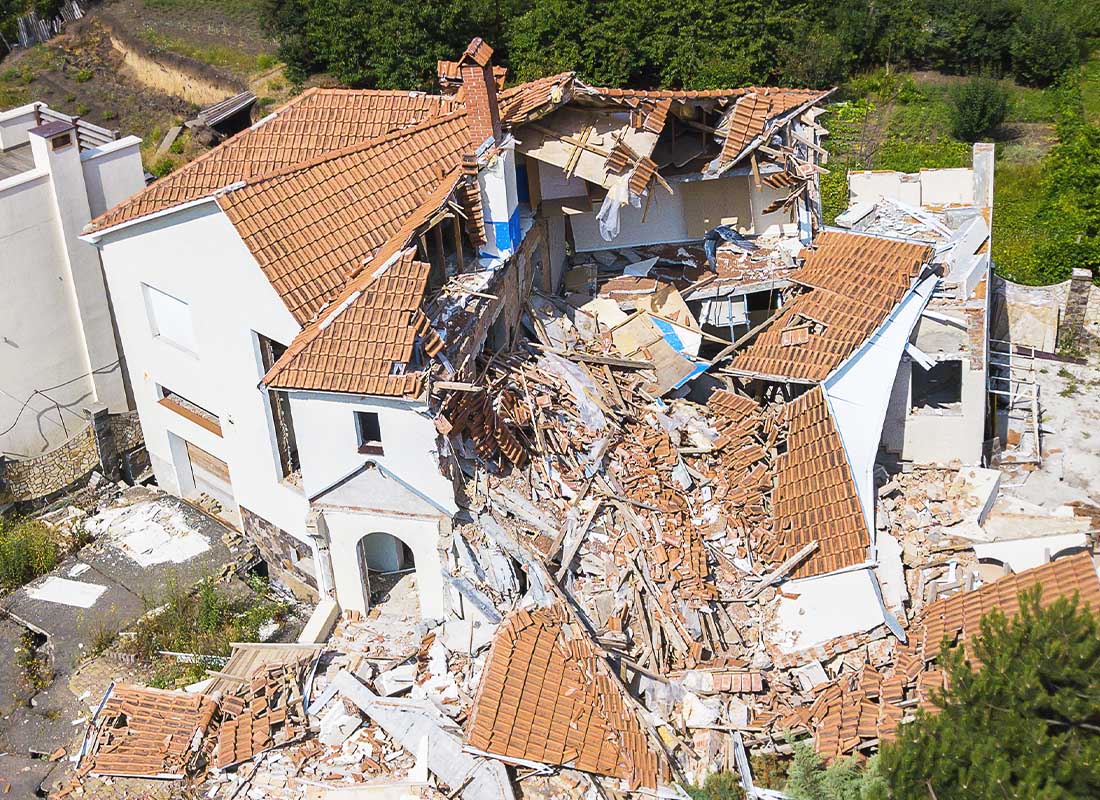
Earthquake insurance is a separate policy that pays to repair or rebuild your home, replace your belongings, and cover temporary housing costs after a seismic event, because nearly every standard homeowners policy excludes earthquake damage entirely. That exclusion exists because catastrophic earthquakes are relatively rare, which means when one does strike, the losses tend to be enormous. Insurers keep earthquake coverage off the base policy for exactly that reason. For homeowners in the Treasure Valley, this matters more than many people realize: the region sits near several mapped fault systems, and the same basalt-and-clay soil that defines much of the valley can amplify ground shaking during even a moderate event.
What this coverage includes
Dwelling coverage after a seismic event
The core of an earthquake policy covers physical damage to your home's structure: cracked foundations, collapsed walls, compromised roof lines, and the repair or full rebuilding costs that follow. Earthquake deductibles typically run higher than those on a standard homeowners policy, often calculated as a percentage of the dwelling's insured value rather than a flat dollar amount. That structure means you carry more of the first layer of loss yourself, so understanding your deductible before a claim matters.
Personal property inside the home
Furniture, appliances, electronics, and other belongings can take serious damage in a quake even when the structure itself holds. An earthquake policy typically extends coverage to your personal property, subject to its own sublimits. If you have high-value items like art, jewelry, or musical instruments, ask about scheduling them separately so they aren't underpaid under a general contents limit.
Additional living expenses while you're displaced
If a quake makes your home uninhabitable, you still have rent, hotel bills, and restaurant meals to cover while repairs happen. Loss-of-use coverage on an earthquake policy pays those additional living expenses up to a set limit, so a major repair project doesn't also upend your monthly budget. In the Treasure Valley, where the construction pipeline is busy and contractors book out weeks in advance, repair timelines can stretch longer than people expect.
What earthquake insurance typically doesn't cover
Most earthquake policies exclude flood and fire that follows a quake unless those perils are also covered elsewhere. Vehicles are generally not covered under a home earthquake policy; that protection sits under the comprehensive portion of your auto policy. Land and landscaping damage are typically excluded as well. Knowing these gaps upfront lets you build a complete picture of your coverage before you need it.
Pairs well with
Homeowners Insurance
Your homeowners policy is the foundation of your home protection strategy. Earthquake insurance works alongside it, covering the seismic perils your homeowners policy excludes.
Learn more ›Flood Insurance
Earthquakes can disrupt drainage and trigger localized flooding. A separate flood policy through the NFIP or a private carrier covers water damage that neither your homeowners nor earthquake policy addresses.
Learn more ›Personal Umbrella Insurance
If you're renting your home to others during a displacement event, or if a quake leads to liability claims from visitors, an umbrella policy extends your liability limits above your underlying homeowners coverage.
Learn more ›Auto Insurance (Comprehensive)
Earthquake damage to your vehicle is not covered under a home earthquake policy. Comprehensive auto coverage is where that protection lives, so it's worth confirming your auto policy includes it.
Learn more ›What this coverage protects against
Common risks and how this coverage addresses them. Tap any scenario to expand.
-
Foundation damage on a foothills lot above Eagle.
The risk
A moderate 5.5-magnitude quake centered near the Boise Front sends ground motion through the decomposed granite and clay soils on a hillside lot. The homeowner comes home to diagonal cracks running across the poured concrete foundation and a door frame that no longer closes.
How this coverage helps
The dwelling coverage on an earthquake policy pays to assess and repair the foundation. Because the deductible is percentage-based, the homeowner covers the first portion, but the policy picks up the substantial structural repair costs beyond that threshold.
-
Older chimney collapses onto the roof.
The risk
Ground shaking causes an unreinforced brick chimney on a 1970s-era home in Boise to topple, punching through the roof deck and damaging two rooms below. The homeowners policy won't pay because the cause of loss is earthquake, which it explicitly excludes.
How this coverage helps
The earthquake policy covers both the chimney demolition and the roof and ceiling repairs as part of the dwelling coverage. The homeowner files a single claim rather than trying to piece together multiple policies.
-
Months of hotel bills while the home is repaired.
The risk
Structural damage from a quake makes a Meridian home unsafe to occupy. With framing contractors booking four to six weeks out in a busy Treasure Valley construction market, the repair stretches well past what the family initially budgeted for hotel and meal costs.
How this coverage helps
The additional living expenses portion of the earthquake policy reimburses the family for their hotel stay, restaurant meals above their normal grocery budget, and other reasonable costs of displacement, up to the policy's loss-of-use limit.
-
Personal belongings destroyed when shelving collapses.
The risk
During a quake, a wall-mounted shelving unit in the main living area fails completely. A television, a gaming system, and several pieces of furniture are crushed or shattered. The homeowners policy excludes earthquake as the triggering cause.
How this coverage helps
The personal property coverage on the earthquake policy pays to replace the damaged items up to the applicable contents limit. If any individual items are high-value, a scheduled endorsement can ensure they aren't subject to a lower sublimit.
-
Garage slab cracks and vehicle is pinned.
The risk
Ground movement causes the garage floor slab to heave and a support column to shift, trapping the family's second vehicle inside and rendering the garage door inoperable. The home earthquake policy will address the structural damage to the garage, but the car itself is another matter.
How this coverage helps
The dwelling coverage on the earthquake policy covers repair of the garage structure. Damage to the vehicle is not covered there; it falls under the comprehensive portion of the auto policy instead. Reviewing both policies before a loss ensures no one is caught off guard by that distinction.
-
Post-quake fire from a ruptured gas line.
The risk
Ground shaking ruptures a gas line inside the walls of a Star home. Before the homeowner can locate the shutoff and before utility crews arrive, a fire starts in the wall cavity. The homeowners policy covers fire but the question is whether the insurer will dispute the origin.
How this coverage helps
Some earthquake policies include fire-following-earthquake coverage, and some homeowners carriers will honor fire claims regardless of the triggering cause. Bittick reviews both policies to make sure the handoff between them doesn't leave a disputed gap in the middle of a claim.