
Personal Insurance
Extra Liability Protection When Your Policy Limits Run Out
A personal umbrella policy picks up where your auto, home, or watercraft coverage stops, protecting your finances when a serious claim exceeds your standard limits.
Personal umbrella insurance is a standalone liability policy that pays the difference when a claim against you exceeds the liability limits on your underlying auto, home, or watercraft policy. It does not cover damage to your own property or your own losses. It covers what you owe to someone else. Think medical bills, legal judgments, or settlements that climb past whatever your primary policy can pay. For most Treasure Valley households, a serious at-fault accident on I-84 or a significant injury claim filed after a guest gets hurt at a property is all it takes to see standard liability limits fall short.
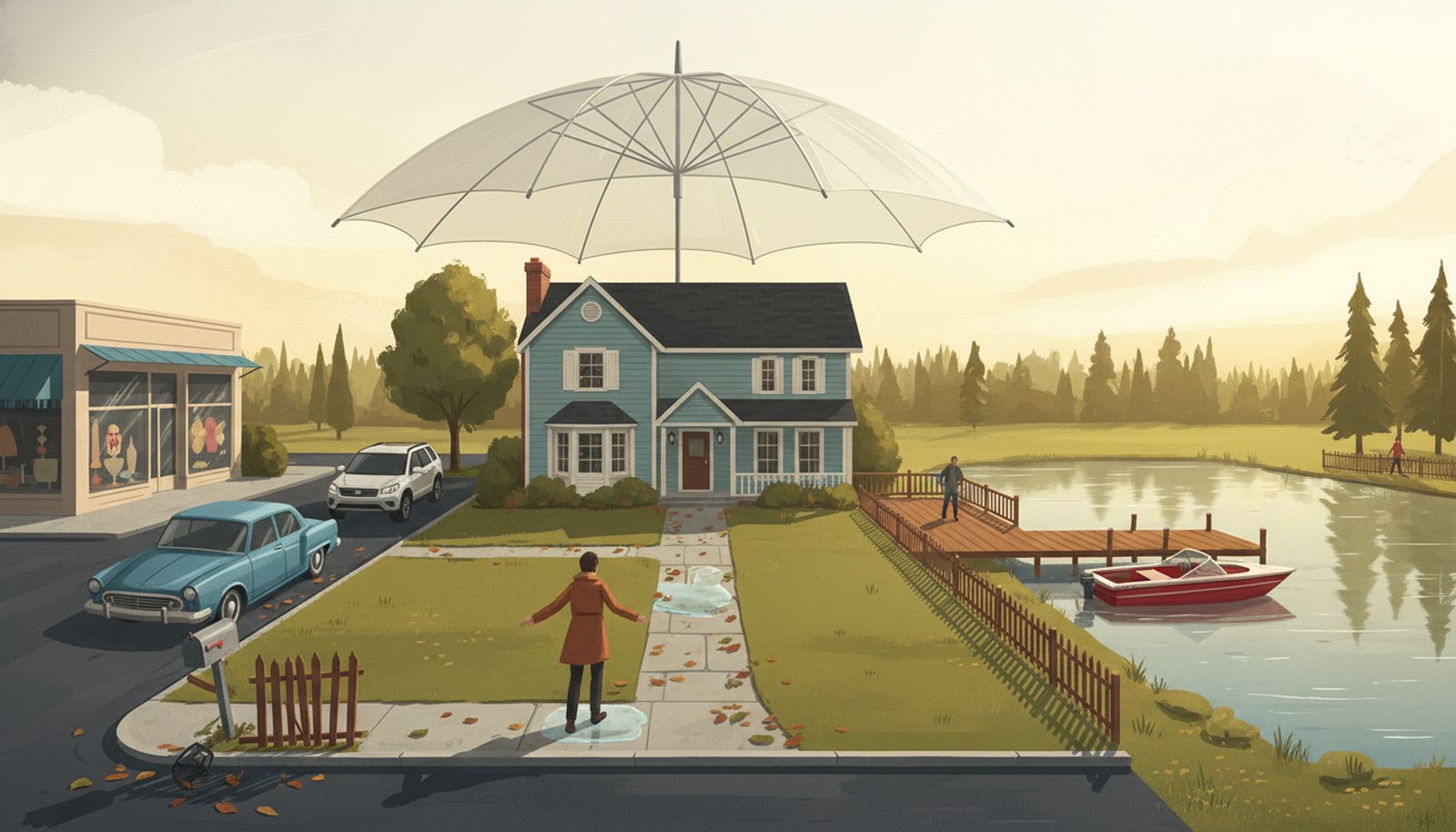
One accident can wipe out your savings. Umbrella insurance closes the gap.
When a lawsuit or major claim exceeds your auto, home, or boat policy limits, you're exposed. We help you add the extra layer of protection you need.
What this coverage includes
Excess liability above your primary policy limits
Your auto or home policy carries a liability limit, and once that limit is exhausted on a covered claim, your umbrella policy takes over. It pays the remaining covered costs up to its own limit, which typically starts at $1 million and can go higher. Without it, any amount above your primary limit comes out of your pocket, which can mean wages, savings, or assets are on the table.
Coverage tied to multiple underlying policies
One umbrella policy can sit on top of several underlying policies at once. Your auto liability, your homeowners liability, and your watercraft liability can all feed into a single umbrella. If a claim on any one of those policies exhausts its limit, the umbrella steps in. You do not need a separate excess policy for each coverage line.
Broader liability scenarios your primary policies may not address
Some umbrella policies pick up liability exposures that a standard auto or home policy excludes or severely sub-limits, such as libel, slander, or certain personal injury claims. Coverage varies by carrier, so Bittick reviews the actual policy form with you before placement, not just the limit on the declarations page.
Household member coverage
Many umbrella policies extend to resident family members, meaning a teenager who causes a serious accident in the family vehicle or a college student still listed on the household policy may also be covered under the umbrella. Confirm who qualifies as a covered person with your specific policy before assuming coverage applies.
Pairs well with
Auto Insurance
Your auto liability limit is the most common threshold an umbrella sits on top of. Coordinating the two policies ensures there is no gap between where auto stops and umbrella starts.
Learn more ›Homeowners Insurance
Home liability coverage protects you when someone is injured on your property, but those limits have a ceiling. An umbrella extends that protection for larger judgments.
Learn more ›Watercraft Insurance
Boat and personal watercraft policies on Idaho lakes and rivers often carry lower liability limits. An umbrella can cover the gap if a serious accident generates claims above those limits.
Learn more ›Renters Insurance
Renters policies include personal liability coverage, but limits are typically modest. If you rent and have assets to protect, an umbrella adds a meaningful second layer.
Learn more ›