
Personal Insurance
Insurance built for the home you get away to
Your vacation or seasonal property carries different risks than your primary home, and it deserves a policy that reflects that.
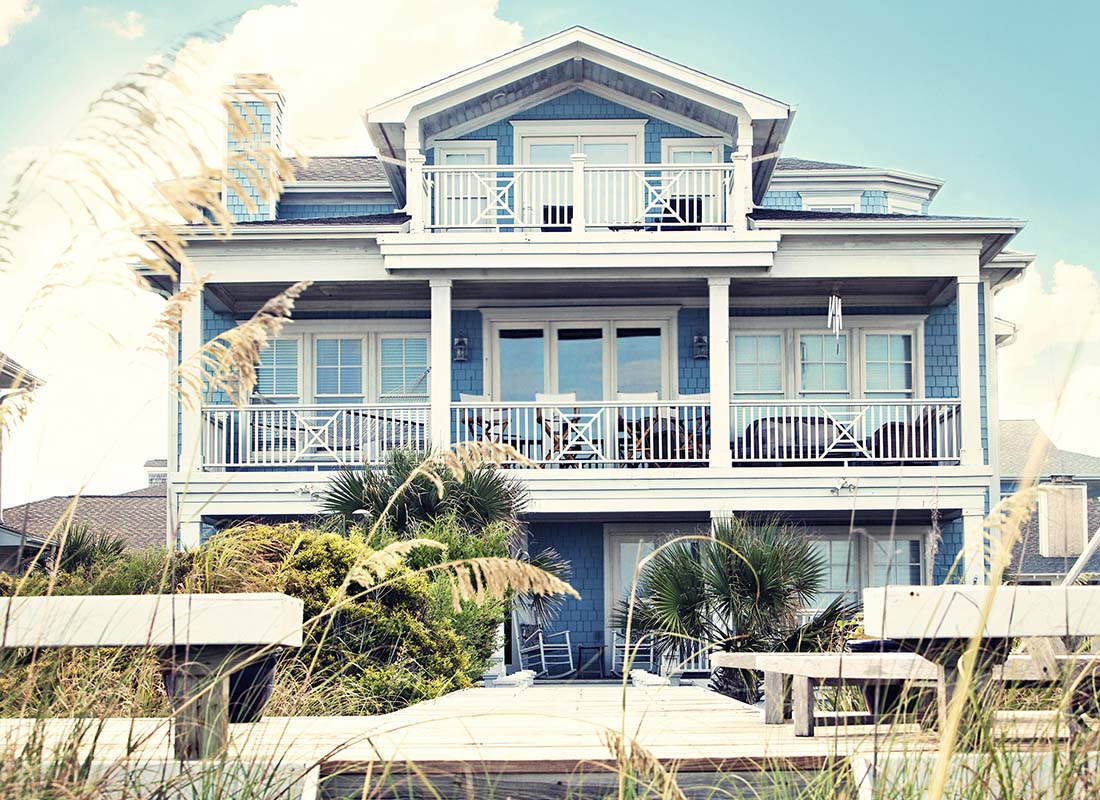
Secondary home insurance is a property and liability policy designed specifically for a home you don't occupy full-time, whether that's a lake cabin, a mountain retreat, a beach house, or a seasonal property you visit a few months a year. Standard homeowners insurance is built around the assumption that someone is regularly present; secondary home policies account for the longer stretches when no one is there. Vacancy changes your risk profile in ways that matter to insurers, and Bittick shops multiple carriers to find coverage that actually fits how and when you use the property. We're licensed across CA, CO, ID, NV, OR, TX, VA, and WA, so we can help whether your getaway is a high-desert cabin outside McCall or a Hill Country property near Boerne.
What this coverage includes
Dwelling and structure coverage
This is the foundation of any secondary home policy: coverage for the physical structure of the home against perils like fire, windstorm, hail, and vandalism. Because vacation properties often sit empty for weeks or months, insurers price this risk differently than a primary residence. The policy should reflect the home's replacement cost, not just its market value, so that a total loss doesn't leave you short of what it actually costs to rebuild. Detached structures like a garage, boathouse, or fence typically fall under this section as well.
Personal property at the vacation home
Coverage limits for personal property at a secondary home are usually lower than at a primary residence, which often makes sense because most people keep fewer valuables there. That said, if you've furnished the place well, keep recreational gear on-site (kayaks, bikes, ski equipment), or leave electronics between visits, it's worth inventorying what you'd actually lose and making sure the limit covers it. High-value items may need a scheduled endorsement to be fully protected.
Liability protection
Liability coverage pays for bodily injury or property damage claims made against you as the property owner. If a guest slips on your dock, falls on an icy step, or is injured using a trampoline or fire pit on the property, this coverage responds to the legal and medical costs that follow. Liability at a vacation property deserves careful attention, especially if the home has amenities like a pool or if you ever allow friends or extended family to use the place when you're not there.
Loss of use and additional living expenses
If a covered loss makes the property temporarily uninhabitable, loss-of-use coverage helps pay for alternative accommodations while repairs are underway. For a vacation home, this can also apply to lost rental income if you rent the property out. The exact treatment of rental activity varies by carrier and policy form, so it's important to be upfront about how you use the property when you apply.
Vacancy-related endorsements
Standard policies often contain vacancy clauses that reduce or eliminate coverage after a home sits unoccupied beyond a set number of days, often 30 to 60. Secondary home policies are structured to account for extended vacancy, but the specific terms still vary. Endorsements for vandalism during vacancy, water damage from undetected pipe failures, or theft of fixtures are worth asking about if the property goes months without a visit.
Pairs well with
Primary Homeowners Insurance
Your primary home policy and your secondary home policy work as a set. Keeping them with the same carrier, or at least reviewed together, helps avoid coverage gaps and can sometimes unlock a multi-policy discount.
Learn more ›Umbrella Insurance
An umbrella policy extends liability limits above what your secondary home policy provides, which matters if a serious injury occurs on the property and the claim exceeds your base coverage.
Learn more ›Flood Insurance
Standard property policies exclude flood damage. If your vacation home sits near a river, lake, or in a low-lying area, a separate flood policy through the NFIP or a private carrier fills that gap.
Learn more ›Short-Term Rental Coverage
If you rent the property through Airbnb, VRBO, or similar platforms, you may need a separate endorsement or standalone policy. Standard secondary home policies often exclude commercial rental activity entirely.
Valuable Items Coverage
Scheduled personal property coverage protects high-value items like artwork, jewelry, or specialty equipment that would exceed the personal property limits of a standard secondary home policy.
What this coverage protects against
Common risks and how this coverage addresses them. Tap any scenario to expand.
-
Burst pipe discovered three weeks after the last visit.
The risk
A freeze-thaw cycle in February pushes a copper supply line past its limit inside a McCall cabin. Nobody is there when it goes. By the time the owner drives up, the subfloor and lower cabinets have been soaked for weeks, and mold has already started.
How this coverage helps
A secondary home policy written to account for extended vacancy covers the water damage to the structure and the remediation cost. Without the right policy form, a standard vacancy clause could have voided the claim entirely.
-
Wildfire smoke damages a property during a summer absence.
The risk
During a prolonged smoke event in central Idaho, a vacation home left closed for two months accumulates smoke infiltration through the HVAC system, discoloring walls and leaving persistent odor in insulation and soft furnishings.
How this coverage helps
Smoke damage from a wildfire event is a covered peril under most secondary home policies. The claim covers cleaning, remediation, and replacement of affected materials up to the policy's dwelling and personal property limits.
-
Guest injured at an unattended property.
The risk
The owners allow friends to use their Cascade-area cabin for a long weekend. One guest slips on a wet deck at night and breaks a wrist. A medical bill and a liability claim follow, naming the property owners.
How this coverage helps
The liability section of the secondary home policy responds to the claim, covering medical expenses and legal defense costs. The owners aren't out of pocket beyond their deductible, and the situation doesn't escalate into a personal financial crisis.
-
Theft during an extended off-season closure.
The risk
A vacation home sits unoccupied from October through April. At some point during that stretch, someone breaks a rear window, enters, and takes the television, a laptop left behind, and several power tools stored in the garage.
How this coverage helps
A secondary home policy with a vacancy endorsement keeps theft coverage intact through the off-season. The claim covers the stolen items up to the personal property limit, and the broken window falls under the dwelling coverage.
-
Hail damages the roof between seasonal visits.
The risk
A June hailstorm hits a property on the north side of Bogus Basin Road while the owners are at their primary Boise home. The damage goes unnoticed until fall, when water staining on the ceiling interior finally signals that the roof took a hit months earlier.
How this coverage helps
Wind and hail damage is a named peril under standard property policies. The key is having a policy that doesn't penalize the delayed discovery. A Bittick agent can help identify policy forms that handle time-of-discovery language reasonably for infrequently visited homes.
-
Vacation property rented out casually generates a liability claim.
The risk
The owners list their property on a short-term rental platform for a few weekends a year. A renter is burned by a faulty outdoor grill and files a claim against the owners. Their standard secondary home policy excludes incidents during rental periods.
How this coverage helps
Short-term rental activity typically requires either a specific endorsement or a separate dwelling-fire policy with a rental liability component. Disclosing rental use upfront lets Bittick place coverage that doesn't leave a gap exactly when the property is in heaviest use.
-
Loss of rental income after a covered fire.
The risk
A grease fire in the kitchen of a vacation property causes enough damage to make it uninhabitable for four months during peak rental season. The owners lose the rental bookings they'd already collected deposits on.
How this coverage helps
A secondary home policy with a loss-of-rents provision covers the income lost while the property is being repaired. This requires the rental activity to be disclosed and covered under the policy, which is why the placement conversation matters before a loss, not after.