
Personal Insurance
Fill the Gaps Your Home Insurance Leaves Behind
Difference in conditions insurance covers the perils standard home policies exclude, so high-risk homeowners aren't left exposed.
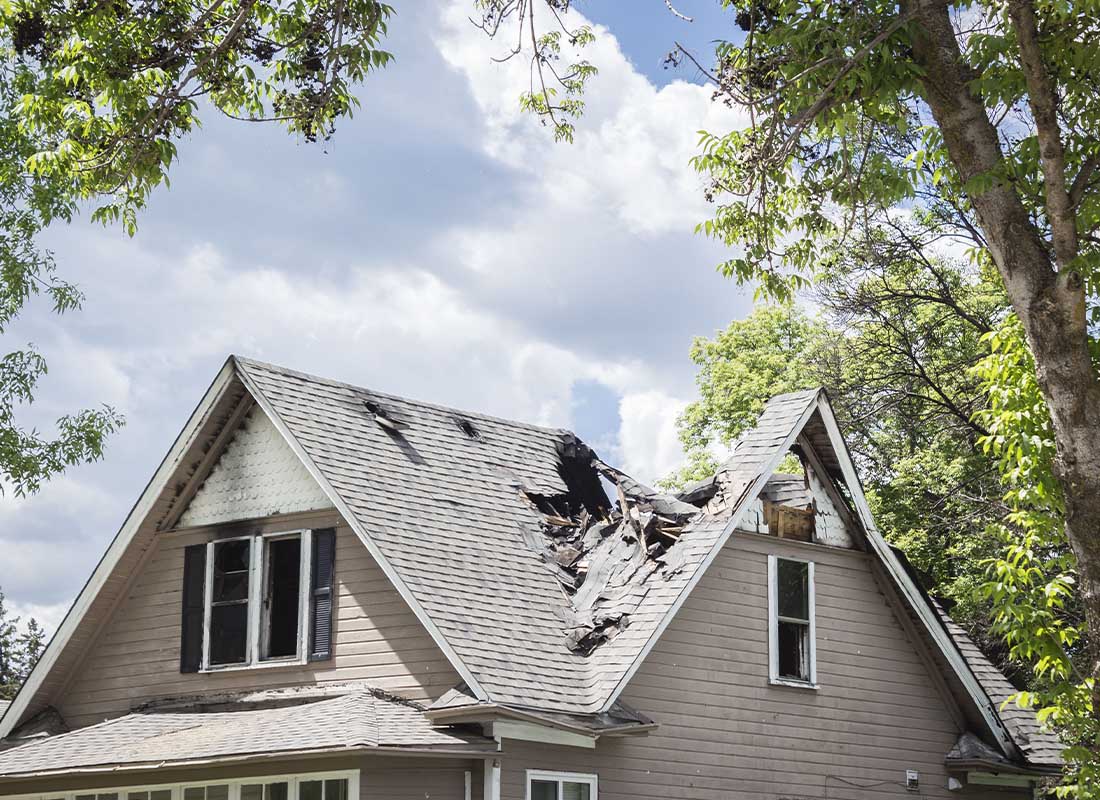
Difference in conditions (DIC) insurance is a specialized policy that covers perils your standard homeowners policy explicitly excludes, such as floods, earthquakes, mudslides, and certain water damage events. It works alongside your existing home insurance rather than replacing it. Depending on what your current policy already covers, a DIC policy can act as your primary coverage for a completely uncovered peril, or step in as excess coverage once you've exhausted a lower limit. For homeowners in areas where those excluded perils are a real, recurring threat, it closes a gap that could otherwise mean a total loss with no insurance recovery.
What this coverage includes
Named perils your home policy excludes
Standard homeowners policies routinely carve out entire categories of loss. Earthquake damage, flood inundation, landslide and mudslide movement, and certain water intrusion events are the most common exclusions. A DIC policy names those perils directly and insures them. You know exactly what you're buying coverage for, and you know exactly what triggers a claim. There's no ambiguity about whether the peril was a covered cause of loss.
Primary or excess coverage, depending on your situation
A DIC policy is flexible in how it layers with your other coverage. If a peril isn't covered anywhere else in your insurance program, the DIC policy becomes your primary protection for that exposure. If another policy already covers the peril but at a limit that might not be enough, the DIC policy sits above it as excess coverage, activating once the underlying limit is exhausted. Either way, you end up with a more complete picture of protection than a standard homeowners policy alone can provide.
Gap-filling for FAIR Plan and similar state programs
California homeowners in high-brush-fire zones often end up in the California FAIR Plan after private carriers decline to write their homes. The FAIR Plan covers fire and a handful of other perils, but it doesn't cover water damage from plumbing, theft, or personal liability. A DIC policy is specifically designed to wrap around the FAIR Plan and fill those missing lines. The result is a coverage stack that functions roughly like a standard homeowners policy, even though you couldn't get one from a traditional carrier. Bittick is licensed in California and can help homeowners piece that stack together.
Coverage for homes that standard carriers won't write
Some homes become effectively uninsurable in the admitted market after a series of large claims, or simply because of where they sit geographically. A DIC policy can provide meaningful protection for those properties, covering the high-frequency or high-severity perils that made the home a difficult risk in the first place. It's not a replacement for getting back into the admitted market when that becomes possible, but it keeps coverage in place in the meantime.
Pairs well with
Homeowners Insurance
A DIC policy is designed to work alongside a standard homeowners policy, not instead of it. You need the base policy in place first so the DIC coverage can fill the gaps it leaves.
Learn more ›Flood Insurance
In some situations, a standalone flood policy through the NFIP or a private flood carrier makes more sense than flood coverage through a DIC policy. Bittick can compare both options for your specific address and flood zone.
Learn more ›Earthquake Insurance
Standalone earthquake policies sometimes offer broader structural coverage or more favorable deductible structures than an earthquake peril added through a DIC policy. Worth comparing side by side.
Umbrella Insurance
An umbrella policy increases your liability limits across your home and auto policies, but it doesn't fill property coverage gaps. DIC and umbrella address different exposures and often belong together in a complete personal insurance program.
Learn more ›What this coverage protects against
Common risks and how this coverage addresses them. Tap any scenario to expand.
-
A spring flood hits a home near the Boise River floodplain.
The risk
A homeowner in the North End has a standard homeowners policy. After a high-water event pushes the Boise River out of its banks, the lower level of the home takes on several inches of water. The homeowners policy excludes flood damage entirely.
How this coverage helps
A DIC policy naming flood as a covered peril steps in as primary coverage for the loss. The homeowner files a claim under the DIC policy and recovers the cost to dry out, remediate, and repair the damaged space.
-
An earthquake cracks the foundation of a foothills home.
The risk
A home built on the rocky, decomposed-granite terrain above Eagle sits on a slab foundation. A moderate earthquake opens a diagonal crack through the foundation wall and shifts a load-bearing corner. Standard homeowners policies exclude earthquake damage.
How this coverage helps
The DIC policy covers earthquake as a named peril. The homeowner files a claim for foundation repair and any resulting structural damage, rather than absorbing tens of thousands of dollars out of pocket.
-
A California hillside home is in the FAIR Plan but needs more coverage.
The risk
A homeowner in a Southern California brush-fire zone can only get coverage through the California FAIR Plan. The FAIR Plan covers fire but doesn't cover theft, water damage from a burst pipe, or liability if a visitor gets hurt on the property.
How this coverage helps
A DIC policy wraps around the FAIR Plan to cover the gaps. Together, the two policies provide a coverage stack that resembles what a standard homeowners policy would have offered before the carrier non-renewed the home.
-
A home with multiple prior claims can't find standard coverage.
The risk
After a fire claim and a water damage claim in the same five-year period, a homeowner's carrier non-renews the policy. Other admitted carriers decline to quote because of the claims history, leaving the homeowner without a home insurance option in the standard market.
How this coverage helps
A DIC policy, often placed through surplus lines markets, can insure the home's key excluded perils while the homeowner works toward rebuilding an insurability history. Bittick's access to multiple carriers, including surplus lines markets, opens options that a single-carrier agency might not be able to offer.
-
A mudslide damages a home on a sloped lot in the Treasure Valley foothills.
The risk
Heavy late-winter rain saturates a hillside lot on the north-facing side of the Boise foothills. The basalt-and-clay soil can't absorb the volume fast enough, and a slow mudslide pushes against the home's retaining wall and garage. Homeowners policies typically exclude earth movement.
How this coverage helps
A DIC policy that names landslide and mudslide covers the structural damage and debris removal. Without it, the homeowner would be paying for repairs while still carrying a mortgage on a damaged property.
-
An ice dam backs water under the roof deck during a freeze-thaw cycle.
The risk
Treasure Valley winters bring stretches of freeze and thaw that are hard on rooflines. Ice dams form at the eaves, meltwater backs up under the shingles, and water gets into the attic and ceiling. Some standard policies cover this; others exclude it as a maintenance issue or apply sublimits that don't come close to covering the actual repair.
How this coverage helps
A homeowner who has identified this gap in their standard policy can add ice-and-snow coverage through a DIC policy. When the claim happens, there's a policy in place designed to respond to it, rather than a coverage dispute about whether the damage was sudden or gradual.
-
A homeowner's flood limit runs out before the loss is fully paid.
The risk
A homeowner near Nampa has an NFIP flood policy with a $250,000 building limit. A significant flood event causes $310,000 in structural damage. The NFIP policy pays to its limit and stops. The remaining $60,000 has nowhere to go.
How this coverage helps
A DIC policy structured as excess flood coverage kicks in once the underlying NFIP limit is exhausted. The homeowner recovers the full loss rather than absorbing the overage personally.