
Insurance by Industry
Protect your rental property and the income it generates
Landlord insurance covers the gaps that a standard homeowners policy leaves wide open the moment you hand over a key.

Landlord and rental property insurance is a category of commercial and specialty coverage designed to protect building owners who rent to tenants, covering the structure, lost rental income, and liability in ways a personal homeowners policy does not.
A single-family rental in Kuna, a duplex near the Boise River Greenbelt, a small apartment building off Eagle Road, and a condo unit in a Meridian high-rise all carry different exposures, and no single off-the-shelf package fits all of them. Bittick is an independent agency, so we shop across multiple carriers to assemble the combination that fits your specific property, not the one that was easiest to quote.
Rental properties face unique risks that standard homeowner policies don't cover.
Whether you're renting out a single home, condo, or apartment building, we'll help you find the right protection.
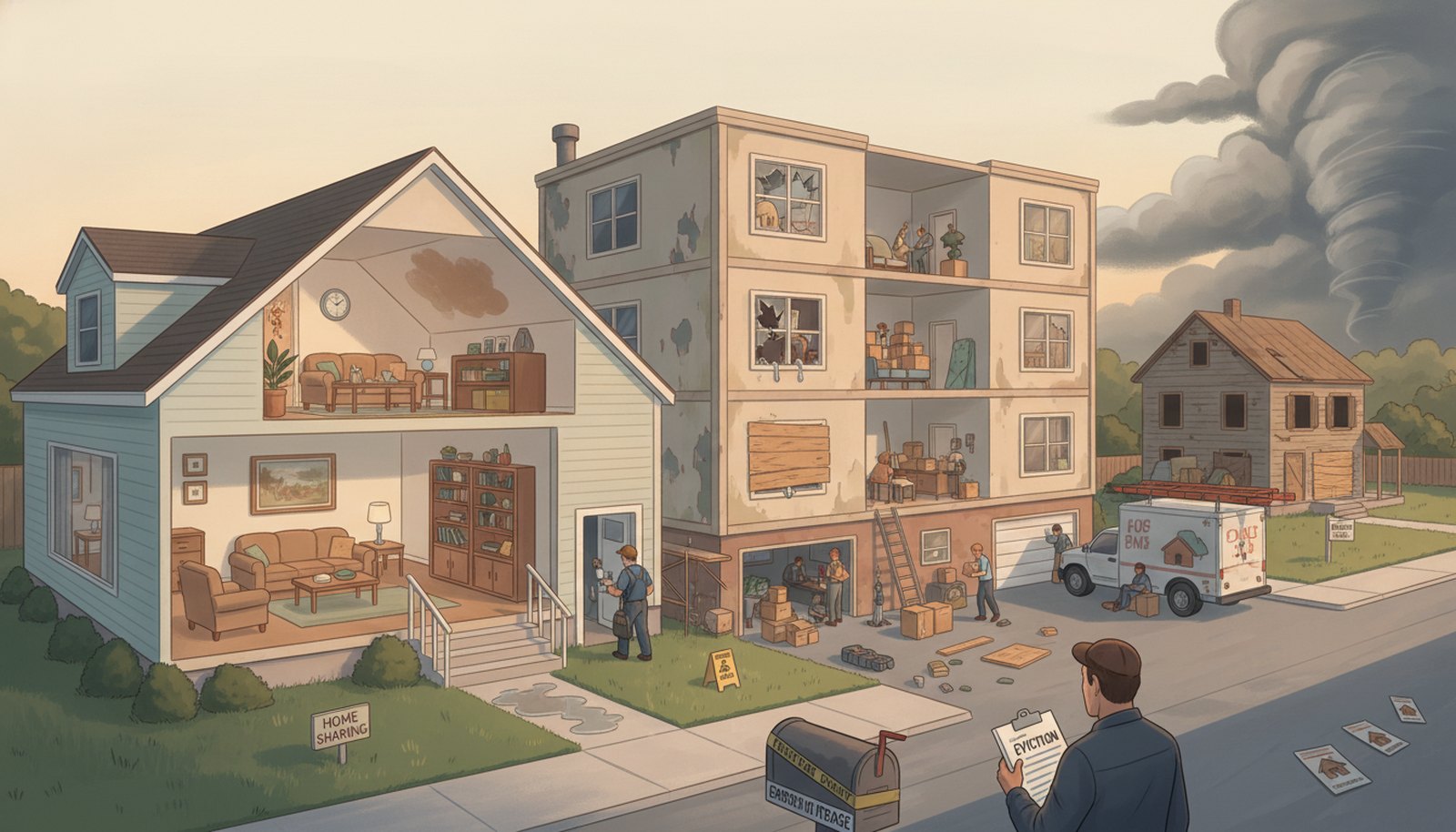
What this coverage includes
Building and structure coverage
This is the foundation of any landlord policy. It pays to repair or rebuild the physical structure after a covered loss such as fire, lightning, windstorm, or hail. For single-family rentals and duplexes, that includes the dwelling itself plus attached and detached structures like garages, sheds, and fences. For apartment or condo buildings, limits need to scale with the full replacement value of the building, all common areas, and any additional structures like parking garages or maintenance buildings on the same lot.
Idaho's freeze-thaw cycles, wildfire smoke seasons, and hailstorms that roll through the Treasure Valley every spring are real contributors to property claims here. Coverage should reflect those regional perils, not a national average.
Lost rental income (loss of use)
When a covered loss makes your rental unit uninhabitable, the rent stops coming in but the mortgage does not stop going out. Lost rental income coverage, sometimes called loss of use or fair rental value coverage, reimburses you for the rent you cannot collect while repairs are underway. Policies set a time limit on this reimbursement, so it matters that the limit is long enough to cover a realistic repair timeline. A fire that requires an 8-month rebuild needs a policy that actually runs 8 months, not 60 days.
Landlord liability
If a tenant or visitor is injured on your property and files a lawsuit, landlord liability coverage pays for your legal defense and, if you lose, up to the policy limit in damages. This coverage can also extend to certain tenant-related legal claims, including wrongful eviction, depending on how the policy is written. Without it, a single slip-and-fall on an icy Boise sidewalk you forgot to salt could cost more than a year of rental income in legal fees alone.
Personal property and equipment breakdown
If you furnish a rental unit, supply a lawnmower or snowblower for tenant use, or leave any equipment on the property, that property is yours to insure. Personal property coverage picks up the cost when those items are damaged by a covered peril. Separately, equipment breakdown coverage addresses mechanical failures in systems like HVAC units, boilers, and water heaters, because standard rental property policies typically exclude equipment breakdown as a cause of loss. A failed boiler in a multi-unit building in January is not a minor inconvenience.
Specialized add-ons: vacancy, ordinance, EPLI, and home-sharing
Several important exposures fall outside a standard landlord policy and require separate coverage or endorsements. Vacant property coverage protects a building between tenants or during renovations, when most standard policies reduce or eliminate coverage after 30 to 60 consecutive days vacant. Ordinance or law coverage pays the added cost of bringing a damaged structure up to current building codes during repair, which matters in any Treasure Valley city that has updated its code since your building was constructed. Employment practices liability insurance (EPLI) protects you if you employ property managers, maintenance workers, or landscapers and face a claim of wrongful termination or discrimination. Home-sharing coverage fills the gap for owners who rent a room or accessory dwelling unit in their primary residence through a short-term rental platform, where both the homeowners policy and the platform's own coverage are typically inadequate.
Pairs well with
General Liability Insurance
Standalone general liability broadens your protection beyond what a landlord liability endorsement provides, particularly useful if you operate your rental properties as a formal business entity.
Learn more ›Umbrella Insurance
A commercial umbrella policy sits above your landlord liability and general liability limits, providing an additional layer of coverage when a single lawsuit or catastrophic event exhausts your primary policy.
Learn more ›Flood Insurance
Standard rental property policies do not cover flood damage. Properties near the Boise River, Snake River, or in any FEMA-designated flood zone need a separate flood policy, typically through the National Flood Insurance Program or a private carrier.
Commercial Auto Insurance
If you or your employees drive to inspect or maintain properties using a vehicle owned by your rental business, a personal auto policy likely will not cover that use.
Learn more ›Workers Compensation Insurance
Idaho requires workers compensation coverage as soon as you employ anyone, including part-time maintenance workers. A property manager or handyman on your payroll triggers this obligation.
Learn more ›Cyber Liability Insurance
If you collect rent online, store tenant applications electronically, or use property management software that holds sensitive data, a data breach could expose you to significant costs that a landlord policy does not address.
Frequently asked questions
Does my homeowners policy cover my rental property?
How much does landlord insurance cost in Idaho?
Do I need flood insurance for my Treasure Valley rental property?
If your property is near the Boise River, the Snake River, or any mapped floodplain, you should take flood insurance seriously. Standard rental property policies do not cover flood damage, and FEMA flood maps in the Treasure Valley have been updated in recent years as the region has developed. We can look up your property's flood zone designation and walk you through coverage options through the National Flood Insurance Program or private flood carriers.