
Personal Insurance
Insurance Built for the Car You Actually Care About
Classic car coverage works differently than a standard auto policy, and for good reason: your vehicle is not a standard car.
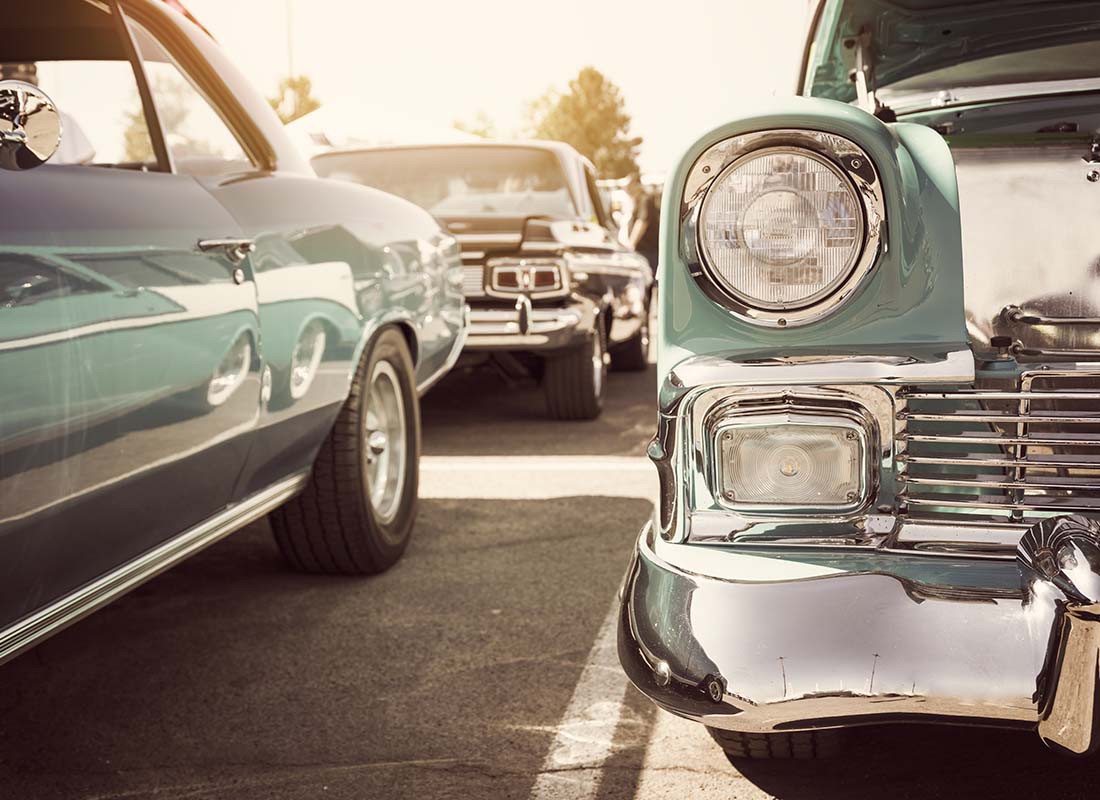
Classic car insurance is a specialty policy designed for vehicles valued as collectibles, covering them at an agreed dollar amount rather than a depreciating market value, and often extending to authentic replacement parts and limited-use driving scenarios.
A standard auto policy treats your '69 Chevelle the same way it treats a rental car: as a depreciating asset. Classic car coverage starts from a different premise. You and the carrier agree on the car's value upfront, so if the unthinkable happens, the payout reflects what the vehicle is actually worth to you, not what Kelley Blue Book says a beat-up daily driver might fetch. Bittick shops this coverage across multiple specialty carriers to find terms that fit your specific vehicle, how you drive it, and where you store it.
What this coverage includes
Agreed-value payouts
The most important distinction between classic car insurance and standard auto coverage is how a total loss gets paid. With a regular policy, the carrier pays actual cash value at the time of the claim, which accounts for depreciation. Classic car policies lock in an agreed value at the start of the policy. If your car is destroyed or declared a total loss, you receive that agreed amount, not a number the adjuster calculates after the fact. This matters especially for restored vehicles whose value has increased over time, not decreased.
Authentic and original-equipment parts
Restoring a classic with generic aftermarket components defeats the purpose. Many classic car policies include a provision that covers the cost of original-equipment or period-correct parts after a covered loss, rather than defaulting to whatever generic replacement is cheapest. That means if your insurer pays for collision repairs, the policy can require that authentic or manufacturer-specific components be used, even when those parts cost more than what a standard policy would cover.
Liability and physical damage while driving
Classic car coverage still includes the liability protection you legally need in Idaho: coverage if you cause injury or property damage to someone else while driving. Physical damage coverage, both collision and comprehensive, applies to the vehicle itself while it is on the road, at a show, or in transit. Some policies extend coverage during car shows and exhibitions, which matters if you regularly drive to events in the Treasure Valley or haul the car on an open trailer to a regional concours.
Storage and garaged-vehicle protection
Many classic cars spend most of their lives in a garage, not on the road. Comprehensive coverage on a classic car policy protects the vehicle while it is stored, covering losses from fire, theft, vandalism, falling objects, and weather events. Given Idaho's freeze-thaw cycles and the wildfire smoke seasons that have become more common along the Boise foothills, having coverage during the months the car is off the road is not an afterthought.
Limited-use and mileage-based terms
Classic car policies are written for vehicles that are not daily drivers. Most carriers set an annual mileage limit, typically in the range of 2,500 to 5,000 miles per year, though this varies. Some policies restrict coverage to specific uses such as exhibitions, parades, and club events, while others allow more general pleasure driving. The premium you pay reflects the lower exposure of a car that is rarely on the road, so it is important to be accurate about how and how often you drive the vehicle when you apply.
Pairs well with
Personal Auto Insurance
If you drive other vehicles day-to-day, a separate personal auto policy covers your daily drivers while your classic car policy handles the collectible. The two policies work in parallel, not in competition.
Learn more ›Homeowners or Renters Insurance
Your home policy covers contents inside the house, but a vehicle stored in a detached garage may have limited protection under a homeowners policy. Confirming how your classic car policy coordinates with your home coverage closes that gap.
Learn more ›Umbrella Insurance
A personal umbrella policy adds a layer of liability protection above the limits on your classic car and auto policies. If an accident involving your collector vehicle results in a serious injury claim, umbrella coverage picks up where the underlying policy's limits end.
Learn more ›Recreational Vehicle Insurance
If you also own motorcycles, ATVs, or a trailer you use to transport the classic, a recreational vehicle policy covers those assets under terms designed for occasional, recreational use.
Learn more ›What this coverage protects against
Common risks and how this coverage addresses them. Tap any scenario to expand.
-
A fender-bender at a Boise car show leaves your restored bumper dented.
The risk
Your 1957 Ford Fairlane is on display at a summer show in Boise when another vehicle clips the rear bumper while maneuvering in the lot. The original chrome bumper is damaged, and a correct replacement costs significantly more than a standard auto policy's repair limit would cover.
How this coverage helps
The authentic parts provision in your classic car policy covers the cost of sourcing a period-correct bumper rather than a generic substitute. Your agreed-value coverage means the repair is handled without an argument about what the car is worth.
-
Your collector car is stolen from a storage unit while you are wintering it.
The risk
You park your muscle car in a climate-controlled storage facility in Meridian for the winter. In December, the unit is broken into and the car is gone. Because the vehicle was not listed on your standard auto policy as an active vehicle, you are uncertain whether any coverage applies.
How this coverage helps
A classic car policy covers the vehicle year-round, including during off-season storage. The agreed value you set when the policy started is what the carrier pays, not a depreciated market estimate from a standard claims formula.
-
Wildfire smoke and ash settle on your convertible stored in an open-sided barn.
The risk
During a heavy smoke week in late summer, fine ash infiltrates the open-sided barn where you store your vintage roadster. The painted surfaces, interior fabric, and chrome are all affected, requiring professional detailing and some panel refinishing.
How this coverage helps
Comprehensive coverage on a classic car policy covers smoke and ash damage as an environmental loss. Because the policy already recognizes the car's agreed value, the repair estimate is evaluated in context of what the vehicle is actually worth, not what a standard adjuster might assign.
-
An open trailer carrying your classic tips on a mountain highway.
The risk
You are hauling your 1970 Plymouth Barracuda on an open trailer up Highway 55 toward McCall for a hill country show when the trailer fishtails on a curve and the car sustains significant body damage. The question is whether the damage happened on the road or in transit.
How this coverage helps
Many classic car policies extend physical damage coverage to the vehicle while it is in transit on a trailer, treating it the same as if it were on the road. Confirming that transit coverage is included in your policy before the first haul is a conversation worth having with your Bittick agent.
-
A standard auto policy pays out far less than your car is worth after a garage fire.
The risk
A neighbor's garage fire spreads to your detached garage, and your fully restored 1965 Mustang is a total loss. At the time of the claim, you discover your standard auto policy pays actual cash value, which the adjuster calculates as a fraction of what you invested in the restoration.
How this coverage helps
A classic car policy with an agreed-value provision would have locked in a number that reflects the car's restored condition, not its depreciated blue-book value. The difference between agreed value and actual cash value on a fully restored vehicle can be tens of thousands of dollars.
-
You cause a minor collision while driving the classic to a Saturday car club meeting.
The risk
You rear-end another driver at a stoplight on your way to a club meetup in Eagle. The other driver's car sustains bumper damage. Your classic car is insured only for show use, and you realize you may have been driving outside the policy's permitted-use terms.
How this coverage helps
Choosing a classic car policy that permits pleasure driving and club-event use, rather than exhibition-only terms, keeps your liability coverage active any time you drive the vehicle for recreational purposes. Bittick helps you match the policy's use definition to how you actually plan to drive the car.
-
Hail strikes your car at an outdoor show before you can move it under cover.
The risk
A fast-moving afternoon storm rolls through the Treasure Valley during an outdoor car show in Nampa. Your convertible takes dozens of hail hits on the hood and trunk before you can get the car under the event tent. The dents are widespread and will require paintless dent repair on original body panels.
How this coverage helps
Comprehensive coverage under your classic car policy covers hail damage, and the repair estimate is evaluated against your vehicle's agreed value. Original-panel repair techniques that cost more than standard bodywork are part of what the policy is designed to cover, so you are not left negotiating for proper repairs.