Insurance by Industry
Insurance built for the risks security professionals actually face
Security guard work carries liability exposures most standard business policies weren't designed to handle.
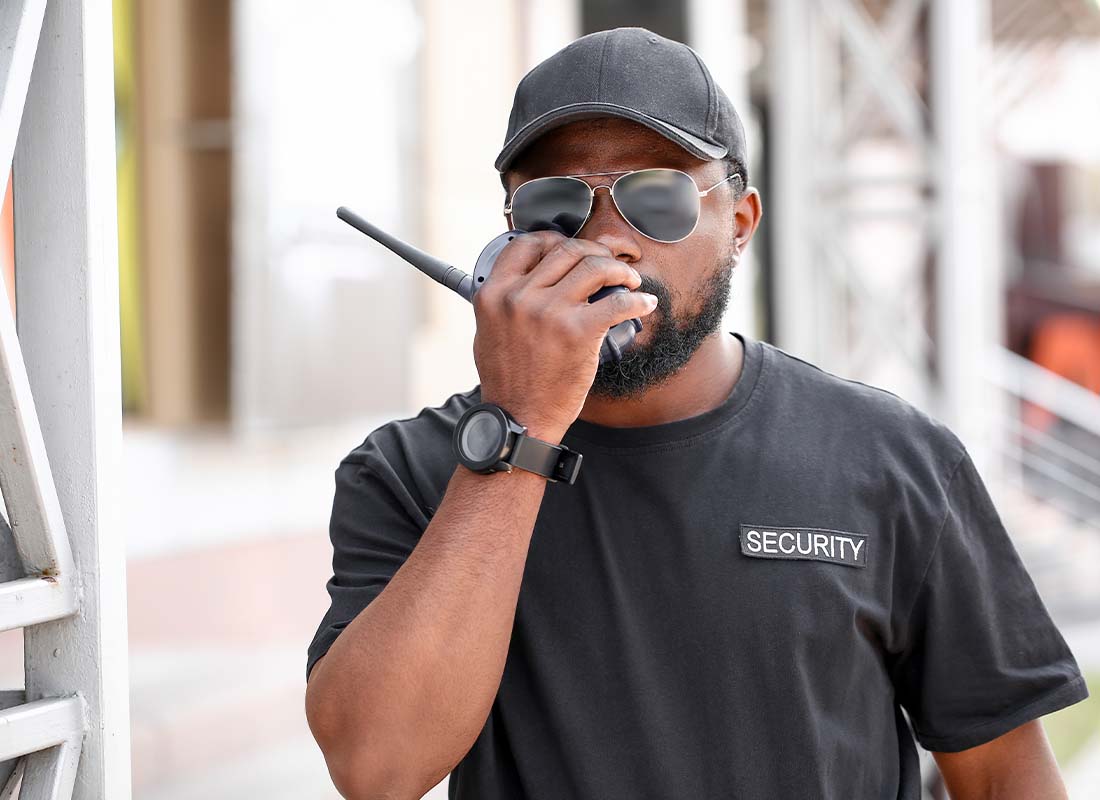
Security guard insurance is a bundle of commercial coverages designed to protect individual guards and security firms from the specific legal and financial risks that come with controlling access, detaining people, and responding to threats. A standard general liability policy is rarely enough on its own. Security work creates exposures around use of force, failure to prevent harm, and false arrest that require purpose-built coverage to address. Bittick shops those coverages across multiple carriers to find the right fit for your operation, whether you're an armed guard working Treasure Valley construction sites or a firm managing event security contracts across Idaho and Texas.
What this coverage includes
Professional liability (errors and omissions)
Professional liability coverage, sometimes called E&O, protects you when a client claims your services fell short. In security work, that usually means allegations of negligence in performing a patrol, inaccuracies in an incident report, or failing to prevent a loss the client hired you to prevent. If a lawsuit follows, this coverage pays for your legal defense and any covered damages. It is the coverage most specific to the security industry and the one Bittick prioritizes when reviewing a policy quote for a guard or a guard company.
General liability for third-party bodily injury and property damage
General liability covers bodily injury or property damage that a security guard causes to a third party during the course of work. The coverage also applies to assault and battery claims, though the scope of that protection varies significantly by policy and carrier. False arrest or wrongful detention allegations are another common trigger. Bittick reviews the assault-and-battery endorsement language closely on any security guard policy, because exclusions buried in that section can leave a guard exposed on the claims most likely to actually happen.
Commercial auto for vehicles used on the job
Personal auto policies exclude business use. If a patrol guard drives a company vehicle, or even a personal vehicle, to cover a route or respond to a call, a commercial auto policy fills that gap. It covers vehicle damage and liability if an accident happens during a covered work activity. This matters in a market like the Treasure Valley, where patrol contracts often cover geographically spread sites across Eagle, Star, and the outer growth corridors of Meridian and Caldwell.
Workers' compensation for on-the-job injuries
Security guards face a higher-than-average risk of physical injury on the job, from altercations to slip-and-fall incidents during a patrol. Workers' compensation covers medical costs and a portion of lost wages when a guard is hurt working. In Idaho, most employers with one or more employees are required to carry workers' comp. The same obligation applies in Texas with different state-specific rules. Bittick works through those requirements with you so you are compliant and covered before your next contract starts.
Business owners policy for the company behind the guards
If you operate a security guard company rather than work as a sole practitioner, a business owners policy (BOP) combines commercial property coverage with a general liability foundation. It protects your office, equipment, and business assets from fire, theft, or damage, and it gives you a baseline liability layer that the more specialized coverages build on. A BOP alone is not sufficient for security work, but it is a sensible starting point that most carriers require before they add the industry-specific endorsements.
Pairs well with
Cyber liability insurance
Security firms often hold sensitive client data, including access codes, patrol schedules, and facility maps. Cyber liability covers notification costs, legal fees, and recovery expenses if that data is compromised.
Learn more ›Commercial umbrella insurance
A single excessive-force lawsuit can exhaust the limits on an underlying liability policy. A commercial umbrella extends those limits so one large claim doesn't exceed your coverage and land on your balance sheet.
Learn more ›Commercial auto insurance
Patrol routes and client response calls happen in vehicles. Commercial auto covers the gap personal auto policies leave when a vehicle is being used for business purposes.
Learn more ›Workers' compensation insurance
Guards face a meaningful risk of physical injury on the job. Workers' comp covers medical care and partial wage replacement, and it is legally required for most Idaho and Texas employers.
Learn more ›Business owners policy (BOP)
A BOP bundles property and general liability coverage for the business itself, protecting your office, equipment, and company assets and giving other specialty coverages a foundation to build on.
Learn more ›What this coverage protects against
Common risks and how this coverage addresses them. Tap any scenario to expand.
-
Guard accused of using excessive force during a detainment.
The risk
A security guard at a Treasure Valley commercial property detains someone suspected of trespassing. The individual later files a lawsuit claiming the guard used unreasonable force. Legal defense alone can cost tens of thousands of dollars before any judgment is reached.
How this coverage helps
General liability coverage with an assault-and-battery endorsement pays for the legal defense and, if the case settles or results in a judgment, covers the damages up to the policy limit. Bittick reviews that endorsement language specifically when placing security industry accounts.
-
Client claims a missed patrol allowed a break-in to happen.
The risk
A retail client contracts a guard company to patrol their building overnight. A break-in occurs on a night when the guard completed fewer rounds than the contract specified. The client sues for the value of stolen inventory and damage to the building, arguing the patrol failure caused the loss.
How this coverage helps
Professional liability coverage responds to claims that a guard failed to perform contracted services correctly. It covers legal defense costs and damages attributed to the error or omission in service delivery.
-
Patrol vehicle rear-ends another car while responding to a site alarm.
The risk
A guard driving a company SUV to respond to a triggered alarm at a Meridian business park strikes another vehicle at an intersection. The other driver sustains injuries and the other car is totaled. The guard's personal auto policy excludes business use.
How this coverage helps
Commercial auto insurance covers both the liability owed to the other driver and the physical damage to the company vehicle. Without it, the guard company and driver absorb costs that can quickly exceed six figures.
-
Guard is injured breaking up a fight at a large outdoor event.
The risk
An event security guard at an outdoor venue in the Boise area intervenes in an altercation between attendees and is struck, sustaining a broken wrist and a concussion. The recovery requires surgery and several weeks away from work.
How this coverage helps
Workers' compensation covers the guard's medical bills and replaces a portion of wages during recovery. Idaho law requires most employers to carry this coverage, and having it in place before an incident keeps the employer compliant and the injured employee from bearing the cost alone.
-
Security firm's client database is accessed after a phishing attack.
The risk
A contract security company stores client information digitally, including facility access codes and patrol schedules. An employee clicks a malicious link and an attacker gains access to the firm's system. Clients must be notified and access credentials changed across multiple facilities.
How this coverage helps
Cyber liability insurance covers the cost of breach notification, credit monitoring for affected parties, forensic investigation, and legal fees. For a security firm, where client trust is the core product, recovering from a data breach without this coverage is a serious financial and reputational risk.
-
Bodyguard accused of wrongfully detaining a bystander.
The risk
A personal bodyguard working a private event in the San Antonio metro briefly restrains someone believed to be approaching their client aggressively. The individual was not a threat and files a false arrest claim against the bodyguard and the security firm.
How this coverage helps
General liability coverage addresses false arrest and wrongful detention claims. The policy covers the legal defense and any damages awarded, so a judgment on a single incident doesn't threaten the financial stability of the whole operation.
-
Office equipment stolen from a security company's headquarters.
The risk
A small security guard company operating out of a leased office in Eagle has computers, surveillance monitoring equipment, and dispatch gear stolen over a weekend. Replacing the equipment and getting operations back online costs thousands of dollars.
How this coverage helps
The commercial property portion of a business owners policy covers the cost of replacing stolen or damaged business equipment. For a company whose operational continuity depends on that technology, getting coverage in place before an incident matters.