
Insurance by Industry
Insurance built for the business side of your medical practice
From a solo family practice in Eagle to a multi-provider clinic in Meridian, the right coverage keeps your doors open when something goes wrong.

Medical office insurance is a bundle of commercial coverages designed to protect a healthcare practice from the property, liability, and operational risks that come with running a clinical business. It typically starts with a business owners policy (BOP) that ties together property, general liability, and business income coverage, then layers on specialty coverages specific to healthcare: professional liability, cyber liability, employment practices liability, and more.
The mix matters because a medical practice carries risks that a typical retail shop does not. You store controlled substances and refrigerated vaccines. You hold highly sensitive patient data. Your staff faces exposure to bloodborne pathogens. And a single billing dispute with a federal payer can cost more to defend than most small practices keep in reserve. Bittick shops those coverages across multiple carriers and puts together a program that fits your practice size, specialty, and state.
Your medical practice faces unique risks that standard business insurance won't cover.
From patient lawsuits to employee injuries to data breaches, we help you build a protection plan tailored to your practice.
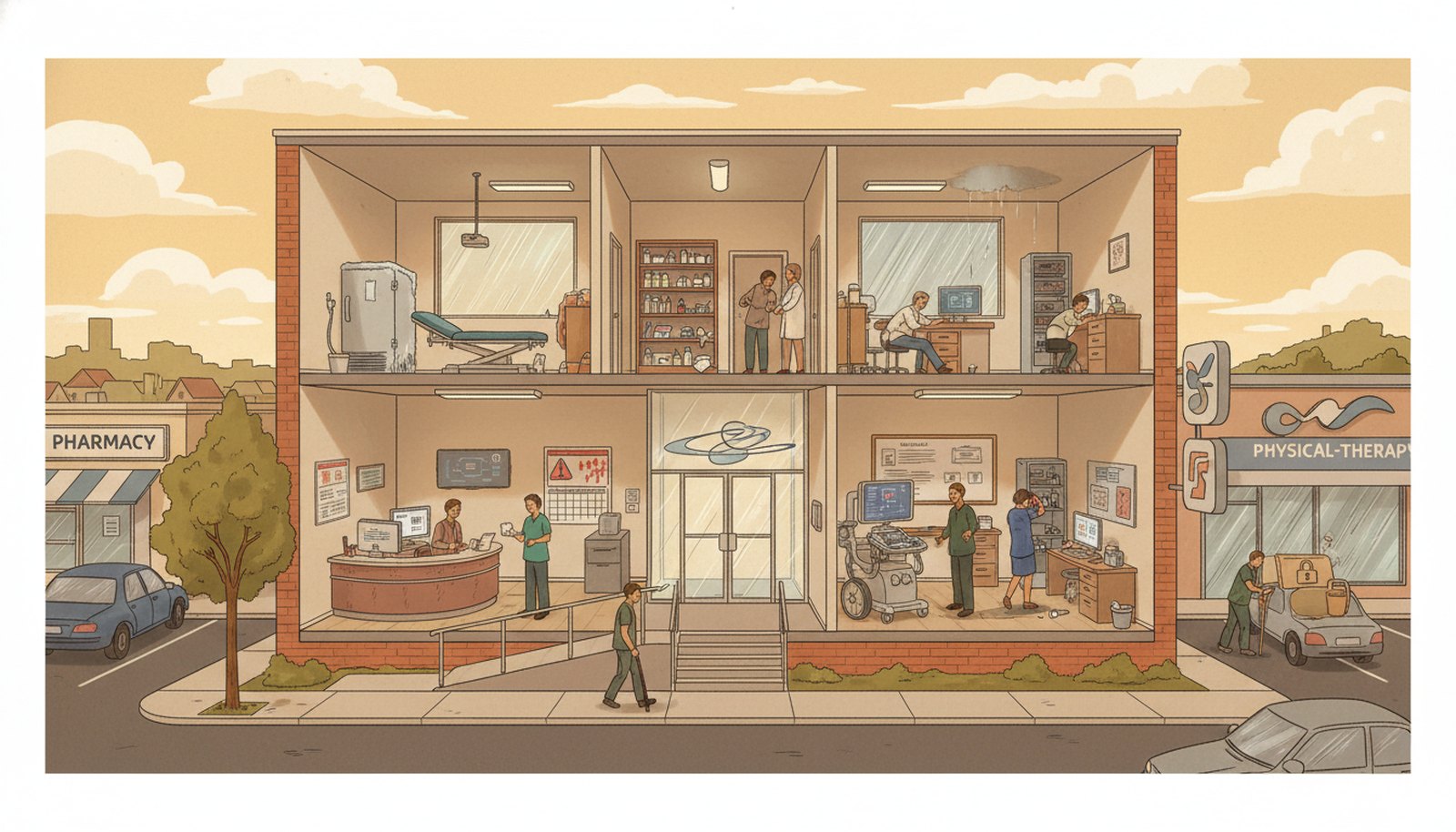
What this coverage includes
Business owners policy: your property and income foundation
A business owners policy (BOP) bundles commercial property coverage with general liability in a single contract designed for small to midsize businesses. For a medical office, the property side covers the physical space, exam-room equipment, front-desk computers, and general office furniture against fire, water damage, theft, and similar perils. The liability side pays when a patient or visitor claims bodily injury or property damage on your premises. Business income coverage, which is typically included, replaces lost revenue and pays ongoing fixed expenses if a covered loss forces you to temporarily close or reduce capacity.
Professional liability: medical malpractice coverage
A standard BOP does not cover claims arising from clinical decisions. That gap is filled by professional liability insurance, which most people in healthcare know as malpractice coverage. It pays defense costs and settlements when a patient alleges that a wrong diagnosis, a medication error, or a treatment decision caused them harm. High-severity claims in primary care, surgery, and specialty practices can reach seven figures, and even a meritless lawsuit costs tens of thousands of dollars to defend. Malpractice coverage should be placed separately from your BOP and sized to your specialty, patient volume, and state.
Cyber liability: protecting patient data
Medical records are among the most valuable data a criminal can steal, and HIPAA breach notifications carry real regulatory teeth. Cyber liability insurance covers the costs your practice incurs after unauthorized access to your systems: forensic investigation, patient notification, credit monitoring, regulatory fines, and third-party claims. It also covers ransomware extortion payments and the income you lose while systems are locked. For any practice using an EHR, telehealth platform, or cloud-based scheduling system, this coverage is not optional.
Employment practices and workers compensation
Employment practices liability insurance (EPLI) protects the practice and its owners against employee claims: wrongful termination, discrimination, harassment, and failure to promote. Studies consistently show that healthcare employers are among the more frequently sued employer categories. Workers compensation is a separate, legally required coverage in Idaho and Texas that pays medical costs and lost wages when an employee is injured on the job. For medical offices, that includes needlestick and sharps injuries, which affect an estimated 800,000 healthcare workers annually. Employer liability coverage, which pairs with workers comp, adds protection if an injured employee files a civil lawsuit beyond the statutory claim.
Specialty endorsements: spoilage, billing errors, and crime
Several exposures unique to medical offices require endorsements or standalone policies outside a standard BOP. Spoilage coverage pays when a refrigeration failure destroys vaccines or temperature-sensitive medications. Regulatory billing and errors coverage reimburses defense costs, fines, and audit expenses when a government agency or commercial payer alleges billing irregularities. Crime and fidelity coverage addresses employee dishonesty, forgery, and theft. Fiduciary liability coverage protects plan administrators from claims that employee benefit funds were mismanaged. A commercial umbrella policy sits above your general liability, workers comp, and auto limits to provide an additional layer of high-limit protection when a single loss exceeds your base policy.
Pairs well with
Professional Liability (Medical Malpractice) Insurance
Covers clinical liability claims that a BOP explicitly excludes. Every licensed provider in the practice should carry individual limits sized to their specialty.
Cyber Liability Insurance
HIPAA and state breach laws create notification and remediation costs that a property policy does not touch. Cyber liability fills that gap directly.
Learn more ›Employment Practices Liability Insurance (EPLI)
Healthcare practices employ a mix of licensed staff, support staff, and contractors, making employee-related claims a statistically common exposure for this industry.
Workers Compensation Insurance
Required by law in Idaho and Texas for practices with employees. Covers medical treatment and lost wages for work-related injuries including needlestick exposures.
Learn more ›Commercial Umbrella Insurance
Adds high-limit protection above your general liability, workers comp, and commercial auto. Useful when a single large liability claim could exceed your base policy limits.
Learn more ›Commercial Auto Insurance
If anyone in your practice drives a practice-owned vehicle for patient transport, supply runs, or mobile services, that vehicle needs a commercial auto policy.
Learn more ›