Insurance by Industry
Logging Insurance for Timber Operations That Can't Afford Downtime
From skidders and feller bunchers to log transport, Bittick places coverage built around how a logging operation actually works.
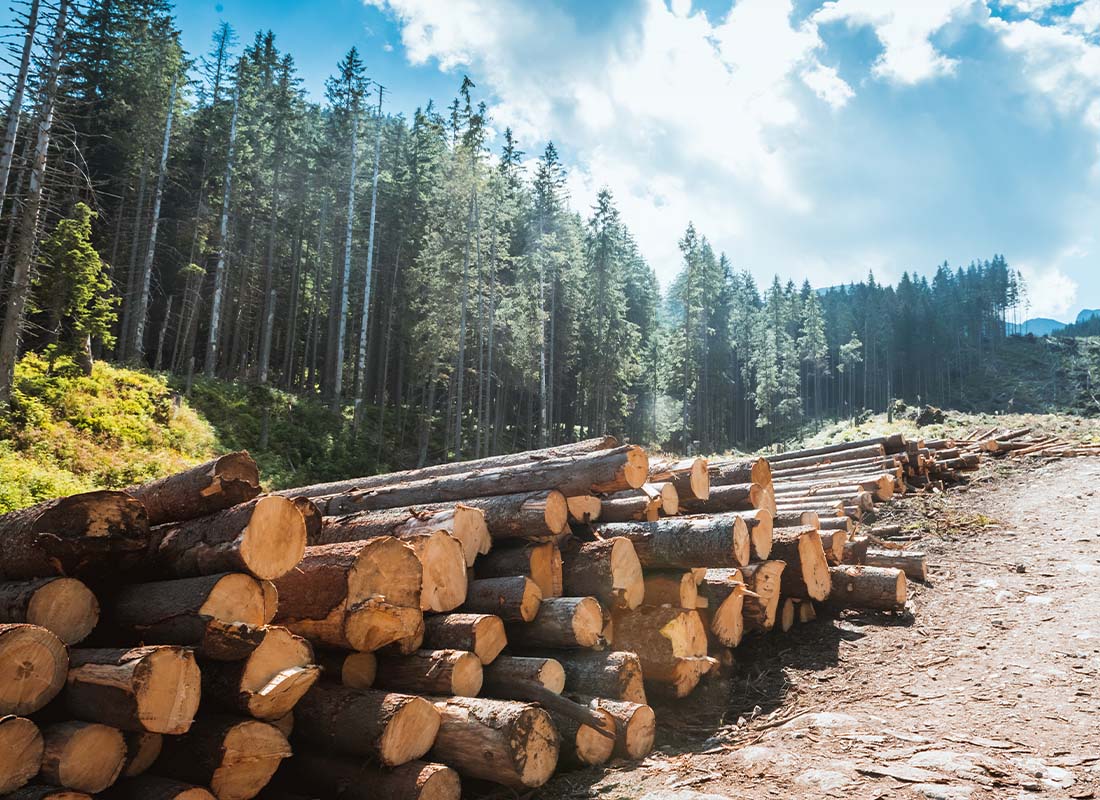
Logging insurance is a package of commercial policies that protects timber businesses from the physical, financial, and liability risks built into the work itself, covering everything from equipment in the field to injured workers to environmental liability.
Logging operations run on expensive, specialized machinery working in remote terrain under constant physical stress. A single breakdown, accident, or third-party claim can shut down production for days or weeks. Bittick works with multiple carriers to build a coverage program that fits your operation, whether you're running a crew in the timber country of central Idaho or managing a larger outfit across state lines.
What this coverage includes
Equipment and tools in the field
Skidders, feller bunchers, processors, loaders, and delimbers are not standard commercial property. They move constantly, work far from any fixed business location, and take a beating. Inland marine insurance covers this category of mobile equipment, meaning it follows your machines wherever they go on the job rather than covering only what sits at a fixed address. If a piece of equipment is damaged in transit between cutting units or while staged at a remote landing, inland marine steps in where a standard property policy would not.
Mechanical and electrical breakdown
Physical damage from a falling tree or a rollover is one thing. But equipment can also fail from the inside: a hydraulic pump burns out, an electrical system shorts, a processor head seizes mid-shift. Equipment breakdown coverage (sometimes called systems breakdown coverage) pays for sudden mechanical or electrical failure that standard property policies exclude. For a logging crew working a unit hours from the nearest dealer, getting a machine back online fast is the difference between making a timber sale deadline and losing it.
Commercial vehicles and log trucks
Logging operations depend on trucks: chip vans, log trucks, service vehicles, pickup fleets running between the office and the job. Commercial auto insurance covers these vehicles for accidents, collision, and liability while they are being used for business purposes. Personal auto policies exclude business use, so if you own any vehicle that regularly moves timber, hauls equipment, or carries employees to a job site, it needs to be on a commercial auto policy.
Workers' compensation for field crews
Logging consistently ranks among the most hazardous industries by injury and fatality rates. Heavy machinery, chainsaws, falling timber, uneven terrain, and remote worksites all create real exposure. Workers' compensation covers your employees' medical costs and a portion of lost wages if someone is hurt on the job. It also limits your business's exposure to lawsuits from injured workers. In Idaho, most employers with one or more employees are required to carry it, and the same requirement applies in Texas.
Environmental and pollution liability
A logging operation can trigger environmental liability in ways that aren't always obvious: fuel or hydraulic fluid spills near a stream, sediment runoff into a waterway after a harvest, or chemical contamination from equipment maintenance areas. Environmental impairment liability (also called pollution liability) covers cleanup costs, regulatory defense, and third-party claims tied to accidental environmental damage. Given the level of regulatory scrutiny on the timber industry, carrying this coverage also signals to landowners and regulators that you operate with real accountability.
Pairs well with
General Liability Insurance
Covers third-party bodily injury and property damage claims, including situations where someone wanders onto a job site and gets hurt or a logging operation damages a neighboring property. Most timber contracts and landowner agreements require it.
Learn more ›Commercial Auto Insurance
Covers your trucks, service vehicles, and any other company-owned vehicle used for business purposes. Standard personal auto does not cover vehicles used commercially, so any vehicle tied to your logging operation needs a commercial policy.
Learn more ›Workers' Compensation Insurance
Required for most employers in Idaho and Texas, workers' comp pays for medical treatment and partial wage replacement when a crew member is injured on the job and limits your exposure to injury-related lawsuits.
Learn more ›Inland Marine Insurance
Extends property coverage to mobile equipment that moves between job sites and off-location storage. Essential for any operation where the most valuable assets are machines in the field, not items in a building.
Learn more ›Cyber Liability Insurance
Logging operations increasingly run on digital systems for contract management, payroll, and equipment telematics. Cyber liability covers costs from data breaches, ransomware, and business interruption caused by a network attack.
Learn more ›Environmental / Pollution Liability
Covers cleanup costs and third-party claims from accidental spills, sediment runoff, or other pollution events tied to your operation. Particularly relevant where timber harvests run near waterways or in sensitive drainages.
What this coverage protects against
Common risks and how this coverage addresses them. Tap any scenario to expand.
-
Processor breaks down mid-contract on a remote cutting unit.
The risk
A feller-buncher processor head seizes up three weeks into a six-week timber sale. The dealer is 90 miles away, parts are on back-order, and the sale deadline is fixed. Every day the machine sits idle is a day of lost production.
How this coverage helps
Equipment breakdown coverage pays for the cost of repairing the failed mechanical system. Combined with an inland marine policy that already covers the machine while it's in the field, your repair and recovery costs come through your insurance program rather than out of your operating account.
-
Log truck rear-ends another vehicle on a county road.
The risk
A loaded log truck returning from a cutting unit stops short on a gravel county road and gets rear-ended by a following vehicle. The other driver is injured and files a claim. Your truck also has front-end damage from the impact.
How this coverage helps
Commercial auto insurance covers your liability to the other driver and the physical damage to your truck. Because the vehicle is on a commercial policy, the claim doesn't threaten your personal auto coverage or expose the business to an uninsured gap.
-
Fuel spill from a loader reaches a small creek on a timber unit.
The risk
During routine refueling at a landing, a hose fitting fails and hydraulic fluid runs downhill into a seasonal creek. A downstream landowner notices and reports it. State environmental regulators open an investigation and order remediation.
How this coverage helps
Environmental impairment liability covers the cost of cleanup and remediation, and it pays for legal defense if the landowner pursues a claim against your operation. Without this coverage, both the regulatory fines and the civil liability can fall entirely on the business.
-
A hiker wanders into an active harvest unit and is injured.
The risk
A recreational hiker ignores posted signs and enters an active cutting unit during operations. A log rolls and the hiker sustains a serious leg injury. They claim the area wasn't adequately secured and file suit against your company.
How this coverage helps
General liability insurance covers your legal defense costs and any settlement or judgment up to the policy limit. It also covers the injured party's medical expenses. This is precisely the kind of third-party bodily injury claim general liability exists to handle.
-
A crew member is struck by a falling snag during cleanup work.
The risk
During post-harvest cleanup, a standing dead tree fails without warning and strikes a crew member. The injury requires surgery, two months of rehabilitation, and extended time away from work.
How this coverage helps
Workers' compensation pays the employee's medical bills and a portion of their wages during recovery, so they aren't left without income while they heal. It also protects the business from a lawsuit related to the injury, which is especially important in an industry where injury severity can be high.
-
Skidder is stolen from an unattended landing over a long weekend.
The risk
A skidder left staged at a remote landing over a holiday weekend is gone by Monday morning. No witnesses, no surveillance, and the nearest road is a two-track through the timber. Recovery is unlikely.
How this coverage helps
An inland marine policy covers mobile equipment for theft, even when the machine is stored away from your business address and miles from the nearest paved road. The claim gets the equipment replaced so the crew can get back to work without absorbing the loss out of pocket.
-
A ransomware attack locks your payroll system and contract files.
The risk
Your office manager receives a spoofed email attachment and opens it. Within hours, your payroll software, contract database, and equipment service records are encrypted. The attackers demand payment. Crew payday is in three days.
How this coverage helps
Cyber liability insurance covers the cost of a forensic response team, ransom negotiation expenses if warranted, data restoration costs, and business interruption losses while your systems are down. It also covers notification costs if any employee or vendor data was exposed.
-
A third-party claims your logging operation damaged their timberland.
The risk
Your crew is harvesting a unit near a property boundary. The neighboring landowner claims your equipment crossed the line, damaged standing timber, and created sediment runoff onto their land. They send a demand letter for the value of the damaged trees plus cleanup costs.
How this coverage helps
General liability insurance covers property damage claims made by third parties, including the cost to defend the claim and any settlement within your policy limits. Depending on the facts, your environmental liability coverage may also respond to the sediment portion of the claim.