
Insurance by Industry
Insurance Built for Jewelers and Their Inventory
From display cases to appraisal liability, Bittick helps jewelry businesses in the Treasure Valley find coverage that fits what they actually do.
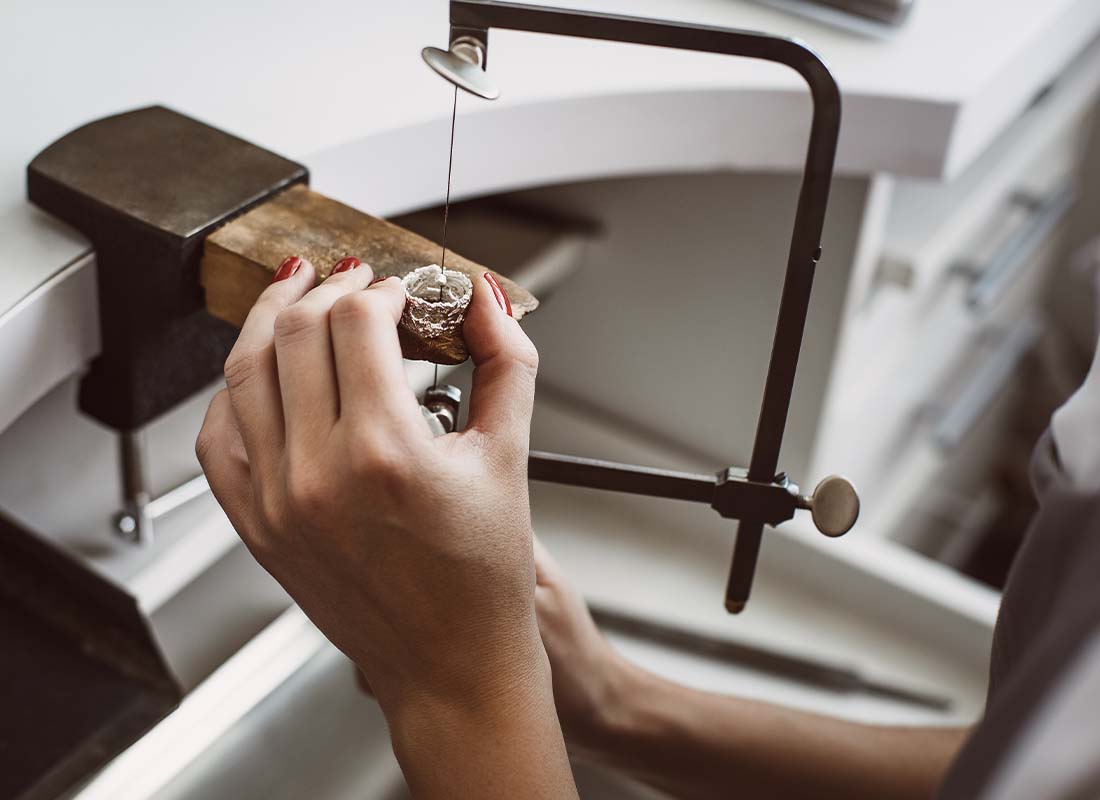
Jewelers insurance is a package of commercial coverages designed for businesses that buy, sell, repair, appraise, or hold fine jewelry and gemstones. Your store holds inventory worth far more per square foot than almost any other retail business, and that concentration of value creates exposures that a standard commercial property policy alone won't fully address. Add in the liability that comes with appraising a client's estate piece or handling a customer's heirloom for repair, and the risk picture gets more complex fast. Bittick works with multiple carriers to build a program around what your shop actually does.
What this coverage includes
Commercial property for your building and contents
Commercial property insurance covers your physical location and the business contents inside it: display cases, engraving equipment, polishing machines, signage, workbenches, and the inventory itself. If a fire, burst pipe, or vandalism damages your shop, this coverage pays to repair or replace what was lost. Most jewelers need the policy written on a replacement-cost basis so a dated display case is replaced at today's prices, not depreciated value. If you lease your space, the landlord's policy covers the walls; yours covers everything inside them.
Crime and theft coverage for high-value inventory
Jewelry is a high-theft target, and commercial property insurance typically carries sublimits or exclusions that leave gaps when the stolen goods are gemstones or precious metals. A crime insurance policy fills those gaps. It can cover theft by outsiders, burglary after hours, and robbery during business hours. Some crime policies also include resources for theft investigation and recovery coordination. If your inventory value is significant, the crime policy often carries a higher limit than what property coverage alone provides.
Errors and omissions coverage for appraisal liability
When you appraise a piece, a client or their insurer may rely on that valuation to make financial decisions. If your appraisal is later challenged as too high or too low, and the client suffers a financial loss as a result, they may hold you responsible. Errors and omissions (E&O) insurance, sometimes called professional liability, covers the legal costs and damages that can follow an honest mistake in your professional work. Appraisals are the most common trigger for jewelers, but E&O also responds to disputes over repair estimates or authentication opinions.
Employee dishonesty coverage for internal theft
Inventory shrinkage from employees is a documented reality in the jewelry industry. An employee might pocket cash, undervalue a customer's trade-in to pocket the difference, or walk out with merchandise over time. Employee dishonesty coverage (sometimes called fidelity coverage) reimburses the business for verified losses caused by a dishonest employee. It is distinct from crime coverage, which addresses outside threats. Both are worth carrying when your inventory is dense with high-value items that are easy to conceal.
Additional coverages most jewelry businesses need
General liability covers bodily injury and property damage claims from customers on your premises, including a customer whose ring is damaged during a repair. Cyber liability matters because you store client purchase histories, financial information, and possibly appraisal records digitally. Equipment breakdown coverage pays to repair or replace specialized repair and cleaning equipment that fails mechanically, a loss that property insurance excludes. Workers' compensation is required for Idaho employers with one or more employees and covers medical costs and lost wages for a worker injured on the job.
Pairs well with
General Liability Insurance
Covers bodily injury and property damage claims from customers and third parties on or around your premises. Any retail business with foot traffic needs this as a baseline.
Learn more ›Business Owner's Policy (BOP)
Bundles general liability and commercial property into one policy, often at a lower combined premium. Works well for small-to-mid-size jewelry stores that want a cleaner policy structure before layering specialty coverages on top.
Learn more ›Cyber Liability Insurance
Responds to data breaches, ransomware events, and theft of customer financial information. Jewelers store valuable client data alongside valuable physical inventory, making cyber exposure real even for small shops.
Learn more ›Workers' Compensation Insurance
Required for Idaho businesses with employees. Covers medical expenses and a portion of lost wages for workers injured on the job, including cuts and burns common to bench jewelers.
Learn more ›Equipment Breakdown Insurance
Pays to repair or replace specialized equipment like laser welders, engravers, and ultrasonic cleaners when they fail due to mechanical or electrical breakdown, a cause excluded from standard property coverage.
Commercial Umbrella Insurance
Sits above your general liability and other underlying policies to provide extra limit when a single claim exceeds what those policies carry. Worth considering when you hold significant client property for repair or appraisal.
Learn more ›What this coverage protects against
Common risks and how this coverage addresses them. Tap any scenario to expand.
-
Overnight break-in cleans out the front display cases.
The risk
A burglar breaks through a rear entry door after closing and takes the contents of your three main display cases before the alarm company dispatches police. The stolen pieces include customer consignment items as well as your own inventory.
How this coverage helps
Crime insurance covers the theft loss up to the policy limit, including inventory you owned. If your policy includes coverage for customer property in your care, it can also address the consignment pieces, reducing the claim disputes that would otherwise fall to you.
-
A client challenges an appraisal you wrote two years ago.
The risk
A customer had you appraise an inherited diamond ring. She insured it based on your written valuation. When she filed a claim after losing the ring, her insurer's independent appraiser valued it at nearly half what you wrote. The insurer paid the lower amount and the customer is now pursuing you for the difference.
How this coverage helps
Your E&O policy covers your legal defense costs and, if you are found liable, the damages owed to the customer. Even if your original appraisal was defensible, the defense process alone can be expensive, and E&O makes sure you're not paying out of pocket to prove it.
-
A longtime employee has been skimming cash over eighteen months.
The risk
An audit reveals that a trusted counter employee has been ringing up sales manually instead of through the POS system and keeping the difference. The total shortfall over a year and a half is significant enough to affect your operating margin.
How this coverage helps
Employee dishonesty coverage reimburses the business for verified losses caused by a dishonest employee, subject to the policy limit and any waiting period. It will not undo the trust damage, but it keeps the financial loss from compounding.
-
Your laser welder fails the day before a big custom order is due.
The risk
A mechanical failure takes your primary laser welding unit offline mid-week. The repair shop says parts are on back-order. You have a custom engagement ring due for pickup, and a secondary jeweler's quote to finish the work runs more than the retail margin on the piece.
How this coverage helps
Equipment breakdown coverage pays the repair or replacement cost for the welder and can include coverage for extra expenses you incur to fulfill customer commitments while the equipment is out of service, depending on how the policy is structured.
-
A customer's watch is damaged while in your care for servicing.
The risk
A client drops off a vintage chronograph for a movement cleaning. During servicing, a technician accidentally cracks the crystal and scratches the case. The watch is a collector's piece valued well above what a standard replacement would cost.
How this coverage helps
A general liability policy or a bailee's customer coverage endorsement can respond to damage you cause to customer property in your possession. This prevents you from having to pay out of pocket for a repair that a slip of the hand made worse.
-
A data breach exposes client purchase records and payment information.
The risk
Your point-of-sale system is compromised and an attacker exports months of customer transaction data, including credit card numbers and names attached to high-value purchases. You are required by Idaho law to notify affected customers and cooperate with the investigation.
How this coverage helps
Cyber liability insurance covers notification costs, credit monitoring services for affected customers, legal fees, and regulatory response costs. For a jewelry store, the data breach also signals to would-be thieves who your high-value customers are, making the reputational and legal exposure larger than for a typical retailer.
-
A customer slips near your entrance on a wet floor.
The risk
A customer comes in on a rainy afternoon and slips on water tracked in from outside near the entrance mat. She sustains a wrist fracture and incurs medical bills and time off work. Her attorney sends a demand letter to your business.
How this coverage helps
General liability insurance covers the bodily injury claim, including her medical expenses, lost wages, and legal costs if the matter goes to litigation. Without it, a single slip-and-fall at a retail counter can result in a five-figure out-of-pocket settlement.
-
A bench jeweler cuts a tendon and misses six weeks of work.
The risk
A bench jeweler in your workshop sustains a serious hand laceration while working with a graver tool. The injury requires surgery and occupational therapy, and the employee cannot perform fine motor work for six weeks.
How this coverage helps
Workers' compensation covers the employee's medical treatment and a portion of their lost wages during recovery. In Idaho, carrying workers' compensation is a legal requirement once you have employees, and the penalty for non-compliance comes on top of any direct costs from the injury.