
Insurance by Industry
Insurance Built for Gyms and Fitness Centers
From equipment liability to employment claims, Bittick shops the right carriers so your gym stays protected when something goes wrong.
Fitness center insurance is a bundle of commercial coverages designed to protect gym owners from the specific risks of running a facility where people physically exert themselves. Member waivers are a reasonable first line of defense, but they rarely hold up against every claim, and defending even a baseless lawsuit costs real money. A gym in Meridian or Eagle is also dealing with a fast-growing member base, expensive cardio and strength equipment, personal trainers giving advice, and a retail counter that may sell supplements — every one of those pieces carries its own liability exposure. Bittick is an independent agency, so we place your coverage with carriers who actually specialize in fitness operations, not whoever happens to have a generic commercial package available.
Your fitness center faces unique liability and operational risks that standard business insurance may not fully cover.
We'll help you understand what protection your gym or studio really needs, and make sure you're not exposed.
What this coverage includes
General Liability
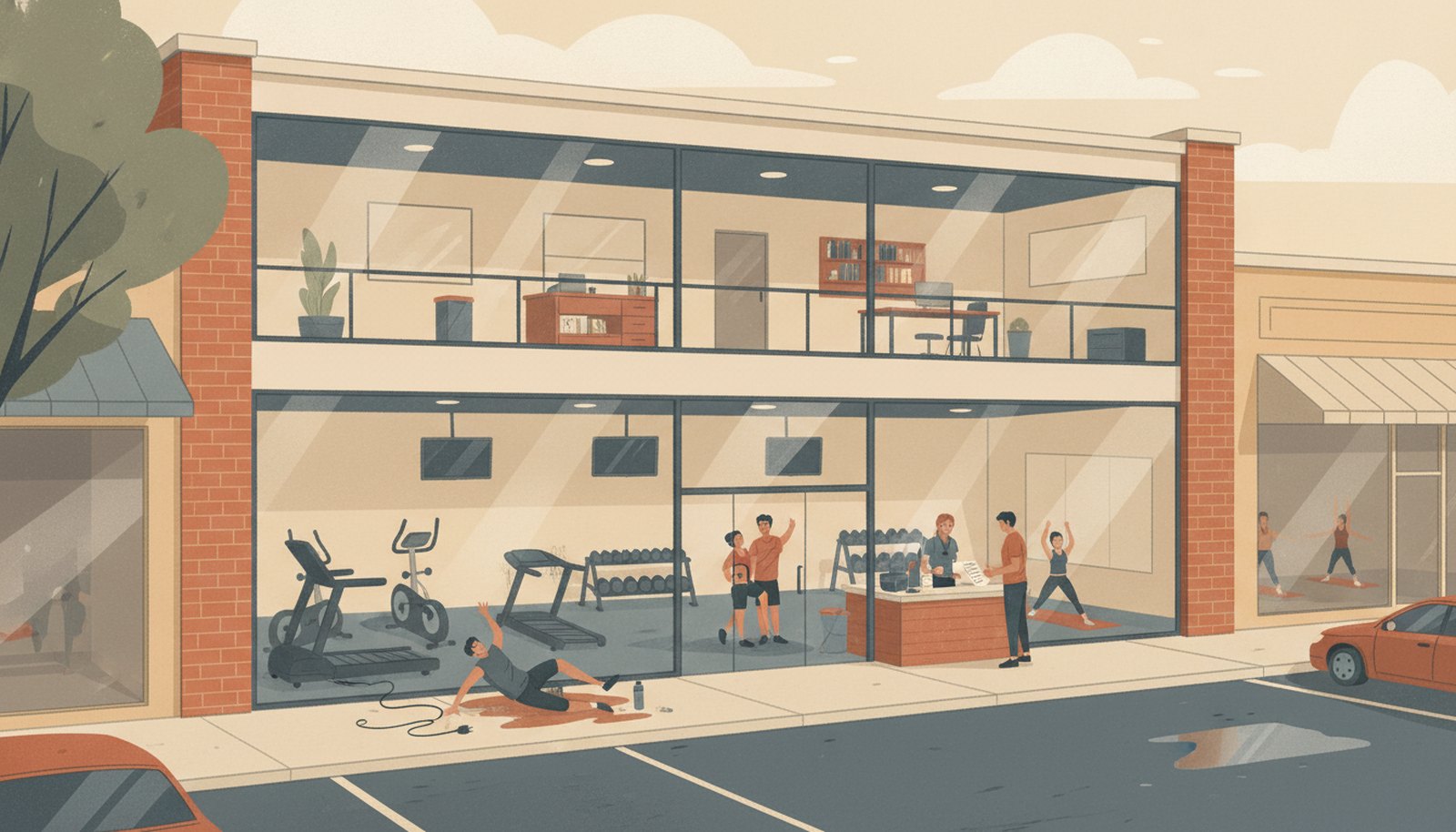
Commercial general liability covers third-party bodily injury and property damage claims that arise on your premises or from your operations. A member slips on a wet floor near the water fountain, a guest trips over a cable left across the gym floor, or a treadmill throws a belt and strikes someone nearby — liability coverage pays the resulting medical bills and legal defense costs. For a fitness center, this is the policy that backstops nearly every other exposure your business faces daily.
Professional Liability
Professional liability (also called errors and omissions) covers claims tied to advice your trainers and staff give. A member who follows a trainer's nutrition or exercise guidance, then suffers an injury or health event, may argue that guidance caused the harm. Even if your trainer did everything right, defending that claim costs money. Professional liability pays legal costs and settlements for covered negligence claims against your staff — including situations where no actual mistake was made but the allegation still has to be answered in court.
Commercial Property
Commercial property coverage protects your physical assets: the cardio machines, free weights, squat racks, locker room fixtures, point-of-sale systems, and supplement inventory. If a fire damages your facility or a break-in results in stolen equipment, this coverage pays to repair or replace what was lost. It applies whether you own the building or lease the space, and it can be packaged with general liability in a business owner's policy (BOP) to simplify your coverage.
Workers' Compensation
Workers' compensation covers medical treatment and lost-wage replacement when an employee is injured or becomes ill because of their job. In Idaho, most employers with one or more employees are required by law to carry it. A personal trainer who injures their back demonstrating a lift, or a front-desk employee who strains their wrist during a slip, qualifies for benefits under workers' comp. It also limits your exposure to civil lawsuits from injured employees, which is equally important.
Employment Practices Liability (EPLI) and Business Income
Employment practices liability (EPLI) covers claims from employees alleging wrongful termination, discrimination, harassment, or similar workplace disputes. Small fitness businesses often underestimate this exposure, but any employer with staff can face these claims. Business income coverage is a separate but related protection: if a covered event like a fire or burst pipe shuts your gym down for days or weeks, business income coverage replaces the revenue you lose while you are closed for repairs. These two policies address risks that your property and liability coverage alone will not touch.
Pairs well with
Commercial Umbrella Insurance
A commercial umbrella policy adds a high-limit layer of liability protection above your general liability, workers' comp, and commercial auto limits. A serious member injury claim or a multi-defendant lawsuit can push costs well past standard policy limits, and an umbrella fills that gap.
Learn more ›Commercial Auto Insurance
If your gym operates any vehicles for deliveries, equipment transport, or staff travel, a personal auto policy will not cover those trips. Commercial auto covers vehicles used in the course of business.
Learn more ›Cyber Liability Insurance
Fitness centers collect member payment data, health information, and sign-in credentials. A data breach affecting that information can trigger notification costs, regulatory fines, and member lawsuits. Cyber liability covers those exposures.
Learn more ›Business Owner's Policy (BOP)
A BOP bundles general liability and commercial property into a single policy, often at a lower combined cost than purchasing each separately. It is a common starting point for small to mid-sized fitness centers that want core coverage in one place.
Learn more ›