
Insurance by Industry
Insurance Built for Craft Distilleries
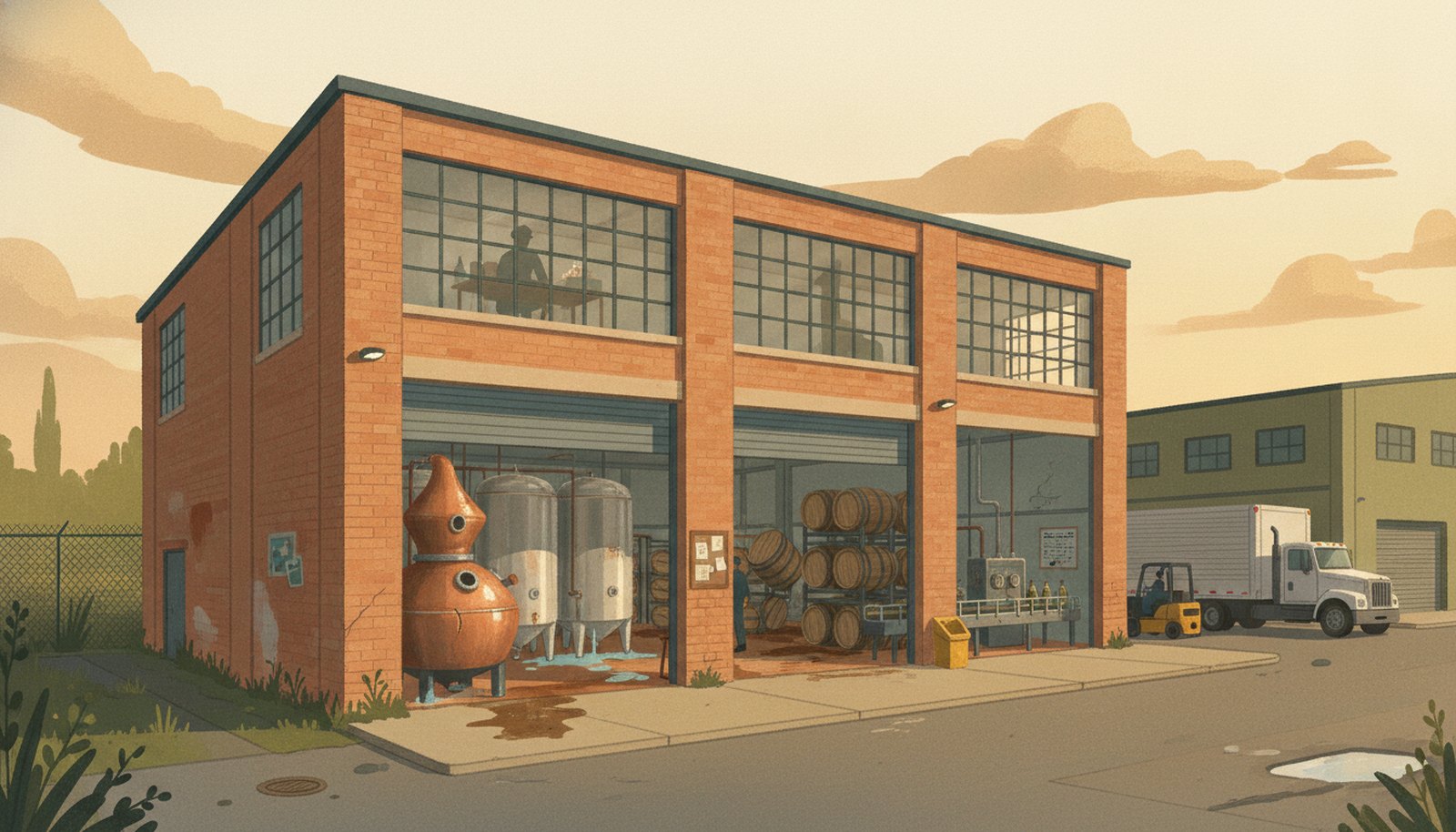
From your copper still to your tasting room, Bittick places coverage that matches how your distillery actually operates.
Distillery insurance is a bundle of commercial coverages designed to address the specific risks craft spirits producers face: equipment-intensive manufacturing, alcohol service liability, perishable inventory, and distribution logistics. A standard business owner's policy covers almost none of those exposures adequately on its own.
Bittick Insurance works with distilleries ranging from small-batch hobby operations to growing regional producers. We shop your risk across multiple carriers and put together a program that reflects your actual footprint, whether you run a tasting room, handle your own distribution, host public tours, or all three. We're licensed in CA, CO, ID, NV, OR, TX, VA, and WA.
Your distillery faces specialized risks that standard policies won't cover.
From equipment breakdown to liquor liability, we'll help you build a protection plan tailored to how you actually operate.
What this coverage includes
Liquor Liability
If your distillery serves alcohol at a tasting bar, during tours, or at hosted events, you carry dram-shop liability. That means if a patron drinks at your facility and then causes an accident after leaving, you can be sued for the resulting injuries or property damage. Liquor liability insurance pays defense costs, settlements, and court-awarded damages arising from those claims. General liability policies routinely exclude alcohol-related incidents, so this is a separate policy you need the moment you pour your first sample for the public.
Equipment Breakdown and Systems Coverage
A commercial still, a fermenter, a chiller system: the equipment that turns grain and water into a finished spirit is expensive, specialized, and irreplaceable on short notice. Standard commercial property insurance covers fire and theft but typically excludes mechanical or electrical breakdown. Systems breakdown insurance (sometimes called equipment breakdown coverage) fills that gap. It pays repair or replacement costs and, on many policies, reimburses you for lost production income while the equipment is out of service.
Spoilage, Contamination, and Product Recall
A contaminated batch, a failed seal on a tank, or a quality issue discovered after bottles ship can cost a distillery far more than the lost product. Spoilage and contamination coverage reimburses you for ruined raw materials and finished goods. Product recall coverage goes further: it pays the cost of pulling product from retail shelves or distributor warehouses, plus some policies extend to brand-rehabilitation expenses like advertising. These two coverages work alongside your commercial property policy rather than replacing it.
Environmental and Tank Liability
Distilleries generate wastewater, spent grain, and chemical byproducts that carry real environmental exposure. Standard general liability policies contain broad pollution and environmental exclusions, so a spill or discharge can leave you holding cleanup costs and regulatory fines with no coverage in place. A standalone environmental liability policy addresses that gap. Tank leakage and tank collapse coverage is a related extension that reimburses lost product and remediation costs specifically when a production or storage tank fails.
Business Auto, Supply Chain, and Core Business Liability
If your distillery handles its own distribution, the vehicles doing those runs need commercial auto insurance because personal auto policies exclude business use. Hired and non-owned auto coverage protects you when employees use personal vehicles for distillery errands. Supply chain coverage can compensate for revenue losses when a key ingredient supplier fails to deliver. Rounding out the program: workers' compensation for production employees, general and premises liability for your physical location, cyber liability if you take online orders or store customer data, and employment practices liability (EPLI) for your HR exposure.
Pairs well with
Commercial Property Insurance
Covers your building, equipment, inventory, and fixtures against fire, theft, and covered perils. The foundation of any distillery program, though it needs endorsements to address breakdown and contamination gaps.
Learn more ›General Liability Insurance
Pays third-party bodily injury and property damage claims arising from your premises and operations. Pairs with liquor liability and premises liability rather than replacing them.
Learn more ›Workers' Compensation Insurance
Required in Idaho for most employers. Production environments involve heat, heavy equipment, and chemical exposure, so medical and wage-replacement claims are a real frequency risk.
Learn more ›Commercial Auto Insurance
Any vehicle titled to the distillery or regularly used to transport product needs commercial auto coverage. Personal policies will not respond to business-use claims.
Learn more ›Cyber Liability Insurance
Distilleries that process online orders, run a loyalty program, or store customer payment data carry data-breach exposure. Cyber liability covers notification costs, regulatory fines, and recovery expenses.
Learn more ›Employment Practices Liability (EPLI)
Covers claims by employees alleging wrongful termination, discrimination, harassment, or failure to promote. Small and mid-size producers are not exempt from these claims.