Insurance by Industry
Crop Insurance for Farmers Who Depend on Their Fields
When weather, disease, or market swings cut into your harvest, the right crop coverage keeps your operation standing.
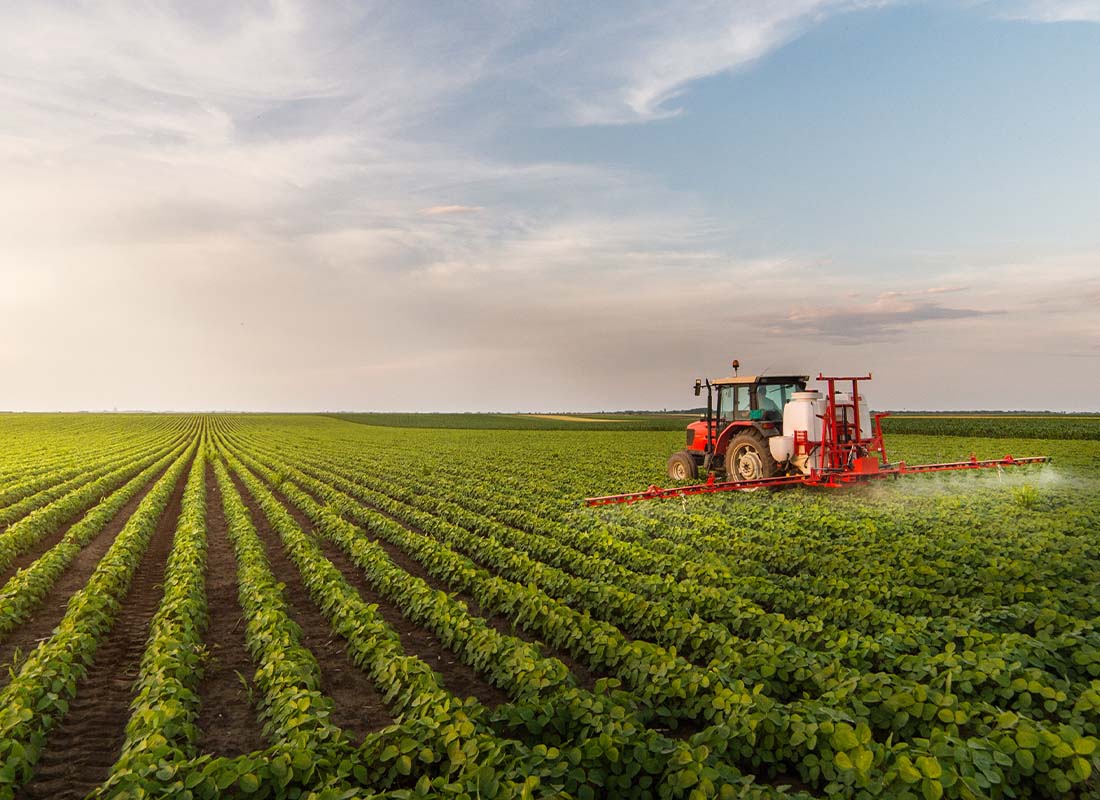
Crop insurance protects farmers against financial losses caused by reduced yields, damaged or unmarketable crops, and in some policies, falling commodity prices. It is not one-size-fits-all: the right structure depends on what you grow, how many acres you farm, and what risks matter most to your operation. In the Treasure Valley, that might mean hay ground along the Snake River bottomland, row crops on the Treasure Valley benchlands, or specialty crops in the foothills. Our San Antonio office works with Texas agricultural clients facing their own set of pressures, from Hill Country drought cycles to market volatility on grain and livestock. Bittick is independent, so we place coverage with multiple carriers and programs, including federally subsidized options through the Federal Crop Insurance Program.
What this coverage includes
Crop-hail insurance
Crop-hail policies cover physical damage to a standing crop from hail and, depending on the policy, from fire, frost, wind, flood, lightning, theft, and vandalism. Hail is the headline risk here because a single storm can shred one quarter of a field and leave the next quarter untouched. Policies can include replanting cost coverage when a damaged stand needs to come back out and go back in. This type of policy is sold by private carriers, can be purchased at any point during the growing season, and is separate from the federal multi-peril program.
Multi-peril crop insurance (MPCI)
Multi-peril crop insurance, also called all-risk crop insurance, ties directly to the federal program administered through USDA Risk Management Agency. It covers yield losses and quality losses caused by a broad list of perils including drought, disease, insects, flood, frost, hail, fire, and wind. Catastrophic-level coverage is fully subsidized by the federal government; farmers who want a higher coverage level can buy up through approved carriers. There are strict sign-up deadlines set by the government before each growing season, so timing matters.
Revenue protection
Revenue protection policies go beyond measuring what came out of the ground. They guarantee a minimum revenue level based on a combination of your expected yield and the projected commodity price. If prices crash at harvest time, or if a short crop collides with a down market, revenue protection can make up the difference in a way that yield-only policies cannot. This matters especially for crops where price swings are wide and fast.
Pasture, rangeland, forage, and hay coverage
Livestock operations depend on feed as much as on the animals themselves. Pasture, rangeland, and forage policies use rainfall index or vegetation index data to trigger payments when forage production falls below expected levels. Hay ground can also be insured separately. For a rancher running cattle on dryland acres in the foothills above the Snake River Plain, or on Hill Country rangeland north of San Antonio, this coverage can be the difference between buying expensive replacement feed or weathering a dry year without going into debt.
Livestock insurance
Farms that raise animals have options beyond crop policies. Livestock risk protection and livestock gross margin programs can insulate a cattle, swine, or dairy operation from catastrophic price drops or margin compression. These are federally backed programs with their own sign-up windows and coverage parameters. Bittick helps clients understand which programs apply to their species and production model and gets the applications in before deadlines close.
Pairs well with
Farm owners insurance
Covers the physical farm property itself: structures, equipment, and farm personal property. Crop insurance covers what grows; farm owners covers the infrastructure that makes growing possible.
Learn more ›Commercial general liability
A farming operation that sells at market, hosts agritourism visits, or employs seasonal labor has third-party liability exposure that crop policies do not address. General liability covers bodily injury and property damage claims from non-employees.
Learn more ›Commercial auto and farm vehicle coverage
Tractors, combines, grain trucks, and ATVs moving between fields and along public roads need properly structured commercial auto or farm vehicle policies, since personal auto policies typically exclude farm use.
Learn more ›Workers compensation
Idaho and Texas both have rules around workers comp for agricultural employers. Seasonal field labor, equipment operators, and packing shed workers can be injured on the job, and the medical and lost-wage exposure can be significant.
Learn more ›Equipment breakdown coverage
A combine that fails mid-harvest or an irrigation pump that burns out during peak demand can cost as much in lost time and crop loss as in repair costs. Equipment breakdown fills gaps that standard farm property policies leave.
What this coverage protects against
Common risks and how this coverage addresses them. Tap any scenario to expand.
-
Hail destroys two-thirds of a standing onion crop near Parma.
The risk
A July hailstorm moves through Canyon County and beats down 60 percent of a grower's onion acreage. The bulbs that took the direct hits are bruised and won't meet packing-shed grade standards. The grower faces losing the majority of that field's revenue with harvest still weeks away.
How this coverage helps
A crop-hail policy pays based on the documented damage to the standing crop. The grower files a loss, an adjuster assesses the damaged acres, and the indemnity helps offset the revenue that won't be coming from that portion of the field. Some policies also cover the cost of running equipment back through to salvage what can be salvaged.
-
A late freeze kills a winter wheat stand that needs replanting.
The risk
A cold snap in late March drops temperatures hard enough to kill an established winter wheat stand that had broken dormancy too early. Replanting into spring wheat is possible, but it means buying more seed and running the planter again, pushing the growing calendar back.
How this coverage helps
A multi-peril crop insurance policy covering prevented planting or replanting costs can reimburse a portion of those expenses. The farmer still bears real losses, but the policy absorbs enough of the replanting cost to keep the operation from starting the season in a financial hole.
-
Commodity prices collapse between spring planting and fall delivery.
The risk
A corn farmer plants based on spring futures prices that made the crop pencil out. By harvest, the cash price has dropped significantly below the projected price, and the yield came in right at average, meaning there is no volume gain to offset the price loss.
How this coverage helps
A revenue protection policy locks in a revenue guarantee calculated from both the projected price and the expected yield. When the final revenue falls short of that guarantee, the policy pays the difference. The farmer gets less than originally planned, but the floor holds.
-
Rangeland forage fails during a dry summer on a cattle operation.
The risk
A dry winter and low snowpack in the mountains cuts spring runoff, and a string of hot, rainless weeks in July burns up the grass on a rancher's dryland pasture months earlier than normal. The rancher is looking at buying hay at peak-season prices to keep the herd fed.
How this coverage helps
A pasture, rangeland, and forage policy uses rainfall index data to measure how far precipitation fell below normal. When the index drops below the threshold the rancher selected at sign-up, a payment triggers. That indemnity helps offset the cost of purchased feed and reduces the pressure to sell cattle at the wrong time.
-
Disease reduces a crop to unmarketable quality before harvest.
The risk
A wet spring in the Treasure Valley creates ideal conditions for a fungal disease in a wheat field. By the time the grain fills, the test weight is down and the falling number fails at the elevator. The yield is there, but the grain grades out at a steep discount or gets rejected entirely.
How this coverage helps
Multi-peril crop insurance covers quality losses as well as yield losses when the cause is a covered peril like disease. The farmer can file a quality adjustment claim, and the indemnity is calculated on the difference between what the crop would have been worth at normal grade and what it actually brought.
-
Wildfire smoke during Idaho's fire season damages a specialty crop.
The risk
A smoke event from fires in the Idaho or Oregon backcountry blankets the Treasure Valley for several weeks during the growing season. Wine grapes, sweet corn, or another flavor-sensitive specialty crop absorbs enough smoke compounds to affect the final product's taste and marketability.
How this coverage helps
Specialty crop policies and certain crop-hail endorsements can include coverage for smoke damage depending on how the policy is structured. Bittick reviews the crop type and the carrier's available endorsements at sign-up so that smoke exposure is on the radar before fire season arrives, not after.
-
A grain truck accident during harvest destroys a load before delivery.
The risk
A fully loaded grain truck is involved in a collision on a rural highway heading to a Caldwell elevator. The load is a total loss. The crop insurance policy covered the field, but the grain was already harvested and in transit, meaning the crop policy no longer applies.
How this coverage helps
This is where commercial auto coverage for farm vehicles and cargo coverage become essential complements to a crop policy. Bittick structures the coverage so that what grows in the field and what moves down the road are both protected, without gaps between where one policy ends and another begins.
-
An irrigation pump failure during peak demand causes partial crop loss.
The risk
A centrifugal pump on a drip irrigation system fails during a stretch of 100-degree days in August. The repair takes four days, and a portion of the crop shows heat and drought stress before water is restored. The yield in the affected block is measurably lower than the rest of the field.
How this coverage helps
Depending on how the multi-peril policy is structured, drought-related yield losses in the affected zone may qualify for a claim even when the cause was equipment failure during drought conditions. Equipment breakdown coverage on the pump itself addresses the repair cost separately. Together, both policies limit how much the mechanical failure costs the operation overall.