
Business Insurance
Commercial Hurricane Insurance for Businesses That Can't Afford Downtime
Standard commercial property policies often exclude hurricane damage, and a single storm can shut a business down for weeks.
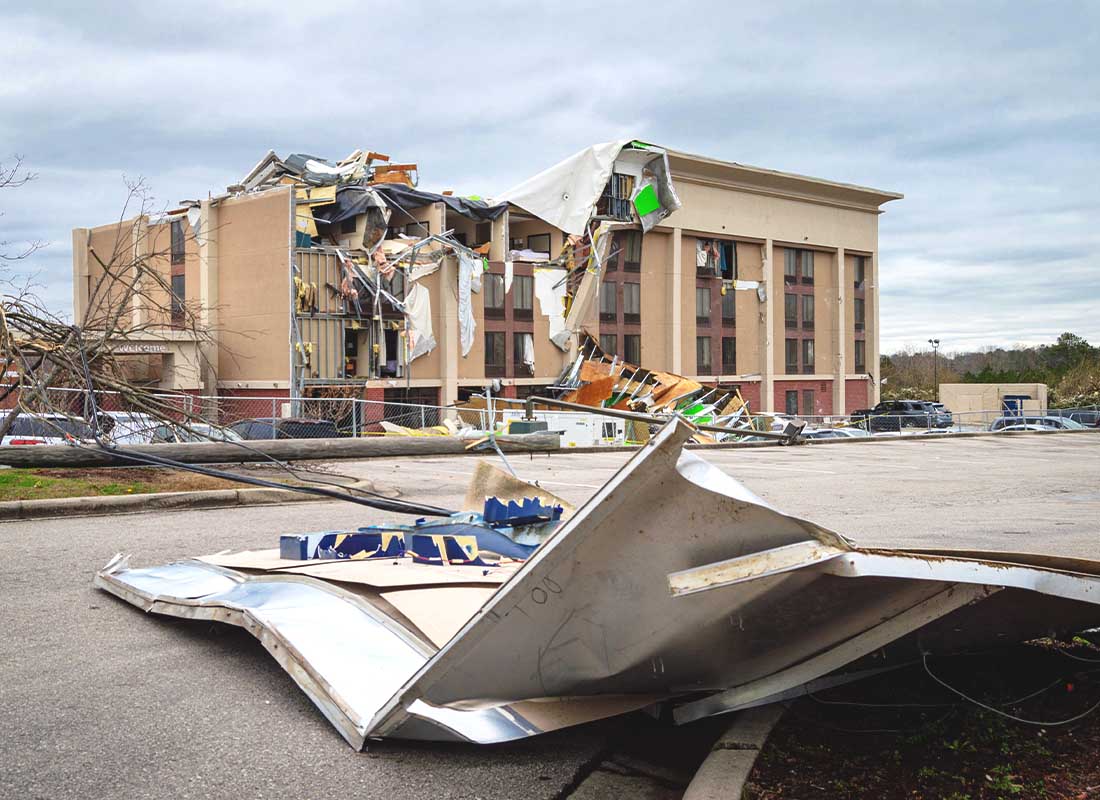
Commercial hurricane insurance is a standalone policy that covers physical damage to your business caused by hurricane-force winds, storm surge, and related perils that standard commercial property policies frequently exclude or cap with high separate deductibles. If your business sits anywhere along the Texas Gulf Coast corridor or in a region where tropical systems make landfall, that gap in your property policy is a real financial exposure, not a technicality. Bittick's San Antonio office works with businesses across the Hill Country and the I-35 growth ring north of the city, where a storm tracking inland from the coast can still deliver destructive wind speeds well beyond what most people expect. We place coverage with multiple carriers and compare terms so you get a policy that actually matches your exposure, not just the cheapest number on paper.
What this coverage includes
Wind and storm damage to your building and contents
The core of a commercial hurricane policy covers physical damage your building and its contents sustain from hurricane-force winds. That includes the structure itself, roofing, windows, exterior signage, and the equipment and inventory inside. Standard commercial property forms often carve out named-storm events entirely, or attach a separate wind deductible expressed as a percentage of insured value rather than a flat dollar amount. A 3% deductible on a $1.5 million building is $45,000 out of pocket before the carrier pays a cent. Hurricane coverage is written specifically to address that gap.
Business interruption when you can't open your doors
Physical damage is only part of the financial hit. If a storm forces you to close for two weeks while you wait for a contractor and a power crew, you still owe payroll, rent, and loan payments. Business interruption coverage, added alongside your hurricane policy, replaces the net income you would have earned during the shutdown period. It can also cover reasonable extra expenses you incur to get back up faster, like renting temporary space or equipment. The income replacement lasts until operations return to normal, up to the policy's agreed period of indemnity.
What this policy does NOT cover: flood
Tropical systems bring heavy rainfall, and rainfall causes flooding. Commercial hurricane insurance covers wind-driven damage but does not cover flood damage, even when the flood arrives in the same storm. Flood is a separately underwritten risk, available through the National Flood Insurance Program or certain private market carriers. If your building sits in a low-lying area or near a drainage channel, buying hurricane coverage without also addressing flood leaves a significant hole. Bittick reviews both exposures together so you do not end up discovering the distinction after a claim.
Risk assessment and coverage gap review
Before placing a policy, Bittick looks at your existing commercial property form, your current deductibles, and your location relative to historical storm tracks. The goal is to find where your current coverage stops and where hurricane exposure begins. For businesses in the San Antonio metro, that analysis includes proximity to the coast, local building code requirements, and how quickly your specific trade or industry can realistically resume operations after a major event. Identifying the gap first produces a more accurate coverage structure than simply adding a policy without knowing what's already in place.
Pairs well with
Commercial Flood Insurance
Hurricane policies do not cover rising water. A separate flood policy, written through the NFIP or a private carrier, covers the damage that storm rainfall and drainage overflow cause to your building and contents.
Learn more ›Business Interruption Insurance
When a storm forces you to close, this coverage replaces the income your business would have earned and can cover extra costs you incur to reopen faster. It pairs directly with a hurricane policy to address both the physical loss and the revenue loss.
Learn more ›Commercial Property Insurance
Hurricane coverage is typically written alongside your base commercial property form, not instead of it. Understanding what your property policy already covers helps define exactly where a hurricane endorsement or standalone policy needs to begin.
Learn more ›Commercial General Liability Insurance
A hurricane that damages your building can also injure customers, vendors, or passersby on your property. General liability covers third-party bodily injury and property damage claims that arise from those situations.
Learn more ›Inland Marine Insurance
Equipment and inventory that moves between locations or is stored off-site during a storm may not be covered under a standard property form. Inland marine covers property in transit or at temporary locations during an evacuation or relocation.
Learn more ›What this coverage protects against
Common risks and how this coverage addresses them. Tap any scenario to expand.
-
Wind strips the roof from your warehouse the night a hurricane makes landfall.
The risk
A Category 2 storm tracks inland and the sustained winds exceed what your building's roofing system can handle. By morning, a large section of the roof is gone, the interior is exposed to rain, and inventory on the floor is destroyed. Your standard property policy has a named-storm wind deductible of 5% of building value, which amounts to $75,000 before coverage applies.
How this coverage helps
A commercial hurricane policy with a flat-dollar wind deductible steps in after that threshold, covering the structural repairs and the damaged contents. The policy is designed for exactly this scenario, where the named-storm exclusion in a standard form would otherwise leave the owner absorbing a disproportionate share of the loss.
-
Your business closes for three weeks while the power grid recovers.
The risk
The physical building survives the storm largely intact, but a transmission line failure leaves the entire commercial corridor without power for 21 days. Your food service business cannot operate without refrigeration, and your revenue stops completely while your fixed costs keep running.
How this coverage helps
Business interruption coverage attached to your hurricane policy replaces the net income your operation would have earned during the closure. It also covers the cost of the inventory you had to discard when refrigeration failed. You meet payroll and cover rent without drawing down your cash reserves.
-
Storm-driven debris shatters your storefront glass and soaks the showroom floor.
The risk
A piece of signage from a neighboring business becomes a projectile in the storm's outer bands and hits your floor-to-ceiling showroom windows. Rain drives through the opening for several hours before a temporary board-up crew can respond. Display merchandise and flooring sustain significant water damage.
How this coverage helps
The hurricane policy covers the glass replacement and the damage to your showroom contents, classified as wind-driven loss rather than flood. You file a single claim and the carrier coordinates the repair rather than leaving you to argue whether the damage came from wind or water.
-
A contractor shortage after the storm turns a two-week repair into a two-month closure.
The risk
After a major storm, every contractor in the region is booked. Your roof repair, which the estimator initially said would take ten business days, gets pushed back repeatedly as crews prioritize larger commercial jobs. Your business stays closed for nearly eight weeks, far longer than your cash flow can absorb.
How this coverage helps
The period of indemnity in your business interruption coverage extends through the duration of the closure, not just the originally estimated repair time. As long as the delay stems from covered storm damage and not a separate uninsured cause, the policy keeps replacing your income while you wait.
-
Your property policy has a hurricane exclusion you never noticed until a claim.
The risk
When you filed the claim after the storm, the adjuster cited a named-storm exclusion buried in the commercial property form's endorsements. The exclusion was added at renewal two years ago, and the change was noted in a coverage summary you received but did not review in detail. The property damage is real; the coverage you thought you had is not.
How this coverage helps
Bittick reviews your existing commercial property form before placing any supplemental coverage, specifically looking for named-storm exclusions and wind deductible structures. If a gap exists, we identify it before a loss occurs and place a hurricane policy that is written to start where the property form stops.
-
Heavy rainfall from the storm floods your ground-floor office, but your hurricane policy won't cover it.
The risk
The storm stalls over the region and drops 18 inches of rain over 48 hours. Your office building, which sits in a low-lying section of town, takes on two feet of water. When you file a claim, the hurricane policy correctly declines the flood portion of the loss because rising water is not a covered peril under wind-focused storm coverage.
How this coverage helps
This is why Bittick reviews both wind and flood exposure together at the time of placement. A commercial flood policy written separately from the hurricane policy would have covered the rising water loss. Holding both policies means the two claims are filed with the appropriate carriers and the full scope of the loss is addressed.
-
Rooftop HVAC units are destroyed and your lease requires you to restore them.
The risk
The storm tears three rooftop HVAC units from their curbs and drops them into the parking lot. Your commercial lease includes a tenant improvement clause requiring you to maintain and replace mechanical systems at your own cost. Replacing three commercial HVAC units runs well over $60,000 before installation.
How this coverage helps
The contents and business personal property section of a well-structured hurricane policy covers mechanical equipment you own or are contractually responsible for, including rooftop units. Reviewing the lease language before the storm and confirming the policy's equipment coverage limits ensures you are not negotiating replacement costs out of pocket.