
Business Insurance
Earthquake Coverage Your Commercial Property Policy Likely Skips
Standard commercial property policies routinely exclude earthquake damage, leaving Idaho and Texas businesses exposed to a gap most owners never notice until they file a claim.
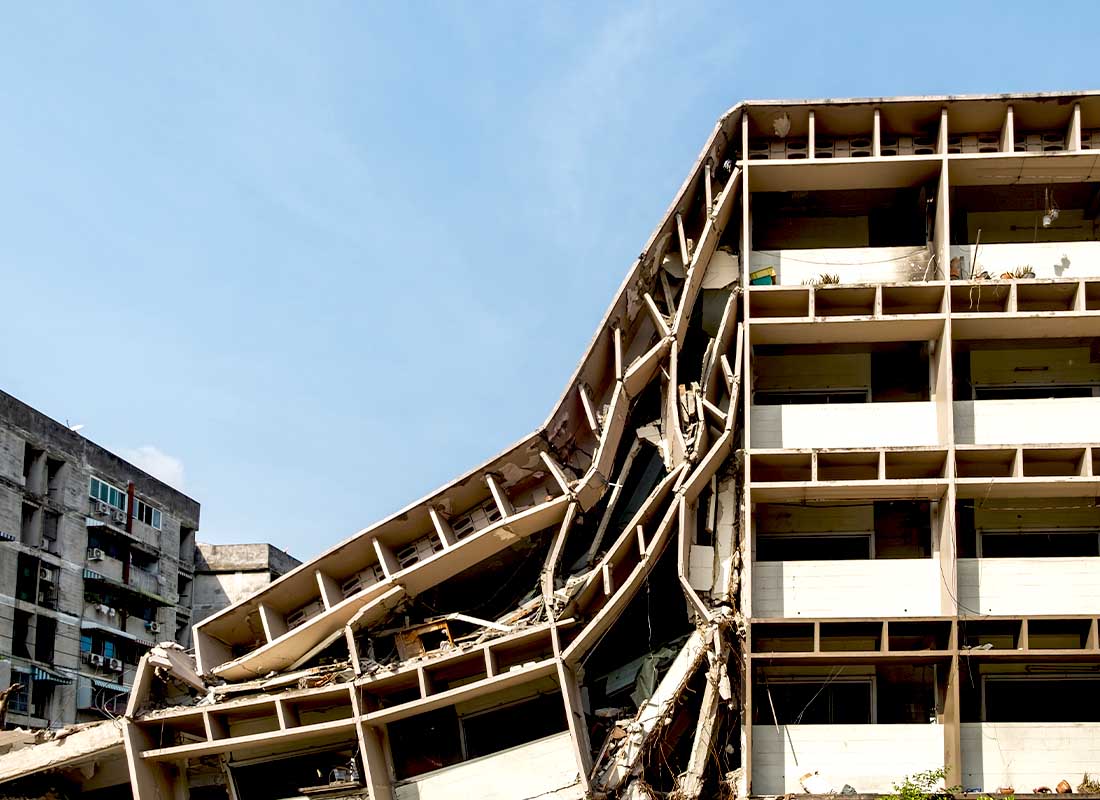
Commercial earthquake insurance is a standalone or endorsement policy that covers physical damage to your building and business property caused by seismic events, along with the income you lose while you're shut down recovering. Standard commercial property insurance almost always excludes earthquake damage, so without a separate policy, a significant tremor could leave your business paying for repairs, replacement equipment, and lost revenue entirely out of pocket. For businesses in southern Idaho, that exposure is real: the Snake River Plain sits near active fault systems, and the 2020 Stanley earthquake (magnitude 6.5) reminded the region that seismic risk here is not theoretical. Bittick shops earthquake coverage across multiple carriers for businesses throughout the Treasure Valley and beyond, licensed in CA, CO, ID, NV, OR, TX, VA, and WA.
What this coverage includes
Building and structural damage
When a quake cracks your foundation, buckles load-bearing walls, or brings down a masonry facade, earthquake insurance pays for the repair or reconstruction of the building itself. This is the coverage your commercial property policy is most likely to exclude outright. The limit you choose should reflect your building's replacement cost, not its market value, especially if you own a concrete-block or older unreinforced structure, which tend to sustain the most damage in a seismic event.
Business personal property and equipment
Inventory that falls from shelving, machinery jarred off its moorings, computer systems racked in a server room that collapses: all of this qualifies as business personal property under a commercial earthquake policy. For a manufacturer in Nampa or a fabrication shop in Caldwell with expensive CNC equipment, replacing even one machine out of pocket could be a six-figure hit. This coverage reimburses you for the actual repair or replacement of the contents your business depends on.
Business interruption caused by the earthquake
Many earthquake policies include or offer a business income component. If a quake forces you to close while your building is repaired, including situations where access is blocked by condemned roads or downed utilities, business interruption coverage replaces the revenue your business would have earned during that period. The waiting period before benefits kick in varies by policy; Bittick reviews that detail carefully when comparing options, because a 72-hour versus a 7-day waiting period can be the difference between a manageable gap and a cash-flow crisis.
What earthquake insurance does not cover
Knowing the exclusions matters as much as knowing what's covered. Fire following an earthquake is typically handled by your commercial property policy, not your earthquake policy, so make sure your property limits are adequate. Flood damage from broken water mains or liquefaction requires a separate flood policy. Vehicle damage falls under commercial auto. Land damage such as erosion or ground settling is generally not covered by any standard commercial policy. A complete coverage review closes these gaps before a claim exposes them.
Pairs well with
Commercial Property Insurance
Your property policy is the foundation of your business coverage, but it almost certainly excludes earthquakes. Reviewing both policies together ensures you know exactly where one ends and the other begins.
Learn more ›Business Interruption Insurance
If earthquake income coverage is not built into your earthquake policy, a standalone business interruption policy fills the revenue gap while you rebuild or relocate.
Learn more ›Commercial Flood Insurance
Earthquakes can rupture water mains and trigger flooding that earthquake policies exclude entirely. A commercial flood policy covers that specific exposure.
Learn more ›Commercial Auto Insurance
Vehicle damage from falling debris or a collapsing parking structure during a quake is not covered under earthquake insurance; commercial auto picks it up instead.
Learn more ›Business Owner's Policy (BOP)
A BOP bundles property and general liability for small-to-mid businesses, but the property component still excludes earthquakes. Pairing a BOP with earthquake coverage is a common and cost-effective combination.
Learn more ›What this coverage protects against
Common risks and how this coverage addresses them. Tap any scenario to expand.
-
Foundation damage shuts down a Meridian office building.
The risk
A magnitude 5.8 event along the Western Snake River Plain fault system cracks the concrete slab under a two-story Meridian office building. A structural engineer red-tags the property, and the business cannot operate for six weeks while repairs are completed.
How this coverage helps
Commercial earthquake insurance covers the cost of the foundation and slab repair. If the policy includes business income coverage, it also replaces the revenue the business loses during the six weeks it cannot open.
-
Inventory destroyed when shelving collapses in a Nampa warehouse.
The risk
During a significant tremor, floor-to-ceiling steel shelving in a Nampa distribution warehouse tears loose from its wall anchors and tips, destroying pallets of finished goods staged for next-day shipment.
How this coverage helps
The business personal property component of the earthquake policy reimburses the replacement value of the destroyed inventory, letting the business fulfill its orders from replacement stock rather than absorbing the loss outright.
-
A Caldwell fabrication shop loses a CNC machine to seismic shift.
The risk
A precision CNC router in a Caldwell fabrication shop vibrates off its isolation mounts during a quake and strikes an adjacent press, damaging both machines. Downtime while waiting for parts and recalibration stretches to four weeks.
How this coverage helps
Equipment covered as business personal property under the earthquake policy is repaired or replaced. Business income coverage bridges the four weeks of lost production revenue while the machines are out of service.
-
Road closure isolates an Eagle retail business for two weeks.
The risk
A quake damages an overpass on a key arterial near an Eagle retail strip, and the city closes the road for emergency inspection and repair. The business's parking lot is accessible but customers cannot reach it, and foot traffic drops to near zero.
How this coverage helps
Some earthquake policies extend business income coverage to civil authority situations where access is blocked by an order related to earthquake damage. Bittick identifies policies that include this provision when placing coverage for retail clients in high-access-dependency locations.
-
A Boise restaurant's gas line ruptures, triggering a kitchen fire.
The risk
An earthquake ruptures a gas line inside the walls of a Boise restaurant. The gas ignites before anyone can shut off the supply, and the kitchen sustains serious fire damage on top of the structural damage from the quake itself.
How this coverage helps
Fire damage following an earthquake is generally covered by the commercial property policy, not the earthquake policy. Bittick reviews both policies side by side at placement to confirm the fire coverage in the property policy is adequate to handle this exact overlap.
-
Water main break floods a ground-floor office suite.
The risk
A quake cracks a municipal water main running under an Boise office building. Water floods the ground-floor suite, damaging flooring, drywall, and workstations before the city can shut off the line.
How this coverage helps
Earthquake policies exclude flooding caused by ruptured water mains. A commercial flood policy covers this specific loss. Bittick flags this gap during the coverage review and places flood coverage alongside the earthquake policy so both exposures are addressed.
-
Unreinforced block wall falls onto a neighboring tenant's storefront.
The risk
The exterior block wall of an older commercial building in downtown Nampa is knocked outward by a quake and lands on the adjacent tenant's glass storefront, destroying the facade and damaging merchandise inside.
How this coverage helps
The building owner's earthquake policy covers the cost to repair or rebuild the collapsed wall. General liability coverage addresses the third-party property damage claim from the neighboring tenant, which is why Bittick always reviews earthquake and general liability limits together for building owners.