Insurance by Industry
Insurance built for mobile home park owners
From common-area liability to business income protection, Bittick shops the right carriers for your park.
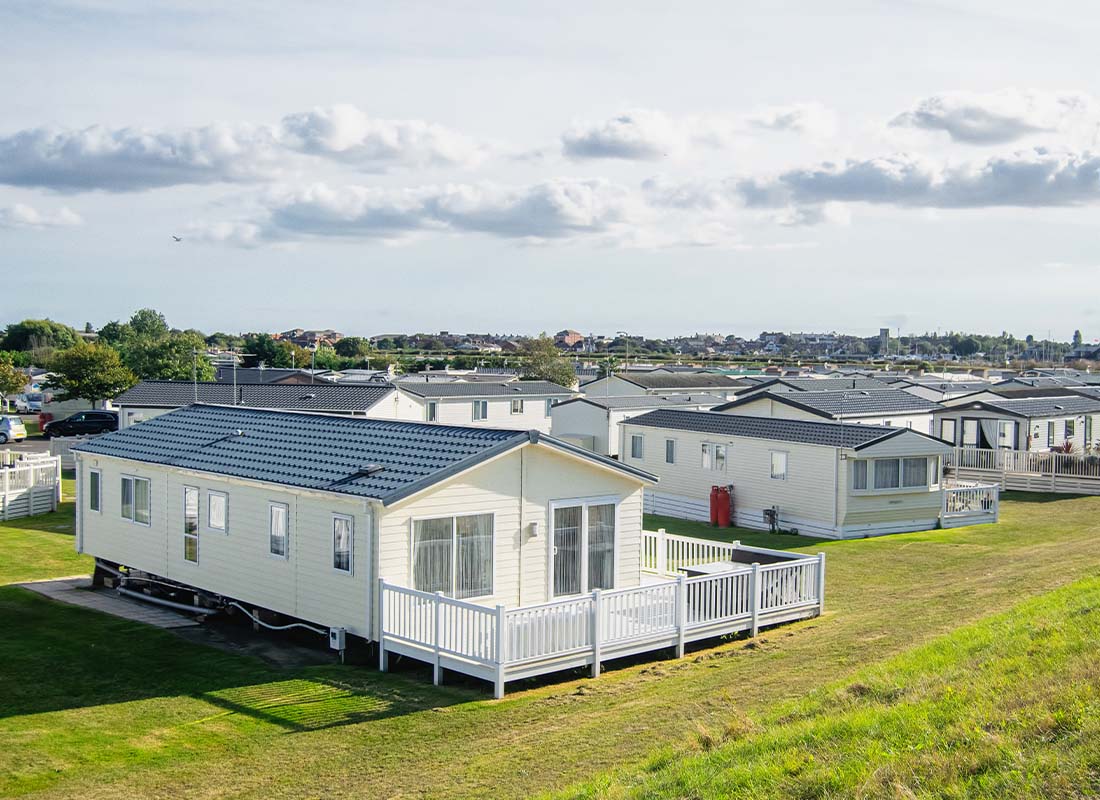
Mobile home park insurance is a bundle of commercial coverages that protects a park owner against property damage, liability claims, and lost rental income — the specific risks that come with operating a residential community you own but don't personally occupy.
If you own a park in the Treasure Valley, you know the landscape: a mix of owner-occupied lots and rental units, shared amenities, and tenants whose livelihood depends on a functioning site. Bittick works with park owners across Idaho and Texas, as well as clients in CA, CO, NV, OR, VA, and WA, placing coverage with carriers that actually understand this asset class.
What this coverage includes
Commercial property for what you own
Your park likely includes more than mobile home pads. Office buildings, perimeter fencing, signage, shared roads and sidewalks, utility connections, laundry equipment, and playground structures are all property you own and maintain. Commercial property insurance covers physical damage to these assets from covered perils like fire, windstorm, and vandalism. If your management office burns down or a water line under your private road fails, this is the coverage that pays for repairs or replacement.
General liability for common-area injuries
General liability insurance covers third-party bodily injury and property damage claims brought against your business. A resident slips on wet pavement near the laundry room, a child is injured on playground equipment, or a visitor trips over a broken curb — any of these can produce a lawsuit. This coverage pays for legal defense and, if you're found liable, settlements or judgments up to your policy limit. For a mobile home park, where dozens or hundreds of people move through shared spaces daily, this is a foundational coverage.
Business income protection if rent stops coming in
A business owners policy (BOP) typically bundles commercial property and general liability, and often adds business income coverage. If a covered loss forces you to close a section of the park or makes units uninhabitable, business income coverage helps replace the rental revenue you lose while repairs are underway. For a park where your cash flow depends entirely on occupied lots and units, a prolonged shutdown without this protection can be financially devastating.
Workers' compensation and employment liability
Many parks employ groundskeepers, maintenance staff, and office personnel. Workers' compensation covers medical costs and lost wages if an employee is injured on the job — and in Idaho, it is required once you have one or more employees. Employment practices liability insurance (EPLI) is a separate policy that covers lawsuits related to hiring decisions, discrimination claims, or workplace harassment allegations. Both coverages belong on your policy stack if you have payroll.
Cyber liability for tenant data
You collect names, lease agreements, payment information, and sometimes Social Security numbers from your tenants. A data breach that exposes that information can trigger notification costs, regulatory fines, and civil claims. Cyber liability insurance covers those expenses, along with costs to restore compromised systems. It's a coverage many park owners overlook until they need it.
Pairs well with
Commercial Auto Insurance
If employees use a park-owned truck or golf cart for maintenance rounds — or drive their personal vehicles on park business — commercial auto covers liability and physical damage from those incidents. Personal auto policies typically exclude business use.
Learn more ›Umbrella / Excess Liability
A serious injury at a pool or playground can produce a claim well above a standard general liability limit. A commercial umbrella policy sits on top of your underlying liability limits and pays once those are exhausted.
Learn more ›Workers' Compensation Insurance
Idaho law requires workers' comp for employers with any employees. It covers medical treatment and wage replacement for work-related injuries, and it protects the business from most direct employee lawsuits over those injuries.
Learn more ›Employment Practices Liability (EPLI)
EPLI covers the legal costs of defending against claims of wrongful termination, harassment, or discriminatory leasing and hiring practices. It is separate from general liability and workers' comp.
Cyber Liability Insurance
Tenant records, payment processing, and lease management software all create data exposure. Cyber liability covers breach response, notification costs, and third-party claims from affected tenants.
Learn more ›What this coverage protects against
Common risks and how this coverage addresses them. Tap any scenario to expand.
-
A resident's child is hurt on the park playground.
The risk
A seven-year-old falls from a climbing structure in the shared play area and breaks an arm. The parents hold you responsible for failing to maintain the equipment and file a personal injury claim against the park.
How this coverage helps
General liability insurance covers your legal defense costs and, if a settlement or judgment is reached, pays up to your policy limit. Without it, legal fees alone can run into tens of thousands of dollars before a case is resolved.
-
A sewer line backs up and floods four units.
The risk
A main sewer line failure sends wastewater into four homes in one section of the park. Tenants suffer property damage and demand you pay for cleanup, temporary housing, and damaged belongings. Repairs to the line and surrounding infrastructure are expensive.
How this coverage helps
A BOP with water backup coverage addresses the cost of infrastructure repairs and may cover liability claims from affected tenants. Business income coverage within the BOP can also replace rental income from units that are uninhabitable during the repair period.
-
Your groundskeeper tears a tendon repairing a road.
The risk
A maintenance employee is filling potholes on the park's private road when they slip and suffer a serious knee injury requiring surgery and six weeks off work. The employee files a workers' comp claim for medical expenses and lost wages.
How this coverage helps
Workers' compensation insurance pays the medical bills and partial wage replacement directly, keeping the claim from becoming a lawsuit against the business. It is required under Idaho law for any park with employees on payroll.
-
An employee causes a fender-bender while picking up supplies.
The risk
A maintenance staff member takes the park's utility truck to the hardware store in Meridian, rear-ends another vehicle at a stop light, and causes several thousand dollars in damage. The other driver's insurer comes after the park for reimbursement.
How this coverage helps
Commercial auto insurance covers the liability claim and the repair costs for the other vehicle. It also covers physical damage to your truck. A personal auto policy on the employee's own vehicle would not extend to business errand driving.
-
A former applicant files a discrimination complaint.
The risk
A prospective tenant you declined to rent to files a fair housing complaint alleging your denial was based on a protected characteristic. Even a groundless claim requires legal representation to defend, and the process can take months.
How this coverage helps
Employment practices liability insurance covers the cost of defending the claim and, if a settlement is required, contributes to that cost up to the policy limit. General liability policies do not cover this type of allegation.
-
A ransomware attack locks your leasing software.
The risk
Your property management software is hit with ransomware. Tenant payment records and lease files are encrypted. You cannot process rent, and you are legally required to notify tenants of the potential data exposure. The ransom demand is $15,000.
How this coverage helps
Cyber liability insurance covers breach notification costs, forensic investigation fees, and business interruption losses tied to the attack. Some policies also cover ransom payments, depending on the carrier and the specific policy terms.
-
A fire destroys your on-site management office.
The risk
An electrical fault starts a fire overnight in the park's management office, destroying computers, files, office furniture, and the building itself. You also lose weeks of rental processing capacity while the space is rebuilt.
How this coverage helps
Commercial property insurance covers the cost to rebuild the office and replace the contents. Business income coverage within your BOP helps offset lost revenue and ongoing expenses during the period you are operating without a functional office.