
Insurance by Industry
Mining Insurance That Covers Your Operation Underground and Above
From equipment breakdowns to environmental liability, Bittick shops the market to find coverage that fits your mining business.
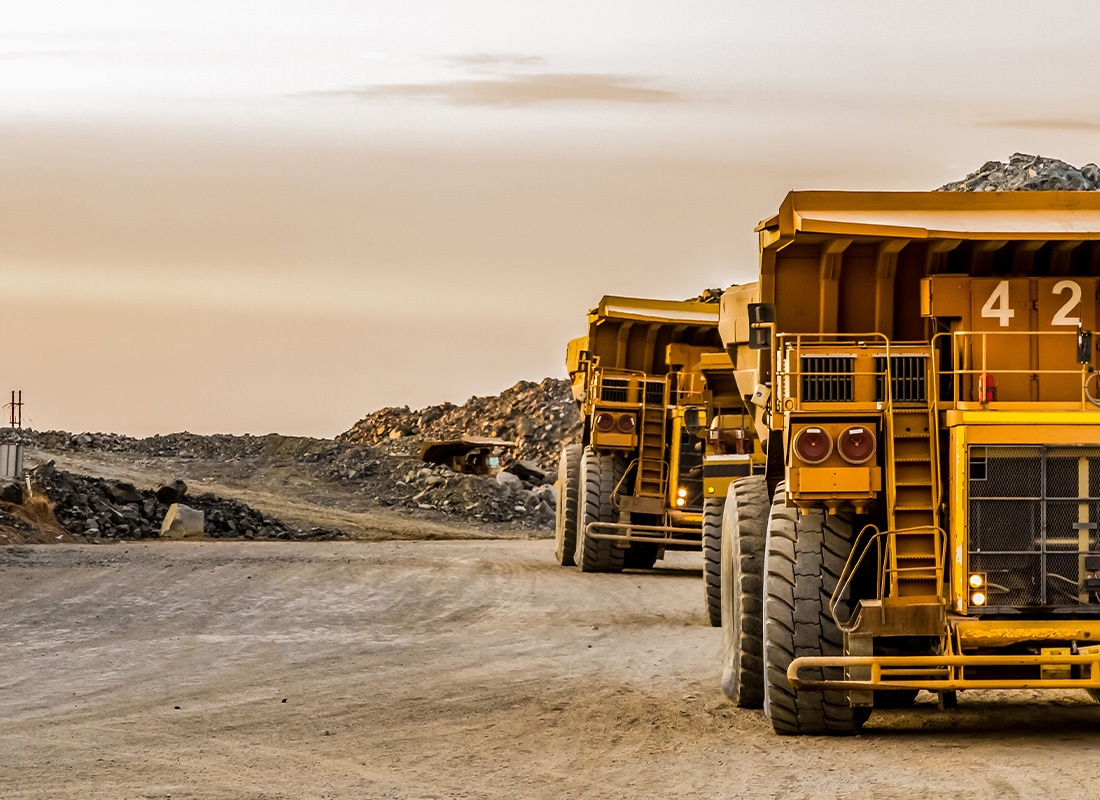
Mining insurance is a specialized package policy that combines property, liability, and casualty coverages to protect mining operations from the hazards most standard business policies exclude. The mining sector runs on expensive, hard-to-replace equipment, a high-risk workforce, and operations that can affect the surrounding environment in ways a general commercial policy simply wasn't designed to address. Coal mines, quarry operations, sand-and-gravel excavators, precious-metal mines, and surface and underground operations all carry distinct risk profiles, and the right policy structure accounts for each layer.
Bittick Insurance is an independent agency. We don't underwrite policies ourselves; we place coverage with multiple carriers licensed in Idaho, Texas, and across CA, CO, ID, NV, OR, TX, VA, and WA, so we can match your operation to coverage that actually fits.
What this coverage includes
Equipment breakdown and machinery coverage
Modern mining depends on specialized machinery that costs far more to repair or replace than a standard commercial property policy covers. Equipment breakdown coverage, sometimes written as part of an inland marine or machinery policy, pays to repair or replace specialized extraction equipment when mechanical failure or accidental damage puts it out of service. Many policies also include a business income component, so if a key piece of equipment goes down and production halts, you have a cushion covering lost revenue while you wait on parts or a replacement.
Workers' compensation
Mining is one of the more hazardous industries in the country, and your crew works with heavy machinery, controlled explosives, unstable terrain, and confined spaces. Workers' compensation coverage pays your employees' medical bills and a portion of lost wages when a job-site injury or occupational illness occurs. It also shields your company from employee lawsuits arising from those injuries. In Idaho, most employers are required to carry workers' comp, and the coverage structure matters as much as meeting the legal minimum.
Environmental liability coverage
Mining operations can disturb groundwater, release particulates, or alter drainage patterns in ways that create liability for neighboring property owners, waterways, or regulatory agencies. Environmental impairment liability coverage pays for pollution cleanup costs and third-party claims if your operation accidentally contaminates a water source, causes a slope failure, or generates runoff that reaches adjacent land. This coverage is usually written as a separate policy or endorsement because standard general liability policies include pollution exclusions that would otherwise leave you exposed.
General liability and premises coverage
General liability insurance covers third-party bodily injury and property damage claims that arise from your business operations. If an unauthorized visitor enters your site and is injured, or if your hauling operation damages a neighboring property, general liability is the coverage that responds. Premises liability, a component of a general liability policy, specifically addresses injury claims tied to conditions on your property or job site.
Cyber liability and data protection
Mining operations increasingly rely on networked systems for equipment monitoring, production data, payroll, and vendor management. Cyber liability insurance covers your business if a data breach or cyberattack exposes company or employee information, disrupts operations, or triggers a regulatory notification requirement. This is a coverage that often gets overlooked by extraction-industry businesses, but the cost of a breach response can run well into six figures even for a mid-size operation.
Pairs well with
Commercial General Liability
The foundation of any mining insurance program. A standalone general liability policy covers third-party bodily injury and property damage claims that your more specialized coverages don't address.
Learn more ›Commercial Property Insurance
Covers your buildings, processing facilities, and on-site structures against fire, theft, vandalism, and certain weather events. Pairs with equipment breakdown coverage to protect both the structures and the machinery inside them.
Learn more ›Commercial Auto Insurance
Haul trucks, loaders, and service vehicles that operate on public roads need commercial auto coverage. Your personal or standard fleet policy almost certainly excludes vehicles used in extraction operations.
Learn more ›Inland Marine Insurance
Equipment that moves between job sites or is stored off-premises falls into gaps that standard commercial property policies leave open. Inland marine fills those gaps for specialized tools and portable equipment.
Learn more ›Umbrella / Excess Liability
A single serious injury, environmental claim, or equipment accident can generate liability that exceeds your underlying policy limits. A commercial umbrella extends those limits and protects the business assets you've built.
Learn more ›Business Income Insurance
If a covered loss forces your operation to shut down temporarily, business income coverage replaces the revenue you would have earned during the downtime. Essential for mines where production interruptions have immediate cash-flow consequences.
What this coverage protects against
Common risks and how this coverage addresses them. Tap any scenario to expand.
-
A hydraulic excavator fails mid-shift and halts production.
The risk
The primary excavator on a gravel operation develops a catastrophic hydraulic failure. The machine can't run, replacement parts are backordered three weeks out, and the operation has contractual delivery commitments to meet.
How this coverage helps
Equipment breakdown coverage pays the repair bill. If the policy includes a business income component, it also replaces a portion of the lost production revenue during the downtime, keeping cash flow stable while the machine is repaired.
-
A worker is injured when a loader tips on unstable fill material.
The risk
An operator on a surface mine is moving overburden when the ground gives way under one side of the machine. The operator is thrown and sustains fractures requiring surgery, hospitalization, and weeks of rehabilitation.
How this coverage helps
Workers' compensation covers the employee's medical costs and a portion of their lost wages while they recover. It also protects the company from a lawsuit arising from the injury, which, in a severe case, could otherwise threaten the financial stability of the whole operation.
-
Runoff from a quarry face contaminates a downstream irrigation canal.
The risk
Heavy rain accelerates erosion at the face of a limestone quarry, and sediment-laden water drains into an adjacent irrigation canal. The neighboring rancher files a claim, and a state environmental agency opens a compliance review.
How this coverage helps
Environmental impairment liability coverage pays for the cleanup, covers the cost of defending the regulatory action, and funds the third-party settlement with the neighboring property owner. Standard general liability would have excluded the claim under its pollution provisions.
-
An unauthorized teenager enters a closed pit and is seriously hurt.
The risk
Over a weekend, a teenager cuts through a perimeter fence at an idle quarry site and falls into a pit, sustaining serious injuries. The family files a premises liability claim against the mining company.
How this coverage helps
General liability insurance, specifically the premises liability component, covers the legal defense costs and any settlement or judgment. Even where trespassers assume some risk, landowners can face liability if the hazard is considered an "attractive nuisance" under state law.
-
A blast fractures the foundation of a house on the adjacent parcel.
The risk
A controlled blasting operation at a surface mine sends ground vibration beyond the expected radius, and a homeowner on the neighboring parcel finds foundation cracks that a contractor attributes to the blast. The homeowner demands compensation.
How this coverage helps
General liability coverage responds to the third-party property damage claim. Depending on how the policy is structured, it covers the investigation, the cost of defending or settling the claim, and any court-awarded damages up to the policy limit.
-
Ransomware encrypts your production management software.
The risk
An employee clicks a phishing link, and ransomware locks the software managing your ore processing schedules, equipment maintenance logs, and vendor invoices. The attacker demands payment, and you can't process shipments until the system is restored.
How this coverage helps
Cyber liability insurance pays for the incident response team, data restoration costs, and business interruption losses during the outage. It also covers any regulatory notification costs if employee or vendor data was exposed in the breach.
-
Fire destroys a conveyor system at the processing facility.
The risk
An electrical fault sparks a fire that burns through the main conveyor belt connecting the pit to the processing building. The conveyor is a total loss, and the processing side of the operation shuts down while a replacement is sourced and installed.
How this coverage helps
Commercial property coverage pays to rebuild or replace the conveyor system. A business income policy running alongside it covers the revenue loss during the repair period, so the company can meet payroll and vendor obligations while the facility is offline.
-
A haul truck collision on a county road injures another motorist.
The risk
One of your haul trucks makes a left turn onto a county road and is struck by an oncoming vehicle. The other driver is injured and the vehicle is totaled. The county road is public, but the truck is clearly a commercial mining vehicle.
How this coverage helps
Commercial auto insurance covers the bodily injury and property damage liability to the other driver, as well as damage to your truck. A personal or standard fleet policy would have excluded a vehicle used in this type of extraction operation.