Business Insurance
Liquor Liability Insurance for Businesses That Serve Alcohol
One alcohol-related incident can generate a lawsuit that a standard business policy won't touch.
Liquor liability insurance covers your business for bodily injury, property damage, and legal costs that arise because you sold or served alcohol to a customer who then caused harm. Idaho, like most states, has dram shop laws: statutes that can hold a bar, restaurant, brewery, or retailer legally responsible for a patron's actions after they leave your door, without the injured party having to prove you acted recklessly. That exposure is specifically excluded from most standard general liability policies, which is exactly why a standalone liquor liability policy exists. Bittick shops this coverage across multiple carriers to find terms that fit your operation, whether you run a taproom off Eagle Road, a catering company working Treasure Valley events, or a licensed retailer.
Your bar, restaurant, or establishment faces real liability when alcohol is involved.
Liquor liability protects you from claims tied to intoxicated guests, and we help you understand what you actually need.
What this coverage includes
Third-party injury and property damage
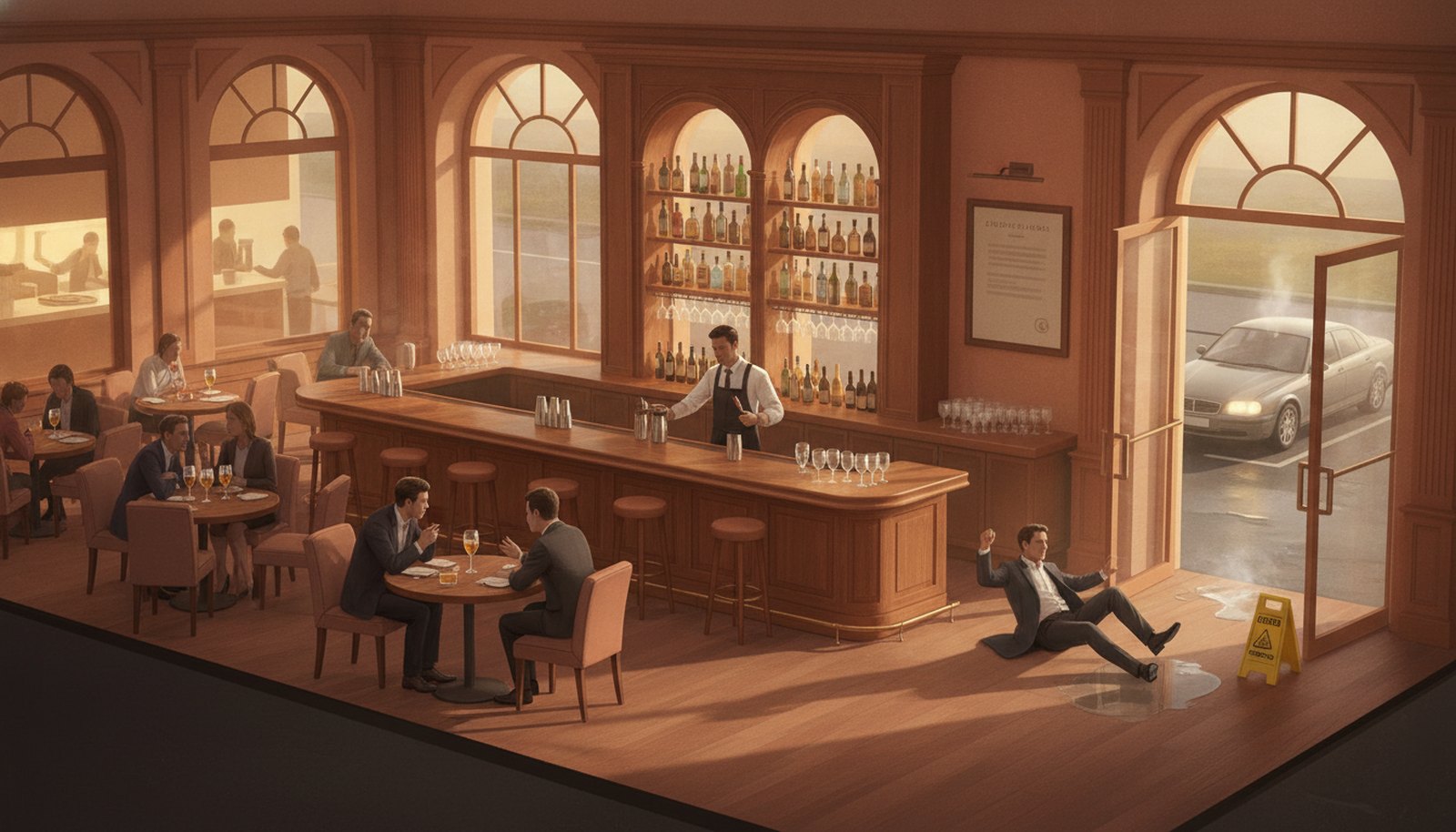
This is the core of the policy. If a patron leaves your establishment intoxicated and injures someone, or destroys property, the injured party can name your business in their claim. Liquor liability steps in to pay covered damages and the legal costs of defending your business, up to your policy limits. That includes incidents that happen after the patron has left your premises, which is where dram shop liability most often surfaces.
Assault and battery coverage
Alcohol and confrontation sometimes go together, and altercations on or near your premises can generate injury claims and lawsuits against you. Many liquor liability policies include assault and battery coverage, which addresses bodily injury claims, property damage, and legal fees arising from fights connected to intoxication. This also covers situations where your staff physically removes an unruly patron and the patron later claims excessive force.
Over-service claims
A busy Friday night makes it hard for staff to track every patron's consumption across a shift. If a guest was over-served and that over-service contributes to a subsequent injury, your business can face a claim even if no single employee acted with obvious disregard. Liquor liability covers those gray-area claims where the argument is that your operation collectively served too much, not that any one person intentionally did so.
Legal defense costs
Even a claim you ultimately win can cost tens of thousands of dollars in attorney fees, court costs, and expert witnesses. Some liquor liability policies cover those litigation expenses regardless of outcome, including cases where the court awards no damages but both sides absorb their own legal costs. Without this, a successful defense can still do serious financial damage to a small or mid-sized operation.
Pairs well with
General Liability Insurance
Your general liability policy covers a wide range of third-party bodily injury and property damage claims, but it typically excludes alcohol-related incidents. Liquor liability fills that specific gap; the two policies work side by side.
Learn more ›Commercial Property Insurance
An altercation or accident on your premises can damage your building, equipment, or inventory in addition to injuring people. Commercial property coverage handles the physical damage to your own assets that liquor liability does not.
Learn more ›Commercial Umbrella Insurance
A serious alcohol-related accident, particularly one involving a fatality or multiple injured parties, can exhaust your primary liquor liability limits quickly. A commercial umbrella policy extends your coverage above those limits.
Learn more ›Workers' Compensation Insurance
Your employees can be injured during alcohol-fueled altercations just as easily as your customers. Workers' compensation covers their medical costs and lost wages regardless of fault, which is separate from what liquor liability addresses.
Learn more ›Business Owners Policy (BOP)
A BOP bundles general liability and commercial property for eligible small businesses. For many bars, restaurants, and retailers, a BOP forms the foundation of their coverage program, with liquor liability added as a separate policy.
Learn more ›