Insurance by Industry
Insurance built for janitorial and cleaning businesses
From commercial office cleaners to residential crews, Bittick helps you place coverage that fits how your business actually works.
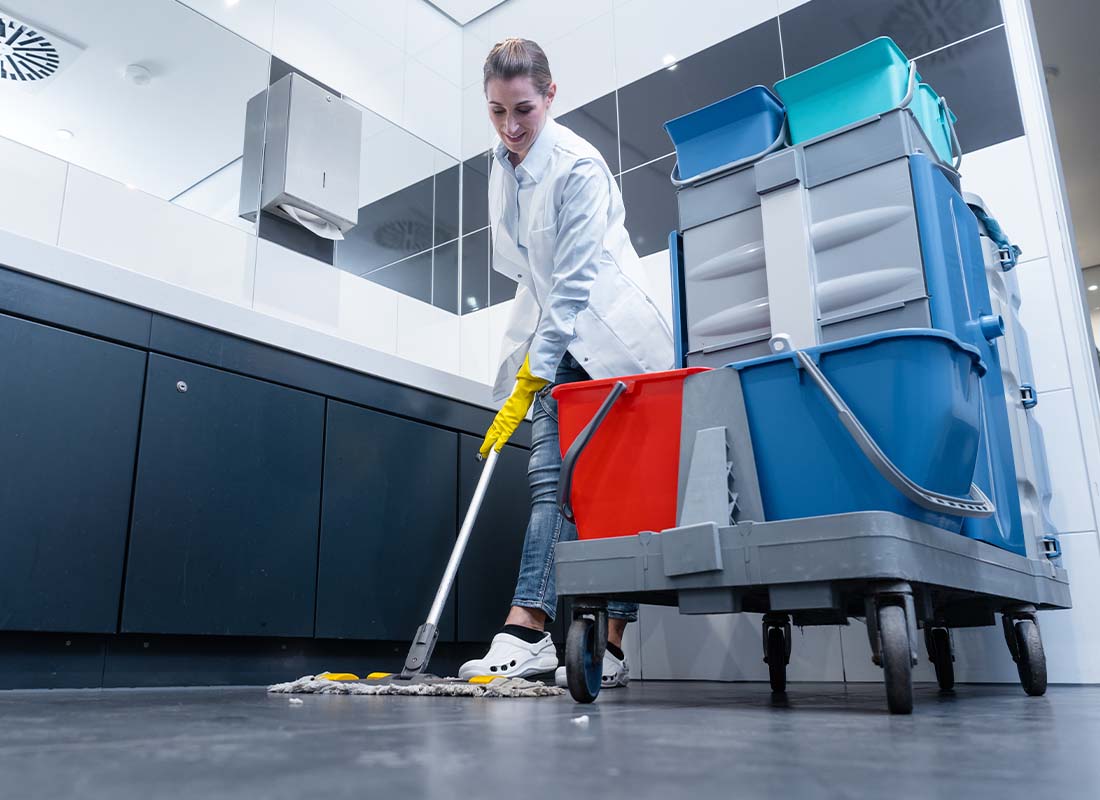
Janitorial services insurance is a set of business policies that protects cleaning companies from the liability, property, and auto exposures that come with working inside other people's buildings every day. A slip-and-fall at a client's office, a broken window during a move-in clean, a chemical spill that damages flooring — these are real claims, not hypotheticals. Because cleaning businesses vary widely (commercial janitorial contracts, residential house cleaning, carpet and upholstery work, post-construction cleanup), there is no single policy that covers everything. Bittick, as an independent agency, shops your account across multiple carriers to build a program that matches the actual work your crew does.
What this coverage includes
General liability for on-site work
General liability insurance covers bodily injury and property damage claims that arise while your employees are working at a client's location. If a client trips over a mop bucket in a Meridian office hallway, or a worker knocks a monitor off a desk while cleaning, your policy steps in to cover legal costs and damages. This is the foundational coverage for any cleaning operation, and limits should reflect the size and value of the accounts you service. A commercial umbrella policy can sit above it to extend those limits if a single claim runs large.
Business auto and non-owned auto
Most cleaning crews move from site to site every day, which makes auto exposure one of the most common liability triggers in this industry. A company-owned van hauling equipment down I-84 needs commercial auto coverage — personal auto policies exclude business use. When employees drive their own vehicles to jobs, non-owned auto liability coverage protects the business if one of those drivers causes an accident on company time. Both exposures are worth addressing before a claim reveals the gap.
Pollution and environmental liability
Cleaning products contain solvents, degreasers, and disinfectants that can cause more damage than the surface they were meant to clean. Mixing incompatible chemicals can compromise air quality in an enclosed space. Runoff from a floor-stripping job can reach a drain and create a remediation obligation. Some policies also cover the inadvertent disturbance of mold, asbestos, or lead-based materials that a crew encounters in an older building. Environmental impairment coverage fills the gap that a standard general liability policy typically excludes.
Workers' compensation
Cleaning work involves repetitive motion, wet floors, ladders, and exposure to chemicals — all of which generate workers' compensation claims at a higher rate than many office-based businesses. In Idaho, most employers with one or more employees are required to carry workers' compensation. It covers medical treatment and lost wages when an employee is injured on the job and protects the business from direct civil liability for those injuries. Proper classification of your employees matters; misclassification can create coverage gaps at the worst possible time.
Cyber liability and employment practices
If your business stores client contact information, billing data, or employee records digitally, a network breach can expose you to notification costs and regulatory scrutiny. Cyber liability coverage handles those costs. Employment practices liability insurance addresses a different exposure: claims from current or former employees alleging wrongful termination, discrimination, or harassment. Both coverages are increasingly relevant as cleaning companies grow their teams and rely on scheduling software and cloud-based systems to run operations.
Pairs well with
Commercial Umbrella Insurance
General liability limits can be exhausted by a serious injury claim at a large commercial account. A commercial umbrella policy adds a layer of coverage above your underlying liability limits so a single incident does not exceed your protection.
Learn more ›Commercial Property Insurance
Your cleaning equipment, supplies, and any leased or owned space represent real assets. Commercial property coverage protects that investment against fire, theft, and other covered losses.
Learn more ›Professional Liability (Errors and Omissions)
If a client claims your crew failed to perform contracted services correctly and pursues damages, a general liability policy may not respond. Professional liability covers the financial fallout from claims tied to your work quality or advice.
Learn more ›Cyber Liability Insurance
Cleaning businesses that use digital scheduling, client portals, or cloud billing are exposed to data breaches. Cyber liability covers notification costs, credit monitoring, and regulatory response after an incident.
Learn more ›Employment Practices Liability Insurance
As your crew grows, so does exposure to claims from employees. EPLI covers legal defense and settlements for wrongful termination, harassment, and discrimination allegations.
Learn more ›What this coverage protects against
Common risks and how this coverage addresses them. Tap any scenario to expand.
-
Client injured by equipment left on a wet floor.
The risk
A night-shift crew finishes a retail strip mall in Nampa and a store manager arriving early the next morning slips on a section of floor left wet near a propped mop bucket. She breaks her wrist and the property management company contacts your business the same day.
How this coverage helps
General liability coverage responds to the bodily injury claim, covering her medical expenses and any legal costs if the situation escalates. Without it, that claim comes directly out of your operating account.
-
Wrong cleaning product ruins a client's flooring.
The risk
A technician uses an acid-based cleaner on a sealed concrete floor in a Boise office lobby. The sealer delaminates across a wide section and the building owner gets a repair estimate for several thousand dollars.
How this coverage helps
General liability covers property damage caused by your employees during the course of their work. The claim is reported to the carrier, which handles the repair cost and any negotiation with the building owner.
-
Company van in an accident on the way to a job.
The risk
A crew driving a company-owned cargo van to an early-morning commercial account on Eagle Road gets rear-ended at a light and the driver suffers a neck injury. The van also needs bodywork before it can be used again.
How this coverage helps
Commercial auto coverage handles both the vehicle damage and the bodily injury liability from the accident. A personal auto policy would not cover a vehicle used primarily for business purposes.
-
Employee using a personal vehicle causes a collision.
The risk
One of your residential cleaners drives her own car to a house in Star and backs into a parked vehicle in the client's driveway. The damage is minor but the other car owner contacts your business directly since the employee was on the clock.
How this coverage helps
Non-owned auto liability coverage extends your business's protection to situations where employees use personal vehicles for work purposes. Your business is shielded from the liability even though you do not own the car involved.
-
Chemical fumes affect a building occupant.
The risk
A cleaning team applies a solvent-based floor finish in a Meridian medical office suite over the weekend. A staff member with asthma arrives Monday and has a respiratory reaction, requiring urgent care. The building owner alleges poor ventilation practices.
How this coverage helps
Pollution liability coverage addresses claims arising from chemical exposure during your work, including bodily injury and any remediation costs. Standard general liability policies often contain pollution exclusions that would leave this claim uncovered.
-
Mold disturbed during a post-construction cleanup.
The risk
A crew hired for post-renovation cleanup in an older Caldwell commercial building disturbs a section of drywall with hidden mold growth. The spores spread to adjacent rooms before the issue is identified, and the building owner demands remediation across the affected area.
How this coverage helps
Environmental impairment coverage covers the cost of professional mold remediation and related damages when your crew inadvertently releases a biological contaminant during the course of work. This is a gap most standard policies do not fill.
-
Employee injured on a ladder during a high-rise window clean.
The risk
A crew member loses footing on an extension ladder while cleaning exterior windows on a two-story commercial building in Eagle and falls, fracturing an ankle. He is unable to work for six weeks.
How this coverage helps
Workers' compensation covers his medical bills and a portion of lost wages during recovery. Idaho law requires most employers to carry this coverage, and it also protects your business from a direct civil lawsuit for the workplace injury.
-
Client billing data exposed in a software breach.
The risk
Your scheduling and invoicing platform gets hit by a credential-stuffing attack. Client names, addresses, and credit card data for several months of transactions are accessed by an unauthorized party. You are required to notify affected clients and face a potential state regulatory inquiry.
How this coverage helps
Cyber liability coverage funds the notification process, provides access to a breach response team, and covers regulatory defense costs. For a small cleaning operation, those costs can be as damaging as a physical liability claim.