Insurance by Industry
Insurance built for interior design professionals
From sole proprietors working out of a home studio to multi-employee firms with showrooms, Bittick shops coverage across carriers to fit your practice.
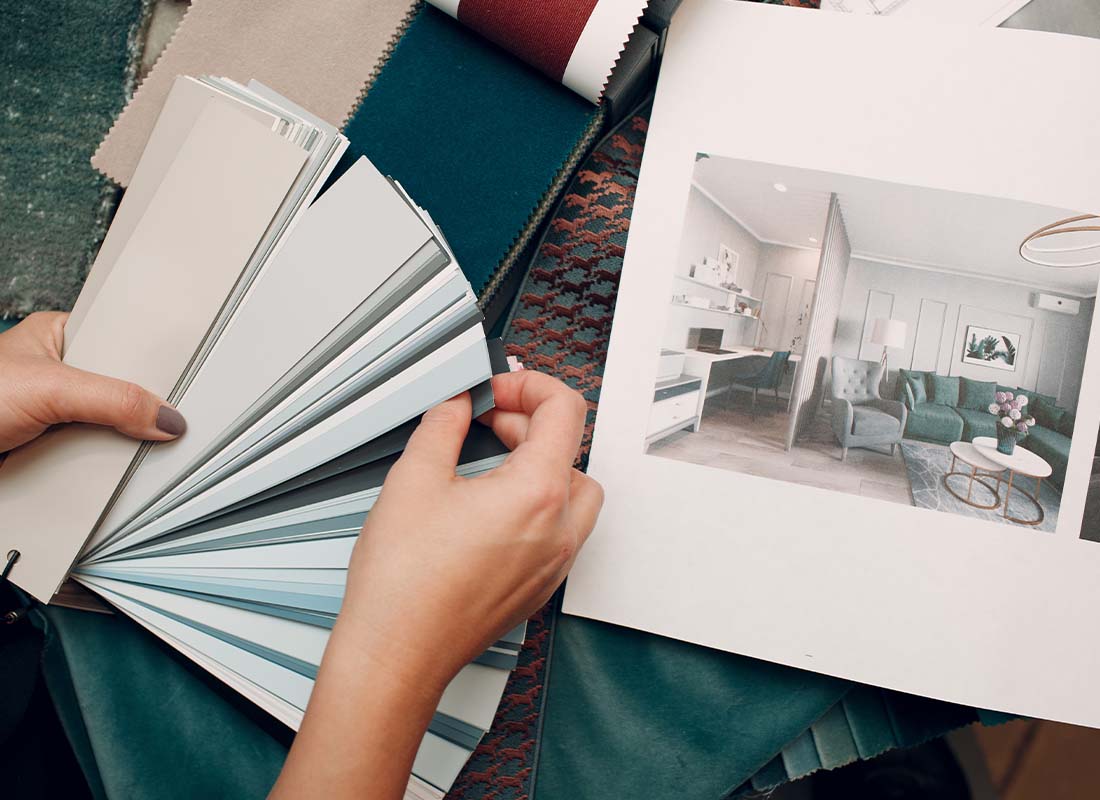
Interior designer insurance is a package of business coverages that protects design professionals against the liability, property, and professional-error exposures that come with specifying and managing work inside other people's spaces. A client who believes your design caused a code violation, an accidental gouge in a hardwood floor during a site visit, or a missed project deadline that triggers a contract dispute — any of these can become a claim. Design work is creative, but the legal and financial risks are concrete. Bittick places coverage with multiple carriers and matches the policy structure to your actual practice, whether you work residential projects in the Boise foothills or commercial fit-outs across the Treasure Valley.
What this coverage includes
General liability: third-party injuries and property damage
General liability coverage pays for bodily injury or property damage claims made against your business by a third party. If you or a member of your team accidentally damages a client's custom tile installation during a walkthrough, or a vendor trips over your equipment samples in a client's entryway, this is the coverage that responds. It also covers certain personal and advertising injury claims, including allegations of libel or slander connected to your business. For most interior designers, general liability is the policy that goes on every contract and certificate of insurance request.
Professional liability: errors, omissions, and negligence claims
Professional liability insurance (sometimes called errors and omissions, or E&O) covers claims that your professional advice or services caused a financial loss. If a client argues that your space plan failed to meet local building code, that a material specification contributed to a moisture problem, or that you missed a contractual milestone, professional liability is what funds your defense and any resulting settlement. General liability does not cover these scenarios. For design professionals, E&O coverage is not optional — it addresses the core of what clients are most likely to dispute.
Business owners policy: your property and your business income
A business owners policy (BOP) bundles commercial property coverage with general liability into a single package. It covers your office, studio, or showroom space and the contents inside it — furniture samples, fabric libraries, computer equipment, design files. A BOP also extends property coverage to your equipment and materials while they are at a client's location. If a fire, theft, or vandalism event shuts down your studio, business income coverage within the BOP helps replace lost revenue during the recovery period. Sole proprietors who work from home still need a BOP or similar endorsement; personal homeowners policies exclude business property and business liability.
Workers' compensation and employment practices liability
Once you bring on employees — even part-time installers or junior designers — Idaho law requires workers' compensation coverage. It pays for medical costs and lost wages when an employee is injured on the job, and it limits your exposure to lawsuits from injured workers. Employment practices liability insurance (EPLI) is a separate but related layer: it protects the business if a current or former employee alleges wrongful termination, discrimination, or harassment. These two coverages work together to protect both your team and your firm.
Commercial auto and cyber liability
Interior designers drive constantly: client consultations, vendor showrooms, jobsite check-ins. Your personal auto policy likely excludes business use, which means a collision on the way to a Meridian jobsite could leave you personally exposed. A commercial auto policy fills that gap. Cyber liability coverage matters if you store client project data, payment information, or vendor contracts digitally. A breach or ransomware attack can result in notification costs, legal fees, and regulatory penalties that a standard BOP does not cover.
Pairs well with
General Liability Insurance
The baseline coverage most clients and contractors require before you step on a jobsite. Pairs with professional liability to cover both physical and professional-error claims.
Learn more ›Professional Liability (E&O) Insurance
Covers the cost of defending and settling claims that your design work caused a financial loss, a code issue, or a contract failure. Distinct from general liability and essential for design professionals.
Learn more ›Business Owners Policy (BOP)
Bundles property coverage and general liability into one policy, which typically costs less than buying each separately. Well-suited for design studios, showrooms, and home-based operations alike.
Learn more ›Workers' Compensation Insurance
Required by Idaho law once you have employees. Covers medical bills and wage replacement for work-related injuries and limits your personal exposure to employee lawsuits.
Learn more ›Commercial Auto Insurance
Fills the coverage gap your personal auto policy leaves open when you drive for business. Relevant any time you use a vehicle for client visits, vendor runs, or jobsite walkthroughs.
Learn more ›Cyber Liability Insurance
Responds to data breaches, ransomware, and other digital incidents involving client or payment data. Standard BOPs do not include this protection.
Learn more ›What this coverage protects against
Common risks and how this coverage addresses them. Tap any scenario to expand.
-
A code violation surfaces after your renovation design is complete.
The risk
You specify a structural wall removal as part of a whole-home remodel in a newer Meridian subdivision. After the project closes, an inspection reveals the opening didn't comply with the local load-bearing requirements. The client holds your design responsible and files a claim seeking the cost of remediation plus the contractor's rework fees.
How this coverage helps
Your professional liability policy funds the legal defense and, if the claim is valid, covers the settlement up to your policy limits. Without it, you would pay those costs out of your firm's operating budget.
-
You accidentally damage a client's antique hardwood floors during a site visit.
The risk
During a final walkthrough on a high-end residential project in the North End, your team drags a furniture sample across an original 1920s fir floor, leaving deep scratches across several boards. The client requests full replacement of the damaged section, which runs into several thousand dollars.
How this coverage helps
General liability coverage pays for the property damage repair up to your policy limits, so the claim doesn't come out of your own pocket and the client relationship can be salvaged.
-
Your studio is burglarized and expensive material samples go missing.
The risk
Over a weekend, someone breaks into your Eagle studio and takes a laptop with active project files, a high-end monitor, and several fabric and tile sample kits that you use for client presentations. The total loss is significant enough to disrupt your active projects.
How this coverage helps
The commercial property portion of your BOP covers the replacement cost of the stolen business equipment and materials. Business income coverage kicks in if the disruption delays billable work past your deductible threshold.
-
A vendor's delivery driver is injured at your home-based studio.
The risk
You run your design business out of a dedicated space in your Eagle home and regularly receive product deliveries there. A driver slips on your front walkway while dropping off a large tile order and sustains a knee injury that requires surgery.
How this coverage helps
A homeowners policy alone does not cover business-related injuries on your property. A BOP or standalone general liability policy that accounts for your home-based business use fills that gap and responds to the injury claim.
-
A junior designer rear-ends another driver while heading to a client meeting.
The risk
Your employee is driving their personal vehicle to a Nampa client consultation and causes a collision at a busy intersection off I-84. The other driver files a claim for vehicle damage and medical expenses. Your employee's personal auto insurer denies the claim, citing business use.
How this coverage helps
A commercial auto policy covering business use, or a hired-and-non-owned auto endorsement on your BOP, steps in to cover the damages. Without it, both your employee and your firm could face direct liability.
-
A ransomware attack locks your project management system.
The risk
Your design firm stores client contracts, payment information, and project renderings on a cloud-based platform. A phishing email compromises your login credentials and a ransomware group encrypts your files, demanding payment to restore access. Notifying affected clients, hiring a forensics firm, and managing potential regulatory exposure adds up quickly.
How this coverage helps
Cyber liability insurance covers breach notification costs, forensic investigation fees, and certain legal expenses tied to the incident. A standard BOP does not include these costs, so cyber coverage is a separate but important layer for any design firm handling client data.
-
A former employee files a wrongful termination complaint.
The risk
You let go of a part-time design assistant during a slow season. Several months later, you receive notice that the former employee has filed a complaint alleging the termination was retaliatory. Even if the claim is without merit, responding to it requires legal counsel and administrative time.
How this coverage helps
Employment practices liability insurance (EPLI) covers the cost of your legal defense and any settlement or judgment up to the policy limit. For small design firms without dedicated HR staff, this coverage protects against claims that are expensive to fight regardless of outcome.