
Insurance by Industry
Electrical Contractor Insurance for Idaho Job Sites
From residential panel upgrades in Eagle to large commercial builds in Meridian, Bittick places coverage that keeps pace with real electrician risks.
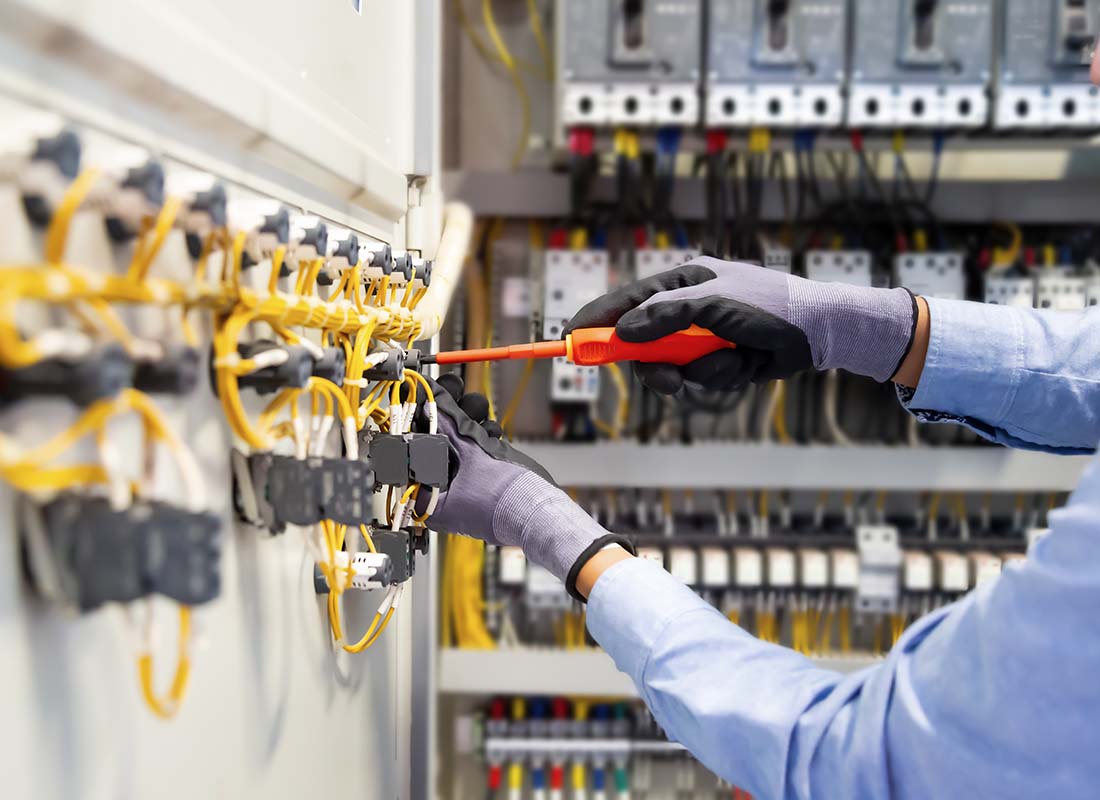
Electrical contractor insurance is a bundle of business policies designed to protect electricians and electrical contracting companies from the liability, property, and income risks that come with the trade. Running wire in a half-framed spec home in Star is different from pulling commercial service for a Meridian distribution center, but several core exposures follow you to every job: third-party injury, property damage to a client's building, faulty-work claims, and the value of the tools and equipment in your van. Bittick is an independent agency, which means we shop your coverage across multiple carriers and put together the combination that actually fits how you work.
What this coverage includes
General liability and completed operations
General liability insurance covers bodily injury and property damage claims that arise from your work on a job site. If a homeowner trips over your cable run or a breaker you installed shorts out and scorches a client's finished basement, this is the coverage that responds. Completed operations is the part of your general liability policy that extends that protection after you've finished the job and packed up. Faulty-work lawsuits often come weeks or months after the final inspection, and completed operations keeps you covered when they do.
Tools, equipment, and inland marine
Inland marine insurance covers the tools and specialized equipment you haul from site to site. The name sounds like it has nothing to do with an electrician in the Treasure Valley, but it originated as coverage for goods in transit and evolved to protect any property that moves regularly. A stolen Milwaukee drill set from your van on a Nampa job site, conduit benders damaged in transit on I-84, or a wire-pulling machine lost on a commercial project are exactly the kind of losses it addresses. Standard commercial property policies cover what's inside your shop; inland marine covers what's moving.
Commercial auto and hired and non-owned auto
Commercial auto insurance covers your company vehicles when an accident causes bodily injury or property damage. A personal auto policy will almost always deny a claim made while a vehicle was being used for business purposes. If your crew drives personal trucks to job sites, or if you rent a van for a large pull, hired and non-owned auto insurance fills the gap that commercial auto doesn't cover. Both coverages are worth reviewing any time your vehicle situation changes.
Business interruption and OPUS
Business interruption insurance replaces lost income and covers ongoing operating expenses if a covered event forces you to shut down temporarily. For electrical contractors, there's also a specialized extension called off-premises utility services coverage, often abbreviated OPUS. If a major storm knocks out power across the Treasure Valley and you physically cannot work because your service area has no electricity, OPUS can help replace the income you'd otherwise lose. Not every carrier offers this automatically; it's worth asking about explicitly.
Broader business policies worth layering in
A few additional coverages come up consistently for electrical contractors. Commercial umbrella insurance sits above your standard liability limits and responds when a catastrophic claim exhausts your underlying policy. Cyber liability matters if you use estimating software, cloud invoicing, or store client data. Employment practices liability covers legal fees and damages if an employee or applicant accuses your company of discrimination, harassment, or wrongful termination. And if you run your operation from a home office, a business owners policy (BOP) provides commercial-grade property and liability protection that a homeowners policy won't.
Pairs well with
Workers Compensation Insurance
Idaho law requires most employers to carry workers comp. Electricians face real injury risk from arc flash, falls, and equipment, and a workers comp policy covers medical treatment and lost wages when someone on your crew gets hurt on the clock.
Learn more ›Commercial Property Insurance
If you operate out of a shop or office, commercial property insurance protects the building and its contents from fire, theft, vandalism, and other covered losses. It pairs with inland marine to cover both stationary and mobile property.
Learn more ›Commercial Umbrella Insurance
A single large lawsuit on a commercial project can exceed a standard general liability limit. A commercial umbrella policy adds a layer of higher-limit protection above your underlying liability policies for exactly those situations.
Learn more ›Cyber Liability Insurance
If you use estimating platforms, send invoices digitally, or store client payment information, you're a potential target. Cyber liability covers notification costs, data recovery, and liability if client data is compromised.
Learn more ›Employment Practices Liability Insurance
As your electrical business grows and you add employees, EPLI covers legal defense costs and damages if a current or former employee files a claim of harassment, discrimination, or wrongful termination.
Learn more ›What this coverage protects against
Common risks and how this coverage addresses them. Tap any scenario to expand.
-
A completed job leads to a faulty-work lawsuit months later.
The risk
You finish wiring a new home in the Eagle foothills, pass inspection, and move on to the next job. Three months later, the homeowner calls claiming an improperly grounded circuit started a fire in their garage and they're holding you responsible for damages.
How this coverage helps
Completed operations coverage, which is part of your general liability policy, responds to claims like this after a job is finished and signed off. It covers legal defense costs and any covered damages up to your policy limits, even when the problem doesn't surface until long after you've moved on.
-
A client's expensive equipment is damaged during a service upgrade.
The risk
You're upgrading the electrical service for a small manufacturing facility in Caldwell. During the cutover, a surge damages a piece of production equipment worth tens of thousands of dollars, and the owner expects you to pay.
How this coverage helps
General liability insurance covers third-party property damage claims arising from your operations. Your carrier steps in to evaluate the claim, cover legal defense if it escalates, and pay covered damages, so the loss doesn't come directly out of your business.
-
Your van is broken into and critical tools are taken.
The risk
Your service van is parked overnight at a commercial construction site in Nampa. Someone breaks in and takes a full set of hand tools, a wire puller, and a conduit bender, gear that adds up to several thousand dollars and that you need to keep working.
How this coverage helps
Inland marine insurance covers tools and equipment in transit or temporarily stored in vehicles. Unlike commercial property coverage, which applies to a fixed location, inland marine follows your equipment wherever it goes, so a theft from a job-site parking lot is a covered loss.
-
A company truck rear-ends another driver on Highway 55.
The risk
One of your electricians is driving a company truck back from a residential job in McCall and rear-ends a car at a stop sign. The other driver files a claim for vehicle damage and medical bills, and the amount is significant.
How this coverage helps
Commercial auto insurance covers bodily injury and property damage your vehicles cause in an at-fault accident. It also covers your own vehicle repairs if you carry the right physical damage coverages, and it keeps your business assets separate from the claim rather than forcing you to pay out of pocket.
-
An extended power outage shuts down your work for several days.
The risk
A major windstorm knocks out power across a wide stretch of the Treasure Valley. You have jobs scheduled and crews ready, but you literally cannot perform electrical work in areas without utility power. The shutdown costs you several days of billable work.
How this coverage helps
Off-premises utility services coverage (OPUS) is a business interruption extension that applies when utility disruptions beyond your control stop your operations. It can replace lost income during the outage period, which standard business interruption policies often won't cover because there's no physical damage to your property.
-
A home-based electrical business faces a delivery liability claim.
The risk
You run a small electrical contracting operation out of your house in Star, storing conduit and materials in the garage. A supplier making a delivery trips on materials stacked near your driveway and is injured, and your homeowners insurer denies the claim because the activity was business-related.
How this coverage helps
A business owners policy (BOP) combines general liability and commercial property coverage in a single package designed for small business operations, including home-based ones. It extends the commercial liability protection that a personal homeowners policy excludes when business activity is involved.
-
A former employee files a discrimination complaint.
The risk
You let an employee go after a slow quarter and a performance dispute. Months later, you receive notice that they've filed a complaint with the EEOC alleging wrongful termination based on a protected characteristic. Even if the claim is unfounded, defending it requires legal counsel.
How this coverage helps
Employment practices liability insurance (EPLI) covers the cost of legal defense and any court-awarded damages in employment claims involving discrimination, harassment, or wrongful termination. For a small electrical contractor, a single contested claim without this coverage can be financially damaging even if you ultimately win.