Insurance by Industry
Insurance Built for Your Dental Practice
From specialized equipment to malpractice defense, Bittick helps Treasure Valley dental practices put the right coverage in place.
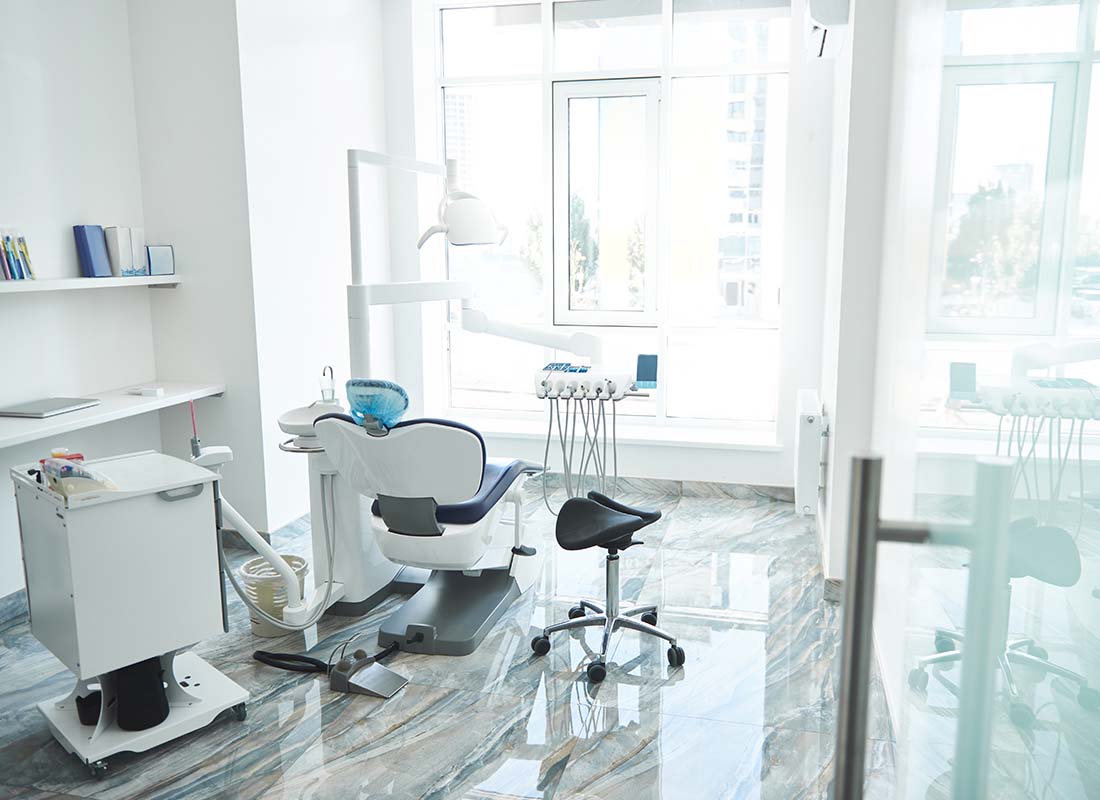
Dental office insurance is a combination of policies designed to protect a dental practice from the professional, property, liability, and operational risks that standard business insurance often leaves unaddressed. A general business policy was written for a generic office, not one stocked with X-ray units, dental chairs, sterilization autoclaves, and digital imaging systems that can cost tens of thousands of dollars to replace. Your practice also carries professional liability exposure that most businesses never face: a patient who believes they received the wrong diagnosis or treatment can file a lawsuit or a licensing board complaint, and both require a legal defense whether or not the claim has merit. Bittick is an independent agency, so we shop multiple carriers and build a policy stack that actually fits your practice, not a one-size-fits-all package.
Your dental practice faces unique risks that require specialized protection.
From patient claims to cyber threats and employee injuries, we help you cover the exposures that matter most to your practice.

What this coverage includes
Professional liability (dental malpractice)
Dental malpractice insurance pays legal defense costs and covered damages when a patient alleges that an error in your clinical judgment or treatment caused them harm. Every lawsuit must be defended, even frivolous ones, and attorney fees accumulate fast regardless of outcome. This coverage also extends to peer review proceedings, though not all standard malpractice policies include peer review defense automatically. Confirm that detail before you need it. Basic dental office policies do not include malpractice coverage, so this is almost always a separate line item.
Specialized equipment and business property
A business owners policy (BOP) bundles commercial property coverage with general liability, and it covers standard office contents as business personal property. The problem is that generic property limits often fall short of what it actually costs to replace a dental operatory. High-value items like cone-beam CT scanners, digital X-ray sensors, and sterilization units may require a separate equipment schedule or an inland marine policy (which covers portable or high-value equipment specifically) to be fully protected. Getting an accurate replacement-cost inventory before a loss, not after, is the step most practices skip.
General liability for patient-facing risks
General liability covers third-party bodily injury, property damage, and personal injury claims that arise from your premises or operations. A patient who slips on a wet floor in your reception area, or a vendor who injures themselves in your supply room, can generate a liability claim against your practice. This coverage pays to defend the claim and covers damages up to your policy limits. For practices that want a larger safety net, a commercial umbrella policy layers additional limits on top of your general liability and other underlying policies.
Cyber liability for patient data
Dental practices store sensitive protected health information: treatment records, social security numbers, insurance data, and payment details. A ransomware attack, a stolen laptop, or an accidental data release can expose that information and trigger notification requirements under HIPAA. Cyber liability insurance pays for breach response costs, patient notification, regulatory defense, and in some cases ransom demands. As practices adopt cloud-based practice management software and digital imaging platforms, this exposure grows, and many standard BOPs exclude it entirely.
Business income and license defense
Business interruption coverage replaces lost revenue and covers continuing fixed expenses (rent, utilities, core payroll) when a covered property event forces your practice to close or operate at reduced capacity. A pipe failure or fire that shuts down your operatories for six weeks can be financially devastating without it. Separately, license defense coverage pays legal costs when a complaint is filed with your state dental board. These complaints are distinct from malpractice lawsuits and require their own defense, often by attorneys who specialize in licensing proceedings. Standard malpractice policies typically do not cover board complaints.
Pairs well with
Workers' Compensation
Idaho law requires workers' compensation for any dental practice with employees. Hygienists, assistants, and front-office staff all face occupational injury risks, and contract workers may create additional coverage obligations depending on how they are classified.
Learn more ›Employment Practices Liability (EPLI)
Small medical offices are not immune to employment claims. EPLI covers the practice and its owners and managers against allegations of wrongful termination, discrimination, harassment, or failure to promote, whether or not the claim has merit.
Learn more ›Commercial Umbrella
A commercial umbrella policy adds a layer of limits, typically $2 million to $10 million, above your general liability, commercial auto, and other underlying policies. It activates when a covered claim exhausts a primary policy's limits.
Learn more ›Commercial Auto
If your practice owns vehicles used for supply runs or staff travel between locations, personal auto policies won't cover business use. A commercial auto policy fills that gap.
Learn more ›Business Owners Policy (BOP)
A BOP bundles general liability and commercial property into one policy and is often the foundation of a dental practice's insurance program. Bittick reviews the property limits and exclusions closely to identify gaps before adding specialty coverages on top.
Learn more ›