
Insurance by Industry
Insurance built for dance studios, inside and out
From student injuries to employment claims, Bittick shops the right carriers to cover the risks that come with running a dance studio.
Dance studio insurance is a package of commercial coverages designed to address the specific liabilities that come with teaching dance professionally, including student injuries, accusations of misconduct, instructor negligence, and damage to the physical space your business depends on. A general business policy won't automatically cover all of these. Studios that work with children face a distinct set of legal and financial risks that require specific policy forms.
Bittick Insurance Services is an independent agency based in Eagle, Idaho, placing coverage with multiple carriers across the Treasure Valley and beyond. We also serve studio owners in the San Antonio metro through our Texas office. One call gets you quotes from several insurers rather than one take-it-or-leave-it price.
Your dance studio faces unique risks that standard business insurance won't cover.
From student injuries to staff allegations, we'll help you find the right protection for your studio.
What this coverage includes
General liability: third-party injuries and property damage
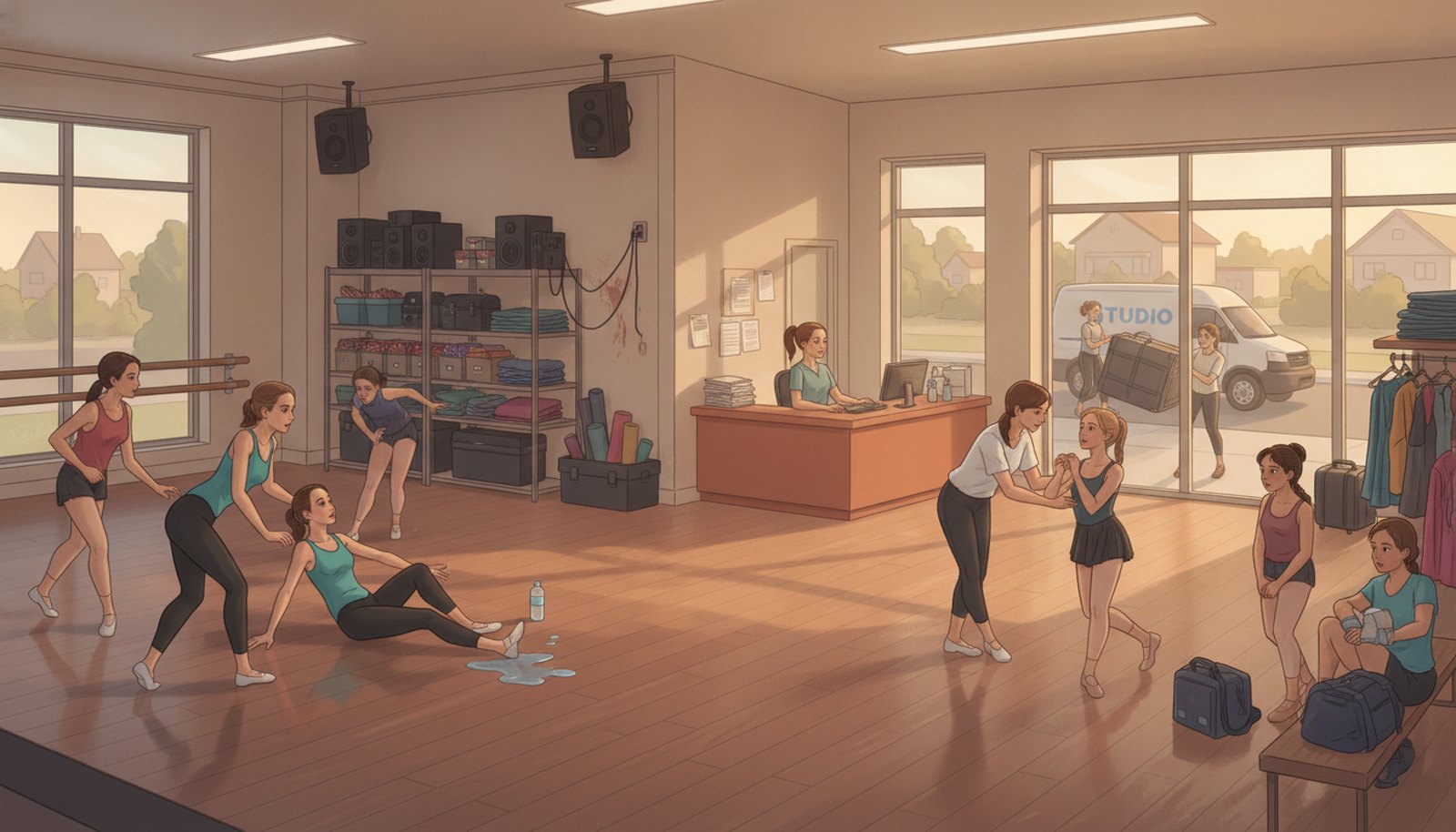
General liability covers your studio when someone outside your business suffers bodily injury or property damage and holds you responsible. A parent slips on a wet lobby floor during recital pickup. A student's phone gets cracked when a staff member moves a prop. A competitor files a lawsuit alleging defamatory statements you posted online. General liability pays the legal defense costs and, when you're found liable, the resulting settlement or judgment. Defense costs alone on a frivolous claim can run tens of thousands of dollars, which is why this coverage is the foundation of any studio's risk program.
Student accident coverage: medical bills when kids get hurt
Dance and acrobatics involve real physical risk. Students fall, collide, land wrong, and occasionally break bones. A student accident policy covers medical expenses when a student is injured at your studio or during a sponsored activity. It comes in two forms: primary coverage pays regardless of the student's own health insurance, and excess coverage pays after the student's health plan has covered what it will. Many families don't realize their child's health insurance may still leave them with significant out-of-pocket costs. Offering student accident coverage signals that your studio takes that responsibility seriously.
Abuse and molestation liability: protecting against serious accusations
Any business that works with children faces the possibility that a staff member or owner will be accused of physical, sexual, or emotional abuse. Even a completely unfounded accusation triggers legal costs the moment someone files a claim. Abuse and molestation liability coverage pays to defend your studio against these allegations and covers settlements or judgments if the claim succeeds. This is a separate coverage form, not a standard part of general liability, and many studio owners don't realize they have a gap until it's too late to fill it.
Professional liability and employment practices: instructor errors and HR claims
Professional liability covers your teachers and studio employees when a student or parent claims that an instructor's error, poor judgment, or negligence caused harm. Think of a choreography decision that allegedly led to a repetitive-stress injury, or a placement decision a parent challenges in court. Employment practices liability (EPLI) is a separate but equally important policy that addresses claims from your own staff: wrongful termination, discrimination, harassment, or wage disputes. EPLI can also include third-party coverage, which extends protection to claims brought by students, parents, or vendors for acts committed by your employees.
Business personal property and workers' compensation: your space and your team
Business personal property coverage replaces the physical contents of your studio after a covered loss: sound systems, mirrors, sprung floors, props, cameras, chairs, and any other equipment you own. Commercial property coverage protects the building itself if you own it. Workers' compensation is required by Idaho law and covers medical treatment and lost wages if an instructor tears a muscle demonstrating a movement or injures their back spotting a student. Both coverages work together to keep a single incident from shutting down your operation permanently.
Pairs well with
Commercial Umbrella Insurance
A single large liability verdict can exceed your general liability or auto limits. A commercial umbrella policy layers additional limits, typically $2 million to $10 million, over your underlying policies so one serious claim doesn't wipe out the business.
Learn more ›Cyber Liability Insurance
If your studio stores student health forms, payment card data, or parent contact information digitally, a breach or ransomware attack is a real exposure. Cyber liability covers notification costs, credit monitoring, extortion demands, and legal defense.
Learn more ›Hired and Non-Owned Auto Liability
When a teacher drives their personal car to pick up supplies or transport students to a competition, your business can be held liable for any accident that occurs. Hired and non-owned auto coverage closes that gap without requiring you to own a fleet.
Learn more ›Commercial Property Insurance
If you own your studio building, a separate commercial property policy covers the structure against fire, wind, vandalism, and other covered perils. Losing the building and its contents at the same time is a scenario worth planning for explicitly.
Learn more ›Business Owner's Policy (BOP)
Smaller studios often find that a Business Owner's Policy bundles general liability and business personal property into one streamlined policy at a lower combined premium, with the option to add endorsements for studio-specific exposures.
Learn more ›